
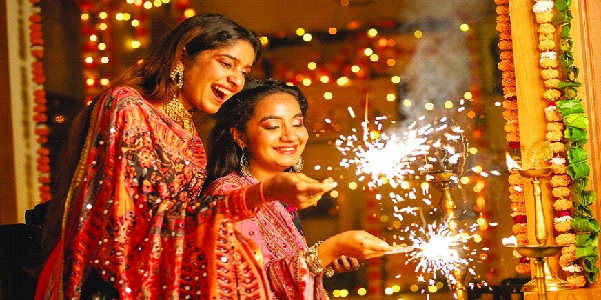

As the autumn evenings grow longer and the festive season reaches its peak, India prepares to welcome one of its most cherished celebrations-Diwali, the Festival of Lights. Homes sparkle with rows of earthen lamps, doorways are adorned with colorful rangolis, markets come alive with festive shoppers, kitchens fill with the aroma of traditional sweets, and families gather to celebrate a festival that carries centuries of history, faith and cultural significance.
Celebrated with immense enthusiasm across India and in Indian communities around the world, Diwali is a festival that transcends geographical boundaries, languages and regional traditions. For some, it marks the homecoming of Lord Rama after fourteen years of exile and his victory over Ravana. For others, it commemorates the triumph of Lord Krishna over the demon Narakasura, honours Goddess Lakshmi, or celebrates the spiritual enlightenment of Lord Mahavira.
Despite these diverse interpretations, the central message remains remarkably universal: darkness cannot overcome light, ignorance must give way to knowledge, and goodness ultimately triumphs over evil.
The word Diwali is derived from the Sanskrit expression Deepavali, meaning a row or series of lights. The humble diya, therefore, is not merely a decorative object. It represents the illumination of the mind, the purity of the soul and the hope of a brighter tomorrow.
The Origins and Historical Significance of Diwali
Diwali has a rich and layered history rooted in ancient Indian religious traditions, mythology, literature and regional folklore. There is no single historical account that explains the origin of the festival for every community. Instead, its significance has evolved through different stories and traditions, each contributing to the festival’s remarkable cultural richness.
Lord Rama’s Return to Ayodhya
One of the most widely recognized stories associated with Diwali comes from the Hindu epic Ramayana.
According to the traditional account, Lord Rama, the prince of Ayodhya and an incarnation of Lord Vishnu, was sent into fourteen years of exile. Accompanied by his wife, Goddess Sita, and his devoted brother Lakshmana, Rama spent these years away from his kingdom. During their exile, Ravana, the powerful king of Lanka, abducted Sita. What followed was an epic struggle between Rama and Ravana, culminating in Ravana’s defeat and the rescue of Sita.
After completing his exile, Lord Rama returned to Ayodhya with Sita and Lakshmana. Overjoyed by the return of their beloved prince, the people of Ayodhya are traditionally believed to have illuminated their homes and streets with rows of earthen lamps.
This homecoming became one of the most enduring explanations for the celebration of Diwali.
The story symbolises the victory of righteousness over wrongdoing, courage over fear and truth over deception. It also highlights the importance of loyalty, sacrifice, duty and devotion.
The Victory of Lord Krishna Over Narakasura
In several parts of India, particularly in southern and western regions, Diwali is associated with another important legend-the defeat of Narakasura.
Narakasura was a powerful demon king whose tyranny brought suffering to the people. According to Hindu mythology, Lord Krishna, with the assistance of his wife Satyabhama, defeated and killed him.
The victory is celebrated as Naraka Chaturdashi, observed on the day before the principal Diwali festivities in many traditions.
The occasion represents liberation from oppression and the destruction of arrogance, cruelty and evil. It is also associated with the idea of cleansing oneself of negativity and beginning anew.
Goddess Lakshmi and the Celebration of Prosperity
Diwali is closely associated with Goddess Lakshmi, the Hindu goddess of wealth, fortune, abundance and prosperity.
According to a well-known Puranic account, Goddess Lakshmi emerged during the Samudra Manthan, or the churning of the cosmic ocean, undertaken by the devas and asuras.
Her appearance symbolised the arrival of beauty, abundance and auspiciousness.
Over time, Diwali became especially associated with Lakshmi Puja. Families clean and decorate their homes, light lamps, prepare offerings and pray for prosperity, happiness and well-being.
However, Lakshmi’s blessings are traditionally understood to extend beyond material wealth. They also represent generosity, good fortune, harmony, wisdom and spiritual abundance.
Diwali in Jainism and Sikhism
Diwali also holds profound significance beyond Hindu traditions.
For Jains, the festival commemorates the nirvana, or liberation, of Lord Mahavira, the twenty-fourth Tirthankara. According to Jain tradition, Mahavira attained liberation at Pavapuri. The lighting of lamps is associated with honoring his spiritual enlightenment and teachings.
For Sikhs, Diwali coincides with the celebration of Bandi Chhor Divas, commemorating the release of Guru Hargobind Sahib Ji from imprisonment at Gwalior Fort. According to Sikh tradition, the Guru secured the release of 52 Hindu kings alongside him. The occasion celebrates freedom, justice, courage and compassion.
Thus, Diwali is not simply one story or one religious observance. It is a festival woven into the spiritual and cultural history of the Indian subcontinent.
The Deeper Significance of Diwali
Beyond mythology and religious observances, Diwali carries several philosophical and social messages that remain relevant in contemporary life.
n The triumph of good over evil: The stories of Rama and Krishna remind people that righteousness, truth and justice must prevail over arrogance, dishonesty and oppression.
n The victory of light over darkness: The lighting of diyas represents the removal of ignorance, negativity and despair. It encourages individuals to cultivate knowledge, understanding and inner peace.
n A celebration of new beginnings: Diwali is traditionally a time to leave behind old grievances, forgive others, renew relationships and welcome fresh opportunities.
n Prosperity with responsibility: Worshipping Goddess Lakshmi reminds devotees to value wealth while practising honesty, generosity, hard work and gratitude.
n Family and community bonding: The festival brings relatives, neighbours and friends together, strengthening relationships and creating lasting memories.
At its heart, Diwali is a reminder that the brightest light is not always the one outside our homes; sometimes it is the kindness, compassion and goodness we nurture within ourselves.
The Five Days of Diwali: A
Journey of Celebration
Diwali is traditionally celebrated over five days, with each day having its own rituals, religious significance and festive character. Although the customs vary across regions and communities, the five-day sequence is widely recognised.
Day 1: Dhanteras – Welcoming
Wealth and Good Fortune
Dhanteras, also known as Dhantrayodashi, marks the beginning of the Diwali festivities.
The word combines Dhan, meaning wealth, and Teras, referring to the thirteenth lunar day of the dark fortnight of Kartik.
The day is associated with Goddess Lakshmi and Lord Dhanvantari, the divine physician associated with Ayurveda.
Purchasing gold, silver, jewelry, utensils and other household items is considered auspicious in many communities. Markets are especially vibrant, with families shopping for festive decorations, gifts and new household possessions.
People clean their homes, decorate entrances and light lamps in the evening. In some traditions, a diya is placed near the entrance or outside the home in remembrance of Yama, the deity associated with death.
Dhanteras symbolises the importance of health, wealth and well-being.
Day 2: Naraka Chaturdashi –
The Victory of Light
Also known as Chhoti Diwali, Naraka Chaturdashi commemorates Lord Krishna’s victory over Narakasura.
In many parts of India, people wake up before sunrise, take an auspicious oil bath and wear fresh clothes. This ritual, often called Abhyanga Snan, symbolises purification and the removal of negativity.
Homes are decorated with lamps, and families prepare sweets and festive delicacies.
In some regions, the day is marked by the lighting of crackers, traditional meals and family gatherings.
The deeper message is one of cleansing, renewal and freedom from destructive tendencies.
Day 3: Lakshmi Puja – The Main
Festival of Diwali
The third day is the principal day of Diwali for many Hindu communities.
As evening approaches, homes and commercial establishments are illuminated with diyas, candles and decorative lights. Families dress in new or festive clothes, prepare elaborate meals and gather for Lakshmi Puja.
Goddess Lakshmi is worshipped for wealth, prosperity and happiness, while Lord Ganesha is invoked for wisdom and the removal of obstacles.
The puja is one of the most significant spiritual moments of the festival. Families offer flowers, sweets, fruits, incense and prayers, seeking divine blessings for the year ahead.
In many communities, this day also marks the traditional beginning of a new financial year or accounting cycle.
The evening concludes with festive meals, exchanging gifts, meeting loved ones and, traditionally, fireworks.
Day 4: Govardhan Puja and Annakut
The fourth day is celebrated as Govardhan Puja in many parts of northern India.
According to Hindu mythology, Lord Krishna lifted Govardhan Hill to protect the people of Vrindavan from torrential rains unleashed by Lord Indra.
The incident is remembered as a lesson in humility, devotion and the importance of respecting nature.
Devotees prepare Annakut, meaning a mountain of food, consisting of a wide variety of vegetarian dishes offered to Lord Krishna.
In temples, especially those associated with the Vaishnava tradition, elaborate food offerings are arranged and distributed as prasad.
In some regions, the day is also observed as Bali Pratipada, associated with King Bali, and is celebrated as the beginning of a new year in certain Hindu traditions.
Day 5: Bhai Dooj – Celebrating the Bond Between Brothers and Sisters
The five-day festival concludes with Bhai Dooj, also known by names such as Bhai Tika and Bhau Beej.
The occasion celebrates the special relationship between brothers and sisters.
Traditionally, sisters apply a tilak to their brothers’ foreheads, perform aarti and pray for their long life, happiness and prosperity. Brothers offer gifts and promise love, care and protection.
The festival is associated with the story of Yama, the god of death, visiting his sister Yamuna.
The occasion reinforces the importance of family relationships and the affection that binds siblings together.
The Rituals and Traditions of Diwali
Diwali is distinguished by its beautiful combination of religious devotion, traditional customs and joyful celebrations. Every ritual, whether performed in a grand temple or a modest household, carries symbolic meaning.
Cleaning and Decorating the Home
The preparations for Diwali often begin days or even weeks before the festival.
Families thoroughly clean their homes, remove unwanted items, organise living spaces and decorate their surroundings. This practice is traditionally associated with welcoming Goddess Lakshmi into a clean, harmonious and inviting environment.
Doors and windows are adorned with torans made of mango leaves, marigolds and other decorative materials.
Colorfl lights, flowers, candles and traditional ornaments add to the festive atmosphere.
The act of cleaning also has a symbolic meaning: making room for new beginnings by letting go of the old.
Lighting Diyas: The Heart of Diwali
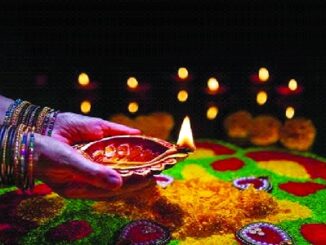
The humble earthen diya is perhaps the most iconic symbol of Diwali.
Traditionally made from clay, diyas are filled with oil or ghee and fitted with cotton wicks. They are placed at entrances, windowsills, balconies, courtyards, temples and places of worship.
The light represents knowledge, hope, purity and spiritual awakening.
In many households, the first lamps are lit during the evening puja, followed by the illumination of the entire home.
The sight of hundreds of tiny flames glowing against the night sky creates one of the most beautiful images associated with Indian culture.
Rangoli: Welcoming Auspiciousness Through Art
Rangoli is a traditional Indian art form in which intricate designs are created on floors, particularly near entrances and courtyards.
Colored powders, rice flour, flower petals, grains and other natural materials are used to create geometric patterns, floral motifs, peacocks, lotus flowers and auspicious symbols.
The lotus, considered sacred in Hindu tradition, is especially popular in Diwali rangolis because of its association with Goddess Lakshmi.
In some households, small footprints symbolising the arrival of Goddess Lakshmi are drawn from the entrance towards the prayer area.
Rangoli is more than decoration. It expresses creativity, hospitality and the desire to welcome prosperity and positive energy.
Wearing New Clothes and Exchanging Gifts
Diwali is also an occasion to dress in new or traditional attire.
Women often wear sarees, suits, lehengas and other festive outfits, while men choose kurta-pyjamas, sherwanis or traditional formal wear.
Families exchange sweets, dry fruits, chocolates, clothing and thoughtful gifts.
The custom of gifting symbolizes affection, gratitude and goodwill. It also strengthens relationships among family members, friends, colleagues and neighbors.
Lakshmi-Ganesh Puja: The
Spiritual Centre of Diwali
Among all Diwali rituals, Lakshmi-Ganesh Puja holds special importance for many Hindu families.
Goddess Lakshmi represents prosperity, abundance, fortune and well-being. Lord Ganesha represents wisdom, auspicious beginnings and the removal of obstacles.
Together, they symbolize the idea that prosperity should be accompanied by wisdom and that success should be guided by good judgment and righteous conduct.
The puja is generally performed during the evening, around the locally prescribed auspicious time known as the Pradosh Kaal, with many families consulting a regional panchang for the recommended muhurat.
The exact procedure varies according to family traditions, regional customs and religious lineages. A commonly followed household puja includes the following steps:
1. Preparing the puja area
The place of worship is cleaned and decorated with flowers, rangoli and diyas. A clean cloth is spread on a wooden platform or chowki.
Idols or pictures of Goddess Lakshmi and Lord Ganesha are placed respectfully on the platform. Some families also worship Goddess Saraswati, Kubera or their traditional household deities.
2. Sankalp
The worshipper takes a sankalp, or sacred resolve, expressing the intention to perform the puja with devotion and sincerity.
3. Invocation of Lord Ganesha
The puja generally begins with Lord Ganesha.
Devotees offer flowers, durva grass, sweets and other traditional offerings while praying for the removal of obstacles and the successful completion of the worship.
A commonly recited mantra is:
Om Gan Ganapataye Namah.
4. Invocation of Goddess Lakshmi
Goddess Lakshmi is invoked with prayers and offerings. Devotees may offer lotus or other flowers, kumkum, turmeric, rice grains, sweets, fruits and fragrant incense.
A popular mantra is:
Om Shreem Mahalakshmyai Namah.
The mantra is a prayer for the blessings of Goddess Lakshmi.
5. Shodashopachara or
traditional offerings
In more elaborate forms of worship, devotees perform Shodashopachara, the offering of sixteen traditional services or forms of hospitality to the deity.
These may include welcoming the deity, offering a seat, water, bathing rituals, clothing, flowers, fragrance, incense, lamps, food and prayers.
Not every household performs all sixteen offerings. A simple, sincere puja is also widely practised.
6. Offering of Naivedya
Fruits, sweets, dry fruits, kheer, laddoos and other vegetarian preparations are offered to the deities.
The offerings are subsequently distributed among family members as prasad.
7. Worship of the household’s
wealth and accounts
Many business families worship cash boxes, account books, business ledgers, calculators and other instruments associated with their work.
This practice expresses gratitude for livelihood and seeks blessings for honest business, financial stability and prosperity.
8. Aarti
The puja concludes with the recitation of aarti.
Devotees move a lit aarti plate before the deities while singing traditional devotional hymns.
Popular aartis include:
” Om Jai Lakshmi Mata
” Jai Ganesh Jai Ganesh Deva
The entire family often participates, creating an atmosphere of devotion, unity and celebration.
9. Lighting the lamps
After the puja, diyas are placed throughout the home, especially near entrances, windows and prayer spaces.
The illuminated home symbolises the welcoming of prosperity, peace and positive energy.
10. Prasad and family celebrations
The prasad is distributed among family members, relatives and guests. Families then exchange greetings, enjoy festive meals and spend time together.
It is worth remembering that the spirit of Diwali puja lies in faith, gratitude and good intentions rather than the number or cost of the offerings.

Be the first to comment