
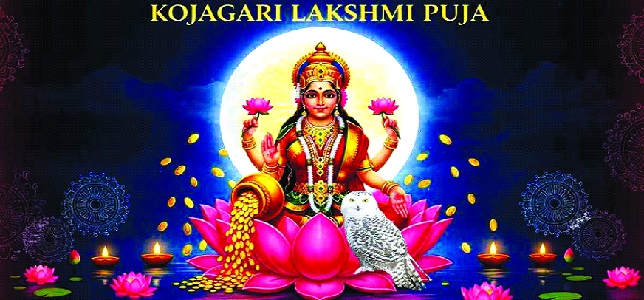

Diwali is a festival of countless traditions, but the worship of Goddess Lakshmi remains at its spiritual heart for millions of Hindu families. Celebrated on the main Diwali evening, Lakshmi Puja is among the most eagerly awaited rituals of the festive season.
As dusk approaches, homes take on a magical appearance. Entrances are decorated with colourful rangolis, marigold garlands and traditional torans. Earthen lamps are arranged along balconies, windowsills and courtyards, while the prayer area is adorned with flowers, fresh cloth and beautifully decorated idols of Goddess Lakshmi and Lord Ganesha.
Families dress in their finest traditional attire and gather around the puja altar. Sweets, fruits, flowers, incense and other offerings are arranged with devotion. The atmosphere becomes serene and spiritually uplifting as prayers begin.
For devotees, this is the moment to express gratitude for the blessings received during the year and seek divine grace for the days ahead.
The underlying belief is that Goddess Lakshmi blesses homes where cleanliness, sincerity, harmony and righteousness are valued. Thus, the preparations for Lakshmi Puja begin long before the actual evening ceremony.
Goddess Lakshmi: The Divine
Embodiment of Abundance
In Hindu tradition, Goddess Lakshmi is revered as the goddess of wealth, prosperity, fortune, beauty and abundance. She is the divine consort of Lord Vishnu, the preserver of the universe, and represents the grace and prosperity that sustain life.
Her iconography is rich in symbolism. She is commonly depicted seated or standing upon a blooming lotus, dressed in beautiful red or pink garments, with gold ornaments and a serene expression.
Her four hands are often interpreted as representing the four aims of human life in Hindu philosophy: dharma (righteousness), artha (material prosperity), kama (desires) and moksha (liberation).
The lotus on which she sits represents purity, spiritual growth and detachment. Despite growing in muddy water, the lotus remains untouched by its surroundings, reminding devotees that prosperity should never compromise one’s values.
Gold coins flowing from one of her hands symbolize abundance and generosity, while the elephants often depicted alongside her represent strength, dignity, royal power and auspiciousness.
Importantly, Lakshmi is not merely the goddess of material wealth. Her blessings are also associated with good health, knowledge, courage, fertility, harmony and spiritual fulfillment.
In Hindu tradition, the idea of prosperity is therefore much broader than financial success. It encompasses a balanced, meaningful and fulfilling life.
The Legend of Goddess
Lakshmi’s Appearance
One of the most celebrated legends associated with Goddess Lakshmi is the Samudra Manthan, or the churning of the cosmic ocean.
According to Hindu mythology, the devas and asuras joined forces to churn the ocean of milk in search of Amrit, the nectar of immortality.
Mount Mandara was used as the churning rod, while the serpent Vasuki served as the rope. Lord Vishnu guided the process, taking the form of Kurma, the divine tortoise, to support the mountain. As the cosmic ocean was churned, numerous divine treasures and celestial beings emerged. Among them was Goddess Lakshmi, radiant in beauty and surrounded by divine splendour.
Her appearance was celebrated as the arrival of prosperity, fortune and auspiciousness. She chose Lord Vishnu as her eternal consort, symbolizing the union of preservation and prosperity.
This legend gives Lakshmi Puja a deeper meaning. It reminds devotees that abundance is a divine blessing and that prosperity must be accompanied by balance, responsibility and righteousness.
Why Is Lakshmi Puja
Celebrated on Diwali?
The association of Goddess Lakshmi with Diwali has developed through centuries of religious beliefs, regional customs and devotional traditions.
According to popular Hindu belief, Goddess Lakshmi visits homes on the night of Diwali, blessing those that are clean, illuminated and filled with devotion.
The lighting of diyas is therefore considered a way of welcoming her divine presence.
The festival also marks a period of renewal. In many business communities, Diwali is associated with the closing of old financial accounts and the beginning of a new accounting year.
Shopkeepers, traders and business owners perform special prayers, worship their account books and seek blessings for prosperity and success.
Lakshmi Puja thus connects the spiritual and material dimensions of life, reminding people that wealth is most meaningful when earned honestly and used responsibly.
The Auspicious Preparations:
Welcoming Goddess Lakshmi
The preparations for Lakshmi Puja begin days before Diwali. Traditionally, cleanliness and decoration are considered essential because they symbolise readiness to welcome auspiciousness.
Cleaning and Purifying the Home
Families thoroughly clean their homes, organize their surroundings and remove unwanted clutter.
This practice is traditionally associated with welcoming Goddess Lakshmi into a clean and harmonious environment.
Doors and windows are decorated with mango-leaf torans, marigold flowers and other auspicious ornaments.
The prayer room receives special attention, with idols and pictures carefully cleaned and arranged.
Rangoli: A Beautiful
Invitation to Prosperity
Rangoli is an essential part of Diwali decorations.
Intricate patterns are created near entrances and courtyards using coloured powders, rice flour, flower petals and natural materials.
Lotus designs are particularly popular because the flower is associated with Goddess Lakshmi.
In many households, small footprints representing the goddess’s arrival are drawn from the entrance towards the prayer area. These symbolic footprints express the hope that prosperity and happiness will enter the home.
Decorating the Puja Area
A wooden platform or chowki is covered with a clean, preferably red or yellow cloth.
Idols or pictures of Goddess Lakshmi and Lord Ganesha are placed on it. Fresh flowers, garlands, lamps and decorative ornaments add to the beauty of the sacred space.
A kalash, containing water and traditionally decorated with mango leaves and a coconut, may also be placed as part of the worship.
Lakshmi-Ganesh Puja: The Sacred Rituals of Diwali Evening
The main Lakshmi Puja is traditionally performed during the evening, with many families following the auspicious Pradosh Kaal and consulting their local panchang for the recommended muhurat.
Lord Ganesha is worshipped before Goddess Lakshmi because he represents wisdom, auspicious beginnings and the removal of obstacles.
The ceremony can be simple or elaborate, depending on family traditions and religious practices.



Be the first to comment