Tag: Arvind Kejriwal

  • Shatrughan provokes BJP to take action

    Shatrughan provokes BJP to take action

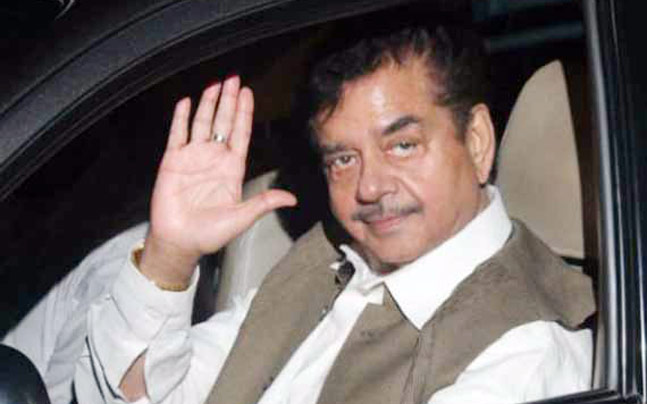
    New Delhi (TIP): Outspoken MP Shatrughan Sinha, in his just launched biography, virtually provoked the BJP leadership to take action against him despite accepting his “open dissidence” after he was sidelined during Bihar Assembly polls.

    In “Anything But Khamosh” launched on Wednesday, Sinha dubbed the BJP leadership “helpless” for it could not take disciplinary action against him for publicly speaking against the party and boasting that he could win elections even as an independent candidate given his equation with senior leaders from other parties.

    “One heard that they’d be taking action against Shatrughan Sinha after the Bihar elections. I said, I didn’t know my people were so helpless that they had to wait for an election to take action. That too against a man who had won with vote share percentage of more than 55 per cent which even our prime minister and Arvind Kejriwal didn’t reach; a man who could stand as an Independent and had the support of many, right from Nitish Kumar and Lalu Prasad to Rahul Gandhi,” Sinha wrote in the 7th chapter: “The Rough and Tumble Of a Life in Politics”. The party grudgingly overlooked repeated defiance from Sinha much before it decided to crack whip on Dharbhanga MP Kirti Azad, suspending him for taking on Union Finance Minister Arun Jaitley in the DDCA case. In a direct challenge, Sinha reiterated his earlier offensive comment in the biography:

    “That’s why I had made the statement, those who want to take action against me must remember Newton’s third law. Every action has an equal and opposite reaction”.

    He said that unlike his veteran seniors L K Advani and M M Joshi, who did not open  their mouths despite sitting outside, “SS was not one to exercise the RSS-style discipline or restraint”.

  • Jaitley’s DDCA affairs

    Jaitley’s DDCA affairs

    The controversy over the CBI searching the office of Delhi Chief Minister Arvind Kejriwal perfectly illustrates why politicians must not get involved with sports administration, especially cricket, which is flush with money and vulnerable to corruption. The CBI said the target of the raid was Rajendra Kumar, Principal Secretary to the Chief Minister, in connection with an old corruption case. But Kejriwal claimed the real motive behind the raid on his office was to seize a file pertaining to an investigation into corruption in the Delhi and Districts Cricket Association (DDCA).

    It’s widely accepted that the DDCA is the most venal, mismanaged cricket association in the country. Earlier this month, the Test match between India and South Africa was allowed to be held there only under the supervision of a Supreme Court-appointed observer. Each state cricket association receives a funding of at least Rs 30 crore a year from the Indian cricket board (BCCI); most state associations have huge sums of money in the bank, but the DDCA is bankrupt. Its stadium was to be renovated at a cost of Rs 24 crore, but over Rs 110 crore was spent. There are allegations of corruption in the selection of the state teams, right from the junior-most level. Delhi’s Ranji Trophy players were not paid match fees for two years.

    Union Finance Minister Arun Jaitley was the DDCA’s president from 1999 to 2013; he continues to be the go-to man for cricket administrators needing help, and mentor to several powerful officials. Last month, the Delhi Government’s probe into the DDCA’s operations highlighted corruption and lack of transparency in its functioning. Kejriwal has insinuated that the CBI raid on his office was organised at the behest of Jaitley in order to seize files pertaining to the DDCA case. This allegation becomes credible only because Jaitley is deeply entrenched in the DDCA’s affairs, heading it for 14 years. This case demonstrates the perils of representing several interest groups – as Jaitley and other politicians who are involved in cricket do – at the same time.

  • Ghulam Ali Concerts – Mumbai, Pune Cancels | Delhi Invites Him

    Ghulam Ali Concerts – Mumbai, Pune Cancels | Delhi Invites Him

    Ghazal King Ghulam Ali & the organizers “Panache Media” have cancelled the concerts in Mumbai & Pune after Shiv Sena threatened to disrupt it, warning that no artist from that country will be allowed to perform in the city till terror emanating from across the border is stopped.

    The decision was taken despite a snub to Sena by Maharashtra Chief Minister Devendra Fadnavis who said adequate protection would be provided to Ali and that the concert, organised in memory of late ghazal singer Jagjit Singh, would be held according to schedule. Despite this assurance, Shiv Sena’s threat has won the cancellation.

    “My government is willing to give full protection to Ali’s concert in Mumbai. The show must go on. It is unfortunate to drag a world-class, renowned ghazal singer into Indo-Pakistan politics… Pakistan artists are always welcome. Our singers and actors also go to Pakistan and perform. We should respect each other’s culture and talent. Why bring politics into culture?” Fadnavis said.

    Shiv Sena spokesperson said in the media, “We can’t have cultural ties with Pakistan when they kill our soldiers.”

    Organisers of the event had announced the cancellation after a meeting with Shiv Sena president Uddhav Thackeray.

    Shiv Sena’s film indutry arm named the Chitrapat Sena, had submitted a letter to the admin department of the Shanmukhananda Hall, asking them to cancel the function and threatened that if their demand will not be followed, they will launch a protest in ‘Sena style’. On the other hand, an official from Pune’s Ganesh Kala Krida Manch stated, “We have not been contacted by any representatives of Shiv Sena. We have just received a letter from the organisers which states the concert has been cancelled.”

    The Arvind Kejriwal Government on Thursday (October 8) invited Pakistani singer Ghulam Ali to perform in the national capital, saying “music has no boundaries”.

    Delhi Culture Minister Kapil Mishra said the Pakistani Singer is welcome to come to Delhi for holding a performance. “Sad that #GhulamAli is not being allowed in Mumbai, I invite him to come to Delhi and do the concert. Music has no boundaries. #BanTheBan (sic),” he wrote on Twitter.

    “Ghulam Ali’s programme has been cancelled. Neither Ghulam Ali nor any Pakistani artiste will be performing at the October 9 event,” organiser Randhir Roy had said.

  • DELHI GOVT GETS FLAK FOR RS 526 CRORE AD BUDGET

    NEW DELHI (TIP): The Delhi government has come under fire for setting aside Rs 526.74 crore for information and publicity in the budget. With an outlay of Rs 41,129 crore for the current financial year, the opposition calls the advertising budget
    “ridiculous”, especially since the government has trimmed its outlay for infrastructure work like road repair.

    Deputy CM Manish Sisodia justified the allocation, saying that with media largely showing negative stories about the government, it needed a platform “where it could show the real picture”.

    Leader of opposition Vijender Gupta said the allocation was 2,200% more than the previous year’s allocation. “The AAP government wants to present its leader Arvind Kejriwal as a messiah.

    While Rs 526.74 crore has been earmarked for information and publicity, Rs 338 crore has been allocated for SC/ST/EWS welfare, Rs 350 crore for nutrition, Rs 208 crore for labour and employment and Rs 400 crore for development of slums,” said Gupta.

    Sources said the allocation for publicity in 2014-15 was Rs 23.7 crore, Rs 25 crore in 2013-14, Rs 24.9 crore in 2012-13 and Rs 27.6 crore in 2011-12.

    DPCC chief Ajay Maken said while there was no money for infrastructure development, the government had earmarked such a huge amount for glorification of the CM.

    The government has already received severe criticism for a television ad that showed a housewife struggling with day-to-day work while her husband sat around watching TV. Sources said the campaign cost the state exchequer about Rs 1.5 crore.

    A government spokesperson denied the figures put out by BJP and Congress for previous years, saying no department had ever given a proper budget for advertising undertaken by them. “This is the first time ever that Delhi government has opened itself to scrutiny and put out an exact figure earmarked for advertising. This is a consolidated figure for all departments for advertisements, public outreach programmes and information outflow” he said.

  • BJP BLEEDS: Lalitgate and now Advani Emergency Remark

    BJP BLEEDS: Lalitgate and now Advani Emergency Remark

    NEW DELHI  (TIP): As if the pain of Lalitgate involving Sushma Swaraj and Vasundhara Raje Scindia was not enough , Advani chose to inject a little more of it with his emergency remarks.

    Already in the line of opposition’s fire over the Lalit Modi issue, the ruling BJP on Thursday, June 18, was further driven to a corner over remarks of party senior L.K. Advani that he did not rule out another Emergency-like situation in the country.

    As the Congress continued its attacks on the Bharatiya Janata Party over the help provided to “fugitive” former IPL commissioner Lalit Modi by External Affairs Minister Sushma Swaraj and also allegedly Rajasthan Chief Minister Vasundara Raje, other opposition parties like AAP, the JD-U, the RJD and the CPI-M also attacked the party on Advani’s remarks, terming them a veiled swipe at Prime Minister Narendra Modi. The BJP however denied it.

    In an interview to the Indian Express ahead of the 40th anniversary of the Emergency, during which he had been jailed, Advani had said that “forces that can crush democracy” (in the country) were stronger and that there were “not enough safeguards in India in 2015” to prevent an Emergency-like situation.

    “Advani ji is correct in saying that Emergency can’t be ruled out. Is Delhi their first experiment,” Delhi Chief Minister Arvind Kejriwal tweeted. Besides Kejriwal, Advani found another supporter in Bihar Chief Minister Nitish Kumar of the Janata Dal-United, who told media persons in Patna, that the BJP veteran was “right to a large extent”. Rashtriya Janata Dal chief Lalu Prasad tweeted: “Already there is undeclared emergency as authoritarian & Hitlerian tendencies prevailing in country since May14.” “Advani Ji proved that our concerns regarding anti-democratic elements & activities being sponsored & promoted by union government are correct.”


    Congress spokesperson Tom Vadakkan said it is not only his party which is questioning the government “but even senior BJP leadership is raising questions on the efficacy of the government”, while his colleague Sanjay Jha, tweeted: “A totalitarian system is gradually overwhelming India; Advani Ji’s warnings confirm our worst apprehensions.”

    Aam Aadmi Party leader Ashutosh also tweeted that Advani’s interview is first
    “indictment of Modi’s politics” and that Advani indicated “democracy is not safe, emergency is not far, under Modi’s leadership”.”

    Slamming the NDA government at the centre over a host of issues, veteran Communist Party of India-Marxist leader Biman Bose too expressed apprehension that an emergency may be proclaimed to stifle democracy as Modi’s “aachhe din (good days)” promise had fallen flat. “So, unable to solve all these problems, there may come a situation, when to stifle democracy, these people may resort to emergency,” he told media persons in Kolkata. BJP spokesperson M.J. Akbar said that Advani may have been referring to institutions rather than individuals. Internal emergency was imposed on the country by then Prime Minister Indira Gandhi on June 25-26, 1975 and lasted 19 months.

    The Congress on Thursday also demanded a “decisive” reply from Prime Minister Modi on the Lalit Modi controversy while clarifying that it was not mulling any legal recourse against the government as of now. “The silence of the prime minister is deafening. He must tell the people of India about his views,” Congress leader C.P. Joshi told the media, also asking him to clarify whether Sushma Swaraj decided to give the go-ahead for travel documents for Lalit Modi as an individual minister or on behalf of the entire government. “He (the prime minister) should give a quick reply. He should put forward his views in a decisive manner,” he said. The former union minister from Rajasthan also sought the resignation of Vasundhara Raje and asked the RSS to clarify its stand on her, noting it had spoken for Sushma Swaraj but was silent on the state chief minister. “We request BJP president Amit Shah to sack her immediately,” he added.

    The external affairs minister as well as the Rajasthan chief minister are facing flak for their association with former IPL chief Lalit Modi, who is wanted by the Enforcement Directorate for alleged financial impropriety in the money-spinning IPL, and currently living in London. In Hyderabad, Minister of State for External Affairs V.K. Singh defended his senior cabinet colleague saying that matters were being blown out of proportion. “What is happening is, many things are being blown out of proportion. Lot of noise is being made. For example, it was said that because Sushma-ji’s daughter is Lalit Modi’s lawyer, so something is fishy…. Chidambaram’s wife is a lawyer in Sardha scam. Should he come under scanner for that? I leave this question to you,” he told reporters.

  • AAP in crisis control: After arrest, Jitender Singh Tomar resigns as Law Minister

    AAP in crisis control: After arrest, Jitender Singh Tomar resigns as Law Minister

    House after his arrest in fake degree case, Jitender Singh on Tuesday stepped down as law minister of Delhi, sending his resignation to Chief Minister Arvind Kejriwal.

    “Jitender Singh Tomar put in his papers a while back. Chief Minister Arvind Kejriwal has accepted the resignation,” Deputy Chief Minister Manish Sisodia said.

    “We shall forward Tomar’s resignation letter to Lt. Governor Najeeb Jung tomorrow (Wednesday) morning,” he added.

    In his resignation letter, Tomar said he did not want to affect the image of the Aam Aadmi Party or its Delhi government.

    Earlier, the arrest of Tomar on charges of fraud and cheating further escalated tensions between the central and state governments, with Sisodia accusing Delhi Police of carrying out a “political vendetta”.

    The face-off between the two governments intensified through the day with another public showdown brewing over transfers involving the Anti-Corruption Branch and the Delhi Home Secretary.

    While remanding Tomar to four days in police custody, a Delhi court said the police action “seemed like a farce exercise” after documents revealed that the arrest notice was issued after the minister was detained.

    The police arrested Tomar, a first-time MLA from Trinagar, at 11 am following an investigation into a complaint by the Bar Council of Delhi that he had obtained a fake law degree from the Institute of Legal Studies College in Munger, Bihar.

    The arrest comes at a time when Lt Governor Najeeb Jung and the Delhi government have locked horns over administrative control of the national capital.

    The Delhi government was quick to condemn Tomar’s arrest. “In the last three months, the AAP government in Delhi has shaken the roots of corruption. Dictatorial ways are being used to create an emergency-like situation in Delhi,” Sisodia said.

  • AAP, Jung & Centre battle goes to courts

    AAP, Jung & Centre battle goes to courts

    Delhi Politics - Kejriwal & Jung - Face OffThe AAP government on Thursday moved the Delhi high court challenging the Union home ministry’s May 21 notification that lieutenant-governor Najeeb Jung has discretionary powers for appointments and transfers to key bureaucratic posts in the nation’s capital. Delhi chief minister Arvind Kejriwal is likely to seek political support for his stand by writing letters to the chief ministers of West Bengal, Uttar Pradesh and Bihar, among others. Even Delhi Assembly Speaker Ram Niwas Goel is in the process of writing to President Pranab Mukherjee urging that the city government be accorded more powers in line with the bill moved by then home minister L.K. Advani in Parliament in 2003.

    The Supreme Court also agreed to hear on Friday a special leave petition by the Union home ministry against the May 25 Delhi high court order describing as “suspect” its notification on the transfer of officers, and holding that Delhi’s lieutenant-governor could not act in his discretion.

    Following the tiff, lieutenant-governor Najeeb Jung on Thursday met Union home secretary L.C. Goyal and had a telephonic conversation with home minister Rajnath Singh. Mr Jung reached the home ministry early Thursday morning and had a 20-minute meeting with Mr Goyal. It is understood that the lieutenant-governor discussed the resolution passed by the Delhi Assembly on Wednesday and the government’s stand in the Supreme Court on the special leave petition. The L-G is said to have briefed the home secretary on the transfers and postings by the AAP government which he claims are in violation of the rules.

    A Supreme Court vacation bench of Justices A.K. Sikri and U.U. Lalit has posted the petition for hearing Friday after a “mention” was made by additional solicitor-general Maninder Singh on its urgency, seeking an early listing. The MHA’s May 21 notification prohibited the Delhi government’s Anti-Corruption Branch (ACB) from acting against Central officials in criminal cases. It had said that the ACB could not take cognisance of offences against officials, employees and functionaries of Central services, that includes the Delhi police. It also gave the lieutenant-governor absolute powers on the transfer and posting of senior officers.

    In the Delhi high court, the city government mentioned the matter before a division bench of Justices B.D. Ahmed and Sanjeev Sachdeva. The bench also then posted it for hearing on Friday. The Delhi government has sought the quashing of the MHA notification on the grounds that it is not constitutionally valid.

    A similar plea filed by law student Vibhor Anand that had challenged the MHA notification and contended that the appointment of bureaucrat Shakuntala Gamlin as acting chief secretary by the lieutenant-governor was “illegal” was also posted for Friday. Mr Anand’s petition said: “Delhi is neither a full state nor a Union territory and (is) governed by Articles 239-AA and 239-AB of the Constitution of India (which deals with Union territories) introduced by a constitutional amendment in 1991.”

    It said: “As per Section 41 of the GNCT Act 1991, the Lieutenant-Governor does not have any discretion to appoint Gamlin as chief secretary and other such posts, nor any special law granted him this discretion.”

    The faceoff between chief minister Arvind Kejriwal and lieutenant-governor Najeeb Jung took place over the control of key bureaucratic appointments.

    The high court, while commenting on this notification, had noted that the lieutenant-governor was bound to act on the aid and advice of the council of ministers directly elected by citizens of Delhi, and that the Centre’s “executive fiat” siding with him was “suspect”. It observed that the people’s mandate “must” be respected by the lieutenant-governor as there was no other “constitutional or legal fetter”.

    The ASG submitted before the Supreme Court bench that the observations by the high court led to total uncertainty and made everyday administration difficult in Delhi. He said there was a need for a clear interpretation of Article 239-AA of the Constitution.

    When the Supreme Court bench noted the high court had only used the word “suspect”, the ASG said a clarification was needed. He said the high court’s observations and findings had come while dealing with the bail application of the policeman who was arrested by the ACB.

    The Delhi government, meanwhile, filed a caveat to make sure that the bench did not pass any ex-parte orders on the MHA’s prevent the Bench from passing ex- parte order in the MHA’s petition without giving it a hearing. In its petition, the MHA faulted the high court for passing an order without giving an opportunity to the Centre to make its submissions.

    The petition questioned the proprietary of the high court in commenting against the May 21 notification although the arguments had been concluded on the bail plea on May 20. It noted there was no occasion for the high court to pass remarks against the notification when it was neither on record nor was it even argued. Further, the petition said the order had also been reserved a day before the notification came into existence.

    The MHA contended that the HC had made sweeping observations against the May 21 notification without any hearing on this aspect. It raised a question whether the high court was required to examine the notification and its implications when the issue pending before it pertained only to a bail petition. Contending that the high court had unreasonably expanded the scope of the controversy and delved upon the notification even as the bail application was pending, the MHA prayed for quashing the impugned order and an interim stay of its operation.

  • Aruna Roy, over 100 AAP LS poll nominees to attend ‘Swaraj’

    Aruna Roy, over 100 AAP LS poll nominees to attend ‘Swaraj’

    The AAP rebel camp today claimed that rights activist Aruna Roy, a former comrade of Arvind Kejriwal from his RTI campaign days, would be attending a meeting called by them next week along with over 100 Lok Sabha poll nominees who had fought on the party’s ticket.

    A twitter account created by the rebel camp also claimed that veteran journalist Kuldip Nayar would be among those attending the meet.

    The group has claimed that it has received responses from around 3,591 people for the April 14 meet.

    It also said that social activist Medha Patkar, who had resigned from AAP as it was rocked by internal differences, is going to attend the meet.

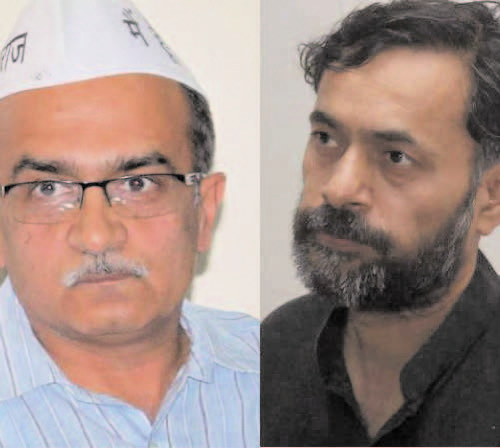
    Yogendra Yadav and Prashant Bhushan have also released a pre-invite for the event that is to be held at IFFCO Chowk at Gurgaon from 10 A.M. To 5 P.M., saying it involves “restarting” the journey of alternative politics so as to remain true to the “original spirit” of the ‘andolan’ (movement).

    The rebel camp claims to have garnered the support of 968 volunteers in Delhi, 661 from Uttar Pradesh, 329 from Bihar, 301 from Haryana and 200 from Maharashtra.

    The build-up to the April 14 meet has witnessed a series of allegations and counter-allegations with the dissident camp accusing Arvind Kejriwal loyalists of trying to scuttle the event while the party has issued a veiled warning to those intending to participate in the ‘Swaraj Samwad’.

    Bhushan and Yadav were ousted from the party’s top panels last month.

  • AAP on the Verge of a Vertical Split

    AAP on the Verge of a Vertical Split

    NEW DELHI (TIP): High voltage drama has been seen in the last few days in Aam Aadmi Party, with top party members being shown the door after AAP’s National Executive meet. A heavily edited video was also released, March 28 showing Arvind Kejriwal’s speech at the meeting where Kejriwal gave no chance for other voices in the party.

    Two founding members and party stalwarts Yogendra Yadav and Prashant Bhushan have been removed from AAP’s national executive and key panels. The Aam Aadmi Party made further changes earlier on March 28, strengthening the grip of Delhi Chief Minister Arvind Kejriwal on the organization by replacing its Lokpal, retired Admiral L. Ramdas, with a team of three ombudsmen, who include two former police officers..

    Kejriwal’s faction in the AAP moved swiftly on Sunday, March 29 to consolidate its position following the ouster of Bhushan and Yadav a day earlier.

    Meanwhile; Social activist Medha Patkar announced on Saturday, March 28 that she had decided to resign as primary member of the Aam Aadmi Party (AAP), following the turbulent events in Delhi in which the party ousted a group of senior leaders. “I am convinced that there is no scope for activists like me to work in this party. I have been thinking about what is happening in the party for several weeks; finally the events in Delhi today have disappointed me to such a level that I have decided to quit,” she said in Mumbai.


    10 developments in the AAP story-

    1. At a resort on the outskirts of Delhi, around 250 AAP leaders voted Yadav, Bhushan and two others, out of the party’s National Executive.
    2. “It was murder of democracy,” said Yadav, alleging that bouncers dragged his supporters out of the meeting so that Kejriwal’s supporters could prevail. Bhushan alleged “goondagardi (hooliganism).”
    3. Yadav and Bhushan did not rule out legal action, saying “all options are open.”
    4. They openly hit out at Arvind Kejriwal. “He has displayed today that is that he is willing to use his dictatorial powers to ruthlessly stifle dissent and ruthlessly stop any discussion or opposition to what he wants,” Bhushan said.
    5. Kejriwal, chief minister of Delhi, did not vote and left after making an hour-long speech in which he reportedly tore into his critics in the party. He returned later in the evening, and said in an emotional speech, “Yogendra Yadav, Prashant Bhushan tried to defeat AAP in Delhi polls. Prashant Bhushan betrayed my trust, cannot work with him. I trusted Bhushan, went to jail for 15 days.”
    6. Hours later, activist Medha Patkar quit the party condemning the way Yadav and Bhushan were treated. “We didn’t expect this from AAP,” she said.
    7. AAP rubbished the allegations. “The talk about bouncers is totally false. We have signatures from 247 people, eight people voted in their favour,” said party leader Sanjay Singh.
    8. The infighting has hit India’s newest party just after it took power in Delhi following a record poll victory.
    9. On Friday, a secretly-taped phone conversation was leaked, in which Kejriwal was heard abusing Bhushan and Yadav and saying, “Any other party would have thrown them out.”
    10. Yadav and Bhushan claim they are being forced out of the party for demanding more transparency and internal democracy. A disciplinary committee is likely to decide on them soon.


  • MEET THE AAP MLAs SWORN IN AS CABINET MINISTERS

    MEET THE AAP MLAs SWORN IN AS CABINET MINISTERS

    NEW DELHI (TIP): Arvind Kejriwal who was sworn-in as eighth Delhi Chief Minister will have six Cabinet Ministers, including Deputy Chief Minister Manish Sisodia.

    In a first, Kejriwal will not keep any portfolio and will look after overall functioning of the government.

    meet aap ministersSisodia has been given key portfolios of Finance and Planning, Revenue, Services, Power, Education, Higher Education, Information Technology, Technical Education, Administrative Reforms.

    The Deputy Chief Minister has also been given responsibility of Urban Development, Land and Building, Vigilance department and all other departments not specifically allocated to any Minister.

    Kejriwal has allocated the departments of Employment, Development, Labour, Transport and General Administration Department to Gopal Rai.

    Satyendar Jain, who was Minister in the previous AAP government, was given portfolios of Power, Health, Industries, Gurudwara Management, Irrigation and Flood Control, Public Works Department.

    Jitender Singh Tomar will look after departments of Home, Law and Justice, Tourism, Art and Culture while Asim Ahmed Khan has been allocated the departments of Food and Supply, Environment and Forest and Election.

    Asim Ahmed Khan has been appointed as the new minister for Food and Civil Supply, Environment and Forest and Election departments in newly-formed AAP government.

    The departments of Women and Child Welfare, Social Welfare, Language and SC and ST have been allocated to Sandeep Kumar.

    [quote_box_left]Also Read – Meet AAP leaders[/quote_box_left]

  • THE RISE, FALL AND RISE OF AAP

    THE RISE, FALL AND RISE OF AAP

    Aam Aadmi Party or Common Man’s Party; abbreviated as AAP is an Indian political party, formally launched on 26 November 2012. It came into existence following differences between the activists Arvind Kejriwal and Anna Hazare regarding whether or not to politicise the popular India Against Corruption movement that had been demanding a Jan Lokpal Bill since 2011. Hazare preferred that the movement should remain politically unaligned while Kejriwal felt the failure of the agitation route necessitated a direct political involvement.

    The party’s first electoral test was in the 2013 Delhi legislative assembly election, from which it emerged as the second-largest party, winning 28 of the 70 seats. With no party obtaining an overall majority, the AAP formed a minority government with conditional support from the Indian National Congress. A significant part of its agenda was to quickly introduce the Jan Lokpal bill in the Union Territory. When it became clear after the election that the other major parties would not support this bill, the AAP government resigned. It had been in power for 49 days.

    In the 2015 Delhi Legislative Assembly election, AAP swept nearly all seats, winning 67 of the 70. Its chief opponent, Bhartiya Janta Party, was reduced to 3 seats, while the Indian National Congress was reduced to zero.

    Background

    The origin of the AAP can be traced to a difference of opinion between Arvind Kejriwal and Anna Hazare, social activists who had both been involved in Team Anna, a strand of the anti-corruption movement for Jan Lokpal Bill that had gained momentum in India during 2011 and 2012. Hazare had wanted to keep the movement politically neutral but Kejriwal considered that direct involvement in politics was necessary because attempts to obtain progress regarding the Jan Lokpal Bill through talks with existing political parties had, in his opinion, achieved nothing. A survey conducted on a Facebook page that purported to be operated by India Against Corruption and other social networking services had indicated that there was wide support for politicisation. Hazare rejected the poll, saying “elections require huge funds, which will be tough for activists to organise without compromising on their values”. He also said it would be difficult to ensure that candidates are not corrupted once elected.

    Hazare and Kejriwal agreed on 19 September 2012 that their differences regarding a role in politics were irreconcilable. Kejriwal had support from some anti-corruption movement activists, such as Prashant Bhushan and Shanti Bhushan, but was opposed by others such as Kiran Bedi and Santosh Hegde. On 2 October,[13] Kejriwal announced that he was forming a political party and that he intended the formal launch to be on 26 November, coinciding with the anniversary of India’s adoption of its constitution in 1949.

    The party’s name reflects the phrase Aam Aadmi, or “common man”, whose interests Kejriwal proposed to represent. A party constitution was adopted on 24 November 2012, when a National Council comprising 320 people and a National Executive of 23 were also formed. Both the Council and the Executive were expected to have more members in due course, with the intention being that all districts and all classes of people would have a voice. Various committees were proposed to be formed to draft proposals for adoption by the party in a process that was expected to take several months. Although one aim was to limit nepotism, there were complaints at this initial meeting that the selection of people invited to attend was itself an example of such practices.

    The party was formally launched in Delhi on 26 November and in March 2013 it was registered as a political party by the Election Commission of India.

    Ideology and issues

    AAP says that the promise of equality and justice that forms a part of the constitution of India and of its preamble has not been fulfilled and that the independence of India has replaced enslavement to an oppressive foreign power with that to a political elite. The party claims that the common people of India remain unheard and unseen except when it suits the politicians. It wants to reverse the way that the accountability of government operates and has taken an interpretation of the Gandhian concept of swaraj as a tenet. It believes that through swaraj the government will be directly accountable to the people instead of higher officials. The swaraj model lays stress on self-governance, community building and decentralisation.

    Kejriwal has said that the AAP refuses to be guided by ideologies and that they are entering politics to change the system: “We are aam aadmis. If we find our solution in the left we are happy to borrow it from there. If we find our solution in the right, we are happy to borrow it from there.”

    In early 2014, there was some media speculation that an alliance might form between the AAP and Communist Party of India (Marxist) (CPIM). Prakash Karat, the CPIM leader, thought that there were some ideological similarities between the two parties, such as their agendas relating to social justice and decentralisation of power. The AAP’s Prashant Bhushan explicitly refuted any joining of forces, claiming that there was corruption within the CPIM. A columnist, T. C. A. Srinivasa Raghavan, has said that AAP is right-wing when it comes to morality and left-wing when it comes to economics.

  • The AAP’s Second Coming

    The AAP’s Second Coming

    In the winter of 2013, at a dinner party hosted by a prominent Janata Dal (United) leader in the national capital, shortly after the Delhi Assembly elections, I was witness to an extraordinary conversation. Seated at a table on the lawns of a Lutyens’ bungalow, senior leaders from the Congress, the Nationalist Congress Party (NCP), the Bharatiya Janata Party, the Communist Party of India (Marxist), the JD (U) and the Samajwadi Party discussed the dramatic electoral debut of Arvind Kejriwal’s Aam Aadmi Party (AAP) that stood a close second to the BJP in the State polls. The surprise?Despite their differing world views, they unanimously described Mr. Kejriwal’s politics as the most serious threat to the future of their own parties.

    But 13 months later – a period that saw Mr. Kejriwal become Chief Minister, then quit and fade away, and Narendra Modi’s BJP achieve spectacular success in the general election – many of those opposition parties including the JD (U), the Trinamool Congress and those from the Left declared solidarity with the AAP ahead of this year’s Delhi Assembly polls. When the results arrived, the significance of the barely two-year-old party’s victory sank in, and congratulations started pouring in from opposition parties including the Shiv Sena and the People’s Democratic Party, BJP allies, old and new. The message?Thank you for stopping the BJP.

    So what does the AAP’s second coming in Delhi – a microcosm of India, with its privileged, powerful urban centre widening out into a hinterland of migrants – mean for the traditional opposition parties? Is it an opportunity or a challenge, as they read it in 2013? 


    Ending era of ‘anti-Congressism’

    Last year, the BJP became the first party other than the Congress to win a majority at the Centre, ending the era of “anti-Congressism.” If the BJP was to be defeated, the message of the electorate was that as many non-BJP parties as could unite would have to come onto one platform, flipping the concept of “anti-Congressism” formulated by the socialist leader Ram Manohar Lohia over half a century ago.

    It is, therefore, not surprising that those at the forefront of the emerging “anti-BJPism” in the country are Lohia’s disciples: Janata Parivar members who have, on several occasions, since the 1960s, worked closely with the BJP or the Jan Sangh against the Congress.

    Today, the Janata Parivar’s constituents are struggling to merge their identities to form one party to protect their turf in Bihar, Uttar Pradesh, Karnataka and Haryana against the imminent BJP onslaught, their efforts slowed down by the crisis within the JD (U) in Bihar where they will face their first challenge in State elections later this year.


    Challenging BJP in Parliament

    Simultaneously, the Janata Parivar has also been playing a key role in challenging the BJP on the streets and in Parliament. The Janata Parivar-sponsored agitations questioning the government’s failure to act on the BJP’s electoral promises of bringing back black money, enhancing prices of farm produce, etc. may have gone largely unnoticed. But in Parliament, along with other opposition parties, they have caused serious discomfort to the ruling dispensation.

    In the winter session, the opposition deployed its superior numbers to block the Modi government’s reforms agenda. Divided on economic issues, the opposition joined hands to demand a clarification on religious conversions and communal statements made by BJP MPs, before cooperating on legislative business. The government walked into the opposition trap, failing to clear the Insurance Bill and the Coal Mines Bill. Eventually, it issued a slew of ordinances, providing fresh fodder for the opposition, which accused the BJP government of bypassing Parliament.

    This show of opposition solidarity (that saw nine parties including the Dravida Munnetra Kazhagam, the Bahujan Samaj Party and the NCP working jointly) will be repeated in this month’s budget session of Parliament, with the AAP’s clean sweep in the capital only strengthening that unity. Indeed, the government will find it hard now to push the land acquisition ordinance, for it was on this issue that the AAP campaigned in Outer Delhi where it had failed to get even a single seat in 2013, thanks largely to its inability to crack the caste factor among the migrant population. In 2015, the AAP won 12 of the 14 seats here.

    But replicating opposition unity outside Parliament will be far more difficult. The compulsions of State politics will ensure that regional parties such as West Bengal’s Trinamool and Odisha’s Biju Janata Dal will continue to work alone in their States, especially when it comes to electoral politics. The All India Anna Dravida Munnetra Kazhagam and the DMK will remain the dominant parties in Tamil Nadu, joining hands with parties with smaller presence at election time. Of course, any of these parties might at some stage join a broader national opposition front, provided potential partners don’t encroach upon their own areas of influence.

    For the steadily declining Left parties, which are in power in Tripura and have a notable presence in West Bengal and in Kerala, forging issue-based unity with other parties in Parliament is even less likely to translate into electoral solidarity. At best, it will participate in street agitations and its trade unions may make common cause with similar organisations on specific issues. The Left parties – the CPI(M), the CPI, the Forward Bloc and the Revolutionary Socialist Party – are currently engaged in trying “to broaden the Left” by including the Communist Party of India (Marxist-Leninist) and the Socialist Unity Centre of India. But with its focus still on creating an alternative policy framework, one that still remains at odds with most other political parties, it is unlikely that it would have any meaningful electoral alliances.

    That leaves us with the country’s largest opposition party, the Congress. If party president Sonia Gandhi had forged electoral alliances ahead of the 2004 general election to lead the United Progressive Alliance to victory, one that sustained for a decade, her successor is not cut from the same cloth. Rahul Gandhi, poised to become party president, has not yet demonstrated the leadership qualities necessary to revive the Congress that touched a historic electoral low last year. Worse, say despairing members of the Congress Working Committee, he is unwilling to work towards building electoral alliances to regain political ground.

    Most opposition parties were looking to the Congress for revival of the opposition. But now with the party scoring a duck in a State that it had earlier ruled for 15 uninterrupted years, that hope will diminish further.

    Where does the AAP now fit into the opposition? A quick check with some opposition leaders suggests that while they would like Mr. Kejriwal to endorse their dying brands, they are wary of entering into an alliance with him. They know that his David-like slaying of the Modi Goliath means he could only join such a platform in one capacity – as the leader.

    The AAP’s historic win may have shattered the air of invincibility that Mr. Modi had acquired, but for traditional opposition parties to get another life outside Parliament, they must build a younger leadership, re-invent themselves or simply perish. The Delhi election reflected a change in the national mood and if they don’t adjust to it, their irrelevance will further grow. Arithmetic can only help up to a point.

    The AAP, on its part, is in no hurry. It first wishes to make Delhi a model State, then build its unit in Punjab where it has four MPs, and then gradually grow in the rest of the country. Any success – or failure – in Delhi, the AAP knows, will get it nationwide attention. For the traditional parties, the threat they spotted in 2013 still looms large.


  • ANNA HAZARE TO ADDRESS FARMERS’ RALLY AGAINST LAND ACQUISITION IN DELHI

    ANNA HAZARE TO ADDRESS FARMERS’ RALLY AGAINST LAND ACQUISITION IN DELHI

    NEW DELHI (TIP): Social activist Anna Hazare, who has been critical of Prime Minister Narendra Modi, will be in Delhi on February 24 to participate in a farmers’ rally being held to protest against the government’s ordinance on land acquisition.

    Sources close to Hazare said the social activist will address the dharna at Jantar Mantar. A few farmers’ organisations from North India have joined hands to oppose the Land Acquisition Act. Activists Dr PV Rajgopal and Medha Patkar have launched the agitation.

    Hazare is scheduled to join the dharna for a few hours and address the farmers. He is expected to return to Ralegan Siddhi next day after staying the night in Delhi, sources said.

    This decision comes two days after Hazare’s bitterly criticised Prime Minister Narendra Modi, holding him responsible for Bharatiya Janata Party’s (BJP) debacle in the Delhi Assembly elections. He remarked that the Modi government had lost its credibility on the issue black money, land acquisition and anti-poor policies.

    Though the sources add that Hazare has no any other engagements in Delhi, they have not ruled out a meeting with Delhi chief minister designate Arvind Kejriwal. Once a prominent member of Team Anna, Kejriwal is likely to meet him during his stay in the national capital.

    Sources close to Hazare said he had a telephonic conversation with Kejriwal on the day the Assembly elections results were declared. Though he initially refused to attend phone calls from Kejriwal, Hazare spoke to him in the afternoon. The Delhi CM designate invited Hazare for swearing-in ceremony, but he refused to associate himself with any political outfit.


    Team Anna will be back

    Hazare has launched a fight against the Modi government on three issues – the Land Acquisition Act, black money and Lokpal Bill.

    He had already expressed his displeasure for the government not taking any action on the Lokpal Bill, passed by the Parliament. He has written two letters to the PM in this regard. He has also announced to the re-launch of Team Anna to boost his efforts.

  • CAMPAIGNING ENDS: ROADSHOWS, RALLIES MARK THE DAY AS CAPITAL BATTLE GOES DOWN TO THE WIRE

    CAMPAIGNING ENDS: ROADSHOWS, RALLIES MARK THE DAY AS CAPITAL BATTLE GOES DOWN TO THE WIRE

    NEW DELHI (TIP): The high-octane campaign for the Delhi Assembly came to a close on February 5, 48 hours ahead of the February 7 polls in which the BJP is seeking to gain majority in the face of strong challenge from the Aam Aadmi Party (AAP).


    February 5 saw some heavy duty and intense campaign by the principal contenders and the Congress, which still hopes to be up and counted having been rejected by the voters of Delhi towards the end of 2013.


    BJP president Amit Shah and its chief ministerial candidate Kiran Bedi held roadshows to demonstrate the strength of the party. The strength of its cadres was no less than the large number of supporters AAP who joined a similar roadshow by Arvind Kejriwal in his Gole Market constituency.


    Although the focus was not so much on the Congress, the party vice president Rahul Gandhi stepped out in Sultanpur Majra for a roadshow which seems to be the more preferred way of reaching out to the people in an informal way.


    The BJP asked its battery of leaders to spread out in each of the 70 constituencies while its RSS
    ‘karyakartas’ began reaching out door-to-door. Stepping up the attack on AAP, BJP chief charged that the AAP received donations in black cautioning that the party “goes back on what it promises”. Speaking in Hindi he said Kejriwal’s challenge to arrest him was made knowing that no probe was possible during elections.


    The BJP chief harped on development and welfare schemes of the Modi government as also rise in the prestige of the country since the BJP government came to power. AAP chief Arvind Kejriwal attacked the BJP saying it’s their ‘religion’ to attack others and like Duryodhana of Mahabharat the entire administrative apparatus was with it, while the nascent AAP had God on its side.


    Kejriwal started his campaign from Mandir Marg in New Delhi constituency today and said he was getting amazing response. “Just amazing response. Unbelievable. Kuch adbhut hi ho raha hai. Its all divine,” Kejriwal said in a tweet.


    The AAP chief exuded confidence, saying the party was “following the path of truth”.


    Adding strength to the support base, the Trinamool Congress and the Janata Dal (United) too endorsed AAP in the battle for the ballot in Delhi. BJP leaders Shah and Union Minister M Venkaiah Naidu have already said that the Delhi election was not a referendum on the Modi government’s performance.


    The Congress, which had been in the saddle for 15 years till December, 2013, has been lagging way behind AAP and BJP in pre-poll surveys.

  • Delhi polls: Survey predicts absolute majority for BJP

    Delhi polls: Survey predicts absolute majority for BJP

    The BJP is projected to get absolute majority in Delhi and win between 41-45 seats and AAP is likely to secure the second place, according to a survey by Research and Development Initiative (RDI). The survey states that AAP is likely to win between 21-25 seats in the 70-member Delhi Assembly.


    NEW DELHI (TIP): The BJP is projected to get absolute majority in Delhi and win between 41-45 seats and AAP is likely to secure the second place, according to a survey by Research and Development Initiative (RDI).


    The survey states that AAP is likely to win between 21-25 seats in the 70-member Delhi Assembly.


    The vote share projection has given BJP 41 per cent and AAP 36 per cent. Where as, Congress is likely to bag between 0-4 seats with a vote share of 12 per cent, according to the survey in the last week of January.


    In the 2013 election, BJP had won 31 seats with a vote share of 33 per cent, while ally SAD had got one seat. AAP had bagged 28 seats with a share of 25 per cent and Congress got 8 seats with a share of 25 per cent votes.


    According to the survey, BJP’s Kiran Bedi is the top choice as a chief ministerial candidate with 46 per cent of people favouring her.


    The survey projected AAP chief Arvind Kejriwal second in the run with 40 per cent voters supporting


    him. Congress’ Ajay Maken managed to secure the third position in the survey with 12 per cent voters in his favour.


    The survey was conducted with a sample size of 21,000 registered voters with a representative sample of 300 registered voters from 25 polling booths drawn in each constituency.


    Delhi will go to polls on February 7 and the results will be declared on February 10.


    What other surveys say?


    BJP seems to have gained in four pre-poll surveys with three of them projecting it may touch the majority mark in the 70-member Delhi Assembly.


    While the India TV-C-Voter survey gives BJP 37 seats, it projects 28 seats for AAP and 5 for Congress in the polls.


    The Week-IMBR survey gives BJP 36 seats and AAP 29 seats while only 4 seats to Congress.


    Another pre-poll survey by Data Mineria, telecast by IBN-7, has also given BJP 36 seats and AAP 27 seats, with 7 to Congress.


    A Zee-Taleem survey has projected 32 to 36 seats for BJP, 30 to 34 for AAP and 4 for Congress while News Nation channel has given BJP 30-35 seats, AAP 30-34 and Congress 3-5. An internal survey by AAP claimed a clear majority for it giving itself 51 seats followed by 15 to BJP and four seats for Congress.


    AAP leader Yogendra Yadav, himself a psephologist, said in the best case scenario AAP may get 57 seats and in the worst it will bag at least 44 seats.


    The India Today-Cicero pre-poll survey yesterday projected AAP will get 38-46 seats and BJP will secure 19-25 seats. Congress was placed way behind with only 3-7 seats.


    In the ‘Poll of Polls’ by Times Now TV channel based on the results of five polls, AAP gets 34 out of 70 seat while BJP 32 and Congress 4. Yadav termed the survey results of some TV channels as “serious underestimation of the ground reality”.


    In the 2013 Assembly election, BJP had won 31 seats, AAP 28 and Congress 8.

  • Delhi to go to polls on February 7, counting on 10th

    Delhi to go to polls on February 7, counting on 10th

    NEW DELHI (TIP): The national capital will go to the polls on February 7 with the Aam Aadmi Party (AAP) hoping to beat its stunning debut performance a year ago, while the Bharatiya Janata Party (BJP) faces another big test of its popularity after back-to-back election wins at the Centre and in state assemblies.

    Results will be announced on February 10. Delhi has been under President’s Rule for almost a year since the Arvind Kejriwal-led AAP quit after just 49 days in office, most of them dominated by public sit-ins, conflicts with electricity, water and law enforcement agencies as well as a power struggle with the Centre.

    Most analysts see the election as a two-way contest between the BJP and AAP with price rise and women’s safety emerging as key electoral issues, though the Congress is also looking to revive its fortunes in the 70-member assembly following a string of defeats last year.

    BJP: Eyeing absolute majority

    Unable to get the magic number in 2013 assembly elections despite a strong anti-incumbency wave against the ruling Congress, the BJP was forced to sit in the opposition as AAP formed the government with outside support from the Congress.

    But with consecutive wins in the Lok Sabha polls and then assembly elections in Haryana, Maharashtra, Jharkhand and a good showing in J-K, the BJP has the momentum going. Also, the party won all seven parliamentary seats in Delhi. However, like the last time, the party is finding it difficult to project a

    chief ministerial candidate. With too many in the race for the top post, the party has decided to bank entirely on brand Modi to keep infighting at bay.

    The party’s campaign has been designed solely around Modi and the Prime Minister will address a rally each in all parliamentary constituencies. Unlike AAP and Congress, the BJP is yet to announce its candidates.

    With successive electoral reverses leaving the Congress weak, the party is in a direct contest with AAP. The Arvind Kejriwal party has taken the lead by announcing names for all 70 seats and going door-to-door seeking votes. Though pre-poll surveys are giving a clear majority to the BJP, it remains to be seen whether it lives up to the hype.

    AAP: Looking to better 2013 tally

    When the AAP came second in 2013 on its electoral debut, winning 28 seats in the 70-member Delhi assembly, volunteers looked ecstatic. Even many of their leaders shared, in private, that the result caught them by surprise as the party went on to rule Delhi for a brief period.

    But the decision to quit is something that has never stopped hurting AAP. It still enjoys support among the lower-middle class and the poor of Delhi. But many of those more affluent did not—and continue not to—approve leaving Delhi for national footprint.

    The party is projecting its “governance potentials” to demonstrate that it is prepared to stay the course. Through policy blueprints, it is fighting its image of a one-issue (corruption) party driven only by agitation.

    The party also has built an organisational structure and is trying to build a perception about the “good works” it did ‘with Congress’ in those 49 days. But this time around nothing short of a clear majority will do.

    The question is: will the party get there, as Delhi BJP hides behind party strongman and PM Narendra Modi? “I will not claim that we’re sure to win. It’s tough for us, but it’s no less tough for the BJP,” senior party leader Yogendra Yadav said in a recent address to AAP volunteers.

    Congress: Fighting survival battle
    Unlike the BJP and the Aam Aadmi Party, which are aiming to form a government with a clear majority, something that the either party failed to achieve in the 2013 polls, the fight for the Congress is that of survival.

    Despite ruling the Capital for three consecutive terms — between 1998 and 2013 — and a long list of infrastructure projects it completed during its 15-year rule that changed the face of Delhi on its election agenda, the party could not withstand the anti-Congress wave that swept across the city. Its seat tally came down from 43 in 2008 to just eight in 2013. The party’s poor run continued in the 2014 Lok Sabha elections when all seven sitting members of Parliament lost by huge margins, four of them forfeiting their security deposit.

    Not much seems to have changed for the Congress in the past few months. The poor, Dalits and the minorities, which were ardent followers of the Congress and had been voting for the party for the past several years, started gravitating towards the Aam Aadmi Party, which was fighting its debut election, in 2013. The trend continued in 2014 Lok Sabha elections too. The party faces an uphill task of bringing these voters back to its fold.

  • AAP releases first list of candidates, top guns missing

    AAP releases first list of candidates, top guns missing

    NEW DELHI (TIP): The Aam Aadmi Party (AAP) has repeated the line-up for the December 2013 Assembly polls while declaring nominees for 22 seats on November 13. Four former cabinet ministers, Somnath Bharti (Malviya Nagar), Girish Soni (Madipur), Satyendra Jain (Shakur Basti) and Saurabh Bhardwaj (Greater Kailash) feature in the AAP’s first list for the impending Assembly elections. But suspense still looms large over the party’s other popular faces. AAP national convenor Arvind Kejriwal, who has shown his inclination to retain his New Delhi constituency, doesn’t feature in the party’s first list.

    He had defeated former chief minister Sheila Dikshit in her home turf by a huge margin of over 25,000 votes. The first list also does not feature former cabinet minister Manish Sisodia (Patparganj) and Rakhi Birla (Mangolpuri). Political affairs committee (PAC) members Gopal Rai, Sanjay Singh, Kumar Vishwas and Yogendra Yadav and party candidates for Lok Sabha polls in Delhi, including state unit convenor Ashutosh, are also missing from the list of nominees. Sources in the party said that most of the PAC members and Lok Sabha nominees will not test the electoral waters.

    Ashutosh who lost to the then chief minister nominee of BJP and the new Union Science and Technology Minister Harsh Vardhan in Chandni Chowk is also planning to give the upcoming Assembly polls a miss. The party has fielded 12 former MLAs – including the four former ministers – from the same constituencies they had won last time. Without throwing up new names, AAP went for the same candidates while declaring candidates for the remaining 10 seats.

    Among the ex-legislators, who have again been given tickets are Bharti (Malviya Nagar), Bhardwaj (Greater Kailash), Satyendra Jain (Shakur Basti), Girish Soni (Madipur), Manoj Kumar (Kondli), Jagdeep (Harinagar), Jarnail Singh (Tilak Nagar), Vishesh Ravi (Karol Bagh), Sanjeev Jha (Burari), Bandana Kumari (Shalimar Bagh), Som Dutt (Sadar Bazar) and Commando Surender (Delhi Cantt). The 11 candidates, who had unsuccessfully contested the Assembly elections in 2013 but given ticket again are Sandeep (Sultanpuri Majra), Anil Bajpai (Gandhi Nagar), Atul Gupta (Vishwas Nagar), Rajesh Rishi (Janakpuri), Gulab Singh (Matiala), Vijendra Garg (Rajendra Nagar), Kapil Mishra (Karawal Nagar), Jitendra Tomar (Tri Nagar), N D Sharma (Bada-rp-ur) and Bhavna Gaur (Palam).The party said the candidates had lost by close margin or came second in the last Assembly polls.

  • IN NEW DING TO CREDIBILITY, HARYANA GOVERNMENT TOLD TO CANCEL DLF DEAL

    IN NEW DING TO CREDIBILITY, HARYANA GOVERNMENT TOLD TO CANCEL DLF DEAL

    Chandigarh (TIP): The Haryana government has been ordered to cancel the allocation of 350 acres of land in Gurgaon to real estate major DLF. The verdict of the Punjab and Haryana High Court further will add another ding to the credibility of the state’s Congress government, which has been accused of allowing sweetheart land deals between DLF and Robert Vadra, the entrepreneur son-in-law of Congress president Sonia Gandhi.

    The assignment of 350 acres of prime property in the Wazirabad had been challenged by villagers who claim they were told that the government was acquiring their land for a recreational park. Instead, the land was given to DLF which planned to develop golf courses and villas for commercial sale. The state government headed by Chief Minister Bhupinder Singh Hooda had also been accused by the villagers and activist-turned-politician Arvind Kejriwal of favouring DLF over two other bidders for the same property.

    The court on September 3 has asked the government to invite fresh bids for the property. The government’s consultants valued the land and set a reserve price of nearly 1700 crores. When only DLF was deemed eligible by a government committee, its bid which was almost identical was accepted – so the government appears to have accepted a poor offer.

    In a statement, DLF said it is waiting for a copy of the verdict and it would ” like to clarify that the said land was allotted to DLF after two rounds of International Competitive Bidding process.” Ashok Khemka, a senior bureaucrat in Haryana who handled land records in an earlier posting has alleged that the Hooda administration allowed Mr Vadra to strike illicit land deals in Gurgaon which allowed him windfall gain.Mr Khemka has alleged a long campaign of vendetta by the government, which transferred him.

    The government has rejected the charges and has declared Vadra’s deals with DLF were clean. Haryana votes soon for its next government. The BJP won seven of the state’s 10 seats in the national elections that were held in May.

  • AAP ON THE VERGE OF COLLAPSE

    AAP ON THE VERGE OF COLLAPSE

    New cracks in AAP as Shanti Bhushan takes on Kejriwal

    NEW DELHI (TIP) The Aam Aadmi Party (AAP) confronted a new installment of its intense internal battle August 13 after one of its founder members, Shanti Bhushan, went public with his criticism of party chief Arvind Kejriwal. Bhushan told a TV channel on Wednesday, August 13: “Arvind (Kejriwal) is a great leader and a great campaigner, but in my opinion he lacks organizational ability.

    He does not have the kind of competence which can spread the message of the party all over India, which can quickly create elected structures of the party which nobody will be able to blame.” In a detailed critique, he also criticized Kejriwal for abruptly resigning as Delhi chief minister after 49 days without consulting anyone, calling it “a sign of political immaturity”. AAP rebutted that Bhushan was “apparently unhappy” at the party’s decision to not contest the Haryana polls.

    “Bhushan has access to everyone in the party and his colleagues expect him to raise any issue which he considers important, with them, as a senior. It is unfortunate that he has aired his views publicly,” the party said in a statement. The 88-year-old former law minister remained silent today, while his son Prashant Bhushan, a close aide of Kejriwal, distanced himself from the comments.

    “This is his personal view. It would have been better if he had discussed it with party members,” Bhushan said, siding with the party. Kejriwal has been facing increasingly sharp and unsparing attacks on his leadership since the party’s abysmal performance in the national election undid its spectacular debut in the Delhi polls in December. AAP contested over 300 seats but won just four seats in Punjab.

    Many in the party believe Kejriwal’s high profile contest against Narendra Modi in Varanasi compromised AAP’s national poll campaign. Soon after the verdict, Shazia Ilmi, a prominent AAP leader, quit citing lack of inner democracy. In June, Yogendra Yadav, another founder member, wrote in an email to AAP members: “Arvind is turning into a personality cult that can damage an organization and the leader himself.” The party later insisted that it was united.

  • AFTER BJP, AAP INDICATES IT WANTS TO FORM GOVERNMENT IN DELHI

    AFTER BJP, AAP INDICATES IT WANTS TO FORM GOVERNMENT IN DELHI

    NEW DELHI (TIP): The race to form the government in Delhi heated up after both the BJP and the AAP indicated that they were ready to stake claim. A day after the BJP suggested that it could form a government in Delhi, AAP leader Arvind Kejriwal sought an appointment with Delhi Lt. Governor Najeeb Jung. Kejriwal tweeted: “I have sought an appointment from LG for all AAP MLAs to meet him today. Waiting for his response.” Satish Upadhyay, the new president of the BJP in Delhi, told the media Wednesday that his party could consider government formation if Najeeb Jung gave an invitation.


    “We might consider it,” he said in brief remarks as speculation mounted that the political logjam in the capital might soon end. “We will decide when the time comes,” added Jagdish Mukhi, a senior BJP leader after a meeting of party legislators. Kejriwal, who quit as chief minister of Delhi Feb 14 after 49 days in power, tweeted: “Can LG invite a party to form government without prima facie satisfying himself whether the party has numbers?” Kejriwal had led the AAP to a stunning victory in last year’s Delhi assembly election and had formed the government with Congress backing.


    In another tweet, Kejriwal said: “Would LG encourage horse trading if he invites a party to form government despite knowing that they don’t have number?” Kejriwal also questioned whether Jung can invite the BJP, which has earlier declined to form the government. “If a party (BJP) has once already declined the offer to form government – can the LG invite the same party in the existing Vidhan Sabha again?” he said. The BJP won 31 of the 70 seats in the December 2013 assembly election in Delhi and the Aam Aadmi Party 28, ousting the Congress, which got only eight seats after being in power for 15 long years. Three of the 31 BJP legislators in Delhi were elected in May to the Lok Sabha, bringing down its tally in the assembly to 28. The AAP’s strength is 27 after one of its legislators broke away months ago.


    It is not clear how the BJP hopes to form a government. It enjoys the support of an Akali Dal member. It will still need the backing of at least five legislators for a simple majority in the assembly whose effective strength now is 67. BJP sources seem confident that they will get the numbers, primarily from a demoralized Congress. “There is nothing we can do if people want to leave the party,” a senior Congress leader said. However, Arvinder Singh Lovely, who heads the Congress in Delhi, insisted that no Congress legislator would go with the BJP or AAP. Another Congress legislator, however, admitted on the condition of anonymity that some in his party were in touch with the AAP which they see as a better bet vis-avis the BJP.


    A senior AAP leader admitted that there had been talks of government formation between the AAP and Congress legislators. The AAP, which has petitioned the Supreme Court seeking fresh elections, feels that it will make a move towards government formation only if it is sure that the Congress will back it once again. Kejriwal has admitted that he made a mistake in resigning, and some AAP legislators have pleaded with him to explore the chances of again forming a government.

  • COLLEGIUM CLEARS UDAY UMESH LALIT AS SC JUDGE

    COLLEGIUM CLEARS UDAY UMESH LALIT AS SC JUDGE

    NEW DELHI (TIP): The collegium headed by the Chief Justice of India has recommended to the Centre to appoint senior advocate Uday Umesh Lalit, a sought after criminal law practitioner, as a judge of the Supreme Court. Along with Lalit, the collegium also recommended the names of three chief justices of high courts – Justices Prafull Chandra Pant, Abhay Manohar Sapre and R Banumathi – to the Union government for appointment as judges of the apex court, official sources said. CJI R M Lodha, who has been advocating appointment of competent senior advocates directly to the Supreme Court, had last month recommended appointment of senior advocates R F Nariman and Gopal Subramanium as judges of the SC. But the government returned Subramanium’s name to the collegium for reconsideration citing adverse IB and CBI reports. The clearance for the appointment of Nariman and Justices Arun Kumar Mishra and Adarsh Goel while segregating Subramanium’s name did not go down well with both the CJI and Subramanium.

    In fact, both Nariman and Subramanium were designated as senior advocates by the Supreme Court on the same day nearly 21 years ago on December 15, 1993. A miffed Subramanium severely criticized the government and the judiciary before withdrawing his consent for judgeship and declared that he would not practice in Supreme Court till Justice Lodha’s retirement. The lawyer said he had been discriminated against because he, as amicus curiae, sought the prosecution of Amit Shah, now the BJP president, in the Sohrabuddin Sheikh ‘encounter’ case.

    Significantly, AAP leader Arvind Kejriwal sought to link the collegium’s choice of Lalit to Shah, saying he was the counsel of the ruling party chief in two cases. Justice Lodha had criticized the Centre’s unilateral decision to segregate Subramanium’s name while expressing shock over the way the lawyer went public with his unpleasant nine-page letter. The Supreme Court presently has 27 judges, four less than the sanctioned strength. If the government expeditiously clears the appointment of Lalit and Justices Pant, Sapre and Bhanumati, the apex court will have full working strength. But a vacancy will arise when Justice C K Prasad retires on July 14. Lalit was designated as senior advocate by the Supreme Court on April 29, 2004.

  • Harsimrat says will act on Nanavati report, AAP disagrees

    Harsimrat says will act on Nanavati report, AAP disagrees

    NEW DELHI (TIP): Lawyer H S Phoolka wrote to Law Minister Ravi Shankar Prasad on May 29 asking him to make operational an SIT, which had been recommended by Arvind Kejriwal during his term as Delhi’s Chief Minister, to probe the 1984 anti-Sikh riots cases. Phoolka also expressed disappointment at the suggestion that the NDA government would implement the Nanavati Commission report, as the “commission had failed to do justice with the 1984 riots victims.”

    A statement issued by the AAP said, “The latest statement of Union Cabinet minister Harsimrat Kaur Badal that the Narendra Modi-led NDA government would implement the Nanavati Commission report on the 1984 anti-Sikh riots is highly surprising and the Aam Aadmi Party totally disagrees with her suggestion. This commission had failed to do justice with the 1984 riots victims and it is regrettable that the BJP-led NDA government, which has been consistently talking about providing justice to the families of nearly 3,000 innocent people who had lost their lives in those riots, is once again looking backwards and is not ready to heal the wounds of the victims’ families.” Phoolka said, “In this Report, Nanavati Commission had recommended registration of only four cases against Sajjan Kumar and Jagdish Tytler.

    All these four cases were registered and investigated by the CBI. Justice Nanavati mentioned in his report that 241 cases were closed by the Delhi Police and were never sent for trial to courts. But, unfortunately, it recommended reopening of only four cases. Justice Nanavati never recommended reopening of the other 237 cases. Riot victims can only get justice and the guilty would be punished only if these 237 cases are reopened.” In his letter to Ravi Shankar Prasad, Phoolka wrote, “When Mr Kejriwal’s government came to power in Delhi, it decided to constitute an SIT to reopen and reinvestigate these cases and also met Lt Governor for this purpose…

    The issue is still pending with the Lt- Governor because the previous Congress government was interested in shielding the guilty and not bringing them to the book. Sir, now you have taken over the very important portfolio of law and justice… therefore, I request you to get the SIT constituted and make it operational.” Phoolka also suggested that the Narendra Modi government “completely implement” a rehabilitation package that former prime minister Manmohan Singh had declared in 2006, which included jobs for the family of each victim.

  • Pause and think: AAP needs to decide what battles to fight

    Pause and think: AAP needs to decide what battles to fight

    Being in the news for the wrong reasons has dented Arvind Kejriwal’s image in the past and he seems to have learnt no lessons. His choice of jail over bail in a defamation case may get him media attention but it shows him in poor light – a promising leader frittering away his energy on non-issues.

    Few would shed tears for his portrayal of himself as a victim. He has made a serious allegation of corruption against BJP leader Nitin Gadkari and the onus is on him to convince the court with evidence. Otherwise, he faces the legal consequences. The subsequent protest by AAP workers, unwarranted as it was, led to traffic jams and inconvenienced commuters. Such mindless agitations can only further alienate people from AAP.

    Instead of sitting together to assess the crushing defeat, finding out what went wrong and formulating a comeback strategy, AAP leaders are back on the road. Kejriwal’s illconceived attempt to revive an AAP government in Delhi backfired as the Congress rebuffed him. His apology to the people of Delhi for the sudden resignation of his 49-day government lost its impact as Kejriwal was back to theatrics which even many of his admirers disapprove of. People found it hard to accept a chief minister sitting in dharna or threatening to violate the law over an issue of questionable merit.

    By taking up needless battles, the AAP leadership would do itself no good. Despite winning only four of the 432 Lok Sabha seats it contested, AAP has some positives to build on. Even in Delhi, where it could not win a single seat, the party has got four lakh more votes than it did in the assembly elections, gaining at the cost of the Congress.

    Its national vote share is higher than that of established parties like the Shiv Sena, DMK, NCP, RJD and the JD(U). What AAP lacks is an organizational network in states and that is what the leadership should focus on instead of indulging in gimmicks.

  • India votes for political stability, development and good governance

    India votes for political stability, development and good governance

    The days of political instability in India should be over, with the people of India clearly preferring the BJP to lead the country. India has chosen, after almost three decades, a government that can function without pulls and pressures, which in other words means, political blackmail, to which the nation has been a helpless witness during the last two decades.

    In a house of 543, where a party needed 272 to have a simple majority, BJP has got 282 seats, 10 more than required to form a government on its own. With its alliance partners in the NDA-Shiv Sena, TDP, SAD, LJP and others, it commands an imposing majority, with 336 seats. It could well lead to an Indian Renaissance. Indubitably, there has been a “tectonic shift in the Indian politics”.

    How one could, otherwise, explain the total decimation of the Congress and its allies in the UPA and the meteoric rise of the BJP. Indians have been waiting for the promised millennium but found, to their chagrin that it was an endless wait for Godot. Their patience was running out. Promises and pledges were made to be broken, not kept, seemed to be the belief of the ruling UPA.

    The result: 44 seats for the Congress Party and a total of 59 for the UPA. The impatience of the people with the government that was steeped in corruption led to protests against corruption and misgovernance. Indians cannot in their honesty deny that the movement against corruption and for a Lok Pal Bill launched by Anna Hazare dented the Congress image.

    Arvind Kejriwal, taking a more hostile opposition to the corruption in the UPA government, launched a frontal attack on the UPA government and the Congress leaders and exposed a number of corruption cases. These movements enjoyed people’s support. The image of the Congress party and its allies in the UPA got sullied, with people openly expressing their disapproval of the functioning of the government.

    Look at the Delhi assembly elections. The Congress party was nearly routed, with just 8 seats, after having ruled the state for 15 years, trailing behind BJP (32) and the fledgling AAP (28). Apart from the exposure of the Congress led UPA government corruption and misdeeds, what hurt it the most was its inability to control inflation. The common man suffered from ever increasing prices which made his life miserable.

    The regular backbreaking price rise of essential commodities made him think of a change. See how Delhites fell to the AAP promises of cheaper water and electricity supply and gave a few months old political party, the massive support to rule. It was another matter that AAP government could not last.

    Other factors that contributed to people’s disenchantment with the Congress party included growing unemployment, failure of law and order machinery to protect the honor of women, and the ruling party’s attitude of indifference towards people’s problems. People wanted a change. As when one medication does not work, one tries another hoping it will work; so, the people of India, oppressed by the ruling party’s indifference to their woes, decided to go in for a change.

    Their vote for the BJP is, in fact, a voteagainst nonperformanceand misperformance of the UPA government. BJP, today, is in a position to deliver. With its comfortable majority, it can shape its policies, without being pressurized, as in a coalition. Narendra Modi has been harping on development during election campaign which he so successfully led from the front. Mr. India would like to get a slice of it.

    If he does not, he knows what to do. History repeats itself. Not long ago, a Kejriwal in Delhi was a cynosure of the common man’s eye and a few months later, he was dumped because he could not deliver. It has happened with the Congress Party. It could as well happen with the BJP. Indians are looking for results from the BJP. They are not going to wait long. First of all, they would like the government to control the killing price rise. Next, they would like to see the law and order machinery protect their lives and property. They want a judicial system which does them justice.

    They would like to be rid of everyday harassment in government offices where everybody seems to be out to reach in to their pockets. They would like to be treated with respect due to a human being. For long, India has followed the colonial system in many ways.

    One, which is more disturbing and destabilizing, is the large presence of the privileged and the non-privileged sections of society. The feudal system which the laws ended a long time ago is still going strong. The mai baap, sarkar, huzoor, VIP culture is doing no good to the nation. And then, we do not want to give up status symbols. One fails to understand why a lawmaker or an official of the government requires security and a fleet of vehicles.

    Who pays for it? Why should the people of India pay for the idiotic notions of the privileged few? Modi’s charisma has worked with the people of India and we would hope it works with the governments of the world. The Modi government must ensure cordial relations with neighbors and friendly nations. In particular, relations with USA, China and Pakistan will need extra care and attention. Over the years, India has diligently built up certain alliances which will need to be strengthened.

    In international relations, change of government does not mean abrupt changes in alliances. It may be remembered that such alliances exist between nations, not between governments. Indians are glad to see a star politician in Modi. They would be happier to see a statesman in Modi. Only time will tell whether or not Modi can graduate from a politician in to a statesman. One hopes, BJP will live up to the expectations of people of India who have placed their trust in the party’s promise of giving good governance – “Sushashan”.

  • Like in Delhi, AAP pledges cheap power, clean river in Varanasi

    Like in Delhi, AAP pledges cheap power, clean river in Varanasi

    VARANASI (TIP): The Aam Admi Party will develop Varanasi as the spiritual capital of the world and accord it the status of a “Holy City,” the party’s manifesto for Varanasi constituency released on May 1, promises. The party’s Varanasi candidate, Arvind Kejriwal, skipped the manifesto release function and was in Amethi campaigning for Kumar Vishwas, the party nominee there.

    AAP leaders Manish Shisodia, Sanjay Singh, Yogendra Yadav, Ashutosh and Anand Kumar released the poll document. Efforts will be made to get Varanasi the status of a “world heritage” city, the manifesto pledged. Cleaning of the Ganga will be accorded top priority and arrangements made to stop discharge of sewage and municipal waste into the river. There will be a check on plastic and the use of earthen pots “kulhad” promoted in restaurants and tea vends. This will help generate jobs.

    The manifesto promises special fi nancial packages to develop infrastructure in Varanasi. Ghats will be cleaned and repaired. Religious and historical heritage cites preserved. Electricity and water supply improved both in rural and urban areas. Hoping voters would remember the party’s efforts at slashing power rates in Delhi here too it talks of making electricity cheaper. The party fi nds it shameful that Varanasi, a city of historic importance that tourists throng to, has erratic power supply.

    The party will also make efforts to restore the Varuna and Asi rivers. AAP will ensure that every paisa is spent honestly and transparently on sewage management and road building. Corruption will be eradicated. Banarasi sarees and fabrics are of world fame, but weavers live in penury. To address their problems the party will establish a yarn and finishing plant in the city for weavers. Weavers will be paid the minimum wage, raw material and power supply will be ensured for the artisans, and middlemen will be thrown out.