Read the latest health news, diet, fitness, medical news and healthcare tips on theindianpanorama.news/health. Get all the healthcare news, including wellness, fitness, diet and weight loss & more.

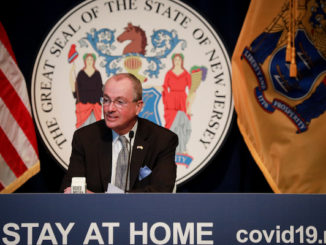
TRENTON, NJ (TIP): New Jersey continues to rank second in the country after New York with at least 151,472 cases and 10,843 deaths attributed to COVID-19 since the outbreak began March 4. On May 21, Officials reported 98 new deaths and 1,304 new positive tests, which is, according to the Governor ‘way down from our peaks.’
With Garden state’s outbreak showing signs of slowing and the economy continuing to suffer, New Jersey Governor Phil Murphy has been slowly lifting restrictions. He unveiled a multi-stage approach to execute a responsible and strategic economic restart to put New Jersey on the road back to recovery from COVID-19. The multi-stage blueprint, guided by the Governor’s Restart and Recovery Commission and complementary Advisory Councils, plans for a methodical and strategic reopening of businesses and activities based on level of disease transmission risk and essential classification.
“Through our combined efforts, we have flattened the curve of COVID-19 cases, and we are well-positioned to continue our restart and recovery process,” said Governor Murphy. “Our multi-stage approach uses science, data, and facts to determine which businesses and activities can reopen according to their risk level and challenges they face to safeguard public health. Additionally, we will be guided by our ability to protect against a new COVID-19 outbreak with expanded testing and contact tracing, and clear social distancing safeguards in place. We are currently in Stage 1, and we will aim to move through each stage quickly, but also judiciously, with the public health of our communities and all New Jerseyans in mind.”
More indoor businesses such barbershops, salons, and gyms in the Garden State may be allowed to reopen, with restrictions, in “a matter of weeks, not months,” Murphy said during an appearance on CNBC’s “Squawk Box.” The Governor said that he’s hopeful schools will be able to physically reopen for the beginning of the next academic year in September. Schools are closed in New Jersey through the end of the year, with students learning remotely.
Earlier on May 18, Murphy signed Executive Order No. 147, allowing certain outdoor activities at recreational businesses, including archery ranges, batting cages, golf driving ranges, horseback riding, shooting ranges, and tennis clubs as well as community gardens to open with required social distancing measures in place. The Order takes effect on Friday, May 22 at 6:00 a.m.
NEW YORK (TIP): Ruchi Shah was 15 years old when she noticed a long line of people outside of a tiny clinic waiting to get treatment for mosquito-transmitted diseases during a family trip to India. After returning to her Ronkonkoma, Long Island home, the driven teenager began working in her family’s garage and a high school classroom to develop an all-natural mosquito repellent.
In March, almost a decade after her dream began, she was named one of 10 winners of Victoria’s Secret PINK’s second annual GRL PWR Project, an initiative that provides funding for young female “leaders, trendsetters and go-getters.” Ruchi’s entry was among those selected from nearly 4,000 video submissions from women across the country ages 18 to 25, winning $25,000 to put toward her business.
Shah’s company, Mosquitoes Be Gone LLC, is a direct descendent of her high school science project, which followed her to Stony Brook, where she majored in biology. In 2015, her junior year as an undergrad, she entered a business plan competition. To her surprise, she won, and a company was born. Her younger sister Nidhi, then a high school senior, became the company’s chief operating officer. Nidhi Shah would herself come to Stony Brook the following year as a psychology major. Ruchi, after earning her BS in Biology, continued her studies at the Renaissance School of Medicine at Stony Brook.
A champion of helping empower others, Ruchi also created an internship program shortly after founding her company that is a collaboration between Stony Brook’s Department of Biology, the College of Business and the WISE Honors program, which offers educational and professional science, technology, engineering and mathematics (STEM) opportunities for undergraduate students.
Gives a call for being ‘vocal for local’ and for self-reliance
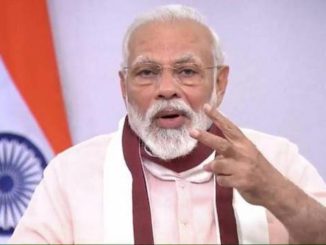
Prime Minister Narendra Modi on Tuesday, May 12, said a new-look Lockdown 4.0 beyond May 17 was in the offing, while announcing an economic stimulus package for ₹20-lakh-crore (estimated at 10% of the GDP), with a clearly defined leap towards economic reforms that will, in his words, lead to Atmanirbhar Bharat, or a self-reliant, resilient India.
This amount includes packages already announced at the beginning of the lockdown incorporating a slew of measures from the RBI and the payouts under the Pradhan Mantri Garib Kalyan Yojana.
Addressing the nation on television, Prime Minister Modi said the whole world was reeling from the crisis engendered by the COVID-19 pandemic, as was India. In this crisis, however, India had had an opportunity to look at systems and institutions that were in existence before the crisis hit and how they crumbled. “We have been hearing for many years that the 21st century will be India’s century, and this crisis is, I believe one that carries a message, that we have to move forward not just to combat the crisis but to prevail,” Mr. Modi said. “That can happen when we are self-reliant.”
He gave the example of India’s ramped-up capacity in producing Personal Protection Equipment (PPE) kits and N-95 masks required by medical personnel and frontline health workers to illustrate his point that India could achieve this.
“When the first case hit us, we didn’t produce either of these things. Now, within weeks we have the capacity to produce 2 lakh of PPE and 2 lakh of N95 masks every day,” Mr. Modi said.
Clarifying that by self-reliance he did not mean insularity and suspicion of the world as in the past but embracing the world in the spirit of Vasudhaiva Kutumbakam (the world is one family).
“Self-reliance in this sense is neither exclusionary nor isolationist, it is for helping the world, with our actions. In the past whenever we have acted it has impacted the world in a positive way — be it solving the Y2K riddle in 1999, or our campaigns against open defecation, tuberculosis and polio,” Mr. Modi said.
He said that the new edifice of this self-reliant India would be based on the five pillars of the economy, infrastructure, demography, technologically driven systems and to strengthen demand and supply chains, with the supply chains being based on local sourcing.
“In the past few days we have seen how local supply chains and shops are the only things that have helped,” he said.
The Prime Minister said the economic package would not be based on incremental changes, but a quantum leap in bold reforms with regard to land, labor, law and liquidity.
“In the last few days we have seen the suffering of our workers, migrant labor, street vendors and daily wagers and farmers. This package will be aimed at them. It will be aimed at the honest taxpayer, at our industry that makes its capital work,” he said.
Mr. Modi signed off on a strong note to buy local, and to be vocal about it. “Local production helped us in this crisis, and when you look at several global brands, they began as local but were marketed and raised to a global level. We have to do the same with our produce. We need to be vocal about local,” he said. “We must and will make India self-reliant,” he said.
A day after PM Modi made the announcement, the Finance Minister Nirmala Sitharaman, on May 13, announced a ₹3 lakh crore collateral free loan scheme for businesses, especially micro, small and medium enterprises (MSMEs), as part of a ₹20-lakh-crore economic stimulus package to deal with the COVID-19 pandemic.
For salaried workers and taxpayers, some relief was provided in the form of an extended deadline for income tax returns for financial year 2019-20, with the due date now pushed to November 30, 2020. The rates of tax deduction at source (TDS) and tax collection at source (TCS) have been cut by 25% for the next year, while statutory provident fund (PF) payments have been reduced from 12% to 10% for both employers and employees for the next three months.
Apart from MSMEs, other stressed business sectors which got attention were non-banking finance companies (NBFCs), power distribution companies, contractors and the real estate industry.
MSMEs will get the bulk of the funding. The ₹3 lakh crore emergency credit line will ensure that 45 lakh units will have access to working capital to resume business activity and safeguard jobs, Ms. Sitharaman said. For two lakh MSMEs which are stressed or considered non-performing assets, the Centre will facilitate provision of ₹20,000 crore as subordinate debt. A ₹50,000 crore equity infusion is also planned, through an MSME fund of funds with a corpus of ₹10,000 crore.
NBFCs, housing finance companies and microfinance institutions — many of which serve the MSME sector — will be supported through a ₹30,000 crore investment scheme fully guaranteed by the Centre, and an expanded partial credit guarantee scheme worth ₹45,000 crore, of which the first 20% of losses will be borne by the Centre.
Power distribution companies, which are facing an unprecedented cash flow crisis, will receive a ₹90,000 crore liquidity injection. Contractors will get a six-month extension from all Central agencies, and also get partial bank guarantees to ease their cash flows. Registered real estate projects will get a six-month extension, with COVID-19 to be treated as a “force majeure” event.
Nirmala Sitharaman with MoS Anurag Thakur outlines stimulus plans at a news conference on Thursday, May 14. Photo Credit/ Shiv Kumar Pushpakar
On May 14, the Finance Minister announced another round of stimulus.
The Centre will help create affordable rental housing for the urban poor and provide relief worth ₹1,500 crore to small businesses through an interest subvention scheme, apart from extending credit for street vendors, farmers, and middle-class housing.
Apart from free food for migrant workers, these are the major highlights of the second tranche of the Atmanirbhar Bharat Abhiyan stimulus package, announced by Finance Minister Nirmala Sitharaman on Thursday, May 14.
Noting that migrant workers and other urban poor face difficulties in finding affordable housing, the Finance Minister said a scheme to build rental housing complexes through public private partnership mode would be launched under the existing Pradhan Mantri Awas Yojana (PMAY) scheme. Both public and private agencies will be incentivized to build rental housing on government and private land, while existing government housing will be converted into rental units.
The credit linked subsidy scheme for lower middle class housing under PMAY will also be extended by one year to March 2021, and is likely to benefit 2.2 lakh more families, said Ms. Sitharaman, expressing the hope that this would also create jobs and stimulate demand for the steel, cement and construction industries.
Street vendors who have been hit hard by the lockdown will be given access to easy credit through a ₹5,000 crore scheme, which will offer ₹10,000 loans for initial working capital.
The scheme will be launched within a month and will benefit 50 lakh vendors, said the Finance Minister.
Small businesses who have taken loans under the MUDRA-Shishu scheme, meant for loans worth ₹50,000 or less, will receive a 2% interest subvention relief for the next year, which will cost the government ₹1,500 crore.
The Centre plans a drive to enroll 2.5 crore farmers who are not yet part of the Kisan Credit Cards scheme, along with fish workers and livestock farmers, and provide them with ₹2 lakh crore worth of concessional credit. NABARD (National Bank for Agriculture and Rural Development) will also extend additional refinance support worth ₹30,000 crore to rural banks for crop loans, Ms. Sitharaman said.
“The only fiscal outlay in today’s announcements are the ₹3,500 crore for food grains to migrants and ₹1,500 crore for the MUDRA loanees. So only ₹5,000 crore is actually coming from government coffers, while the rest are credit-based measures,” said Himanshu, an economist at Jawaharlal Nehru University’s Centre for Economic Studies and Planning.
Terming the government’s approach as “stingy and half-hearted”, he noted that at a time when demand is down, any moves to provide liquidity are not going to help, adding that putting cash in people’s pockets would have been a better approach.
“Banks are parking money with the RBI (Reserve Bank of India), so the problem is not liquidity, but rather the appetite of people to take credit at this time,” he said. “Effectively, the burden of revival has been passed on to the people most affected by the lockdown,” he added.
Meanwhile, Congress spokesman said Govt’s ‘jumla package’ fell way short of what PM Modi had promised.
A senior spokesperson of the party, Anand Sharma, said the country believed that Prime Minister Narendra Modi was serious when he made the “dramatic” announcement of giving 10 per cent of the GDP as a package to revive the economy and support workers and migrant laborers, and that expectations had soared.
“The Finance Minister’s announcement dashed all hopes,” he said.
Congress’ chief spokesperson Randeep Surjewala said Finance Minister Nirmala Sitharaman’s announcements were nothing but a “jumla package”.
Senior party leader Ahmed Patel said: “It is not an economic package. It is an empty package wrapped with speeches since the last three days.”
Congress spokesperson Manish Tewari pointed out that Finance Minister Nirmala Sitharaman articulated the second tranche of the bailout or economic package that this government had conceptualized.
“It is unfortunate that the entire press conference (of Sitharaman) was a classic display of arrogance, ignorance and insensitivity,” he said addressing reporters via a video link.
“We expected that the Finance Minister would come out with what the government is doing to ferry the migrants who are walking on the roads back to their homes safely. But nothing like that happened,” Tewari said.
TRENTON , NJ (TIP): In yet another massive 24-hour surge, New Jersey state officials March 27 announced 1,982 new confirmed cases of the coronavirus and 27 new known deaths in New Jersey, boosting the statewide total to at least 8,825 known cases, including 108 deaths.
That’s the largest one-day total of new deaths the state has reported since the outbreak of the fast-moving virus began.
Governor Phil Murphy said he expects the state’s battle to slow the virus’ spread to continue through next month and beyond.
“I don’t see any scenario where this doesn’t bleed meaningfully into May,” he said.
New Jersey, which has about 9 million residents, ranks second in the United States in total coronavirus cases, after New York.
The Sheen Center for Thought And Culture presents two plays: “When It Happens To You” and “Unheard Voices” in October 2019.
When It Happens To You
“The first time I held my daughter after she was born I made a silent promise to her I would always protect her”
– Tawni O’Dell, playwright, author
“When It Happens to You,”a theatrical memoirby “New York Times” best-selling authorTawni O’Dell (“Back Roads,” “Angels Burning”), will play a seven-week limited engagement, October 2 – November 10, off-Broadway at The Sheen Center for Thought & Culture(18 Bleecker Street, corner of Elizabeth Street, NYC) in the Loreto Theater.
The world-premiere production is directed and co-conceived by two-time Tony-nominee Lynne Taylor-Corbett. The official opening is Sunday, October 13 at 7:30PM.
It doesn’t fade over time. It metastasizes. A sexual assault can last a matter of minutes, but the subsequent disintegration can last a lifetime. This is true for the victim and the family surrounding her. A mother. A brother. Even a pet. Based on her personal experience, Tawni O’Dell’s theatrical memoir, “When It Happens to You,” is about a mother’s struggle to help restore a sense of safety and wholeness to her family after her daughter was the victim of a brutal attack. It’s a journey that continues to this day, nearly five years since she received that middle of the night phone call every parent dreads.
“The first time I held my daughter after she was born I made a silent promise to her I would always protect her,” says Tawni O’Dell. “Then came a night in our future when that promise was shattered. I couldn’t protect her from the man who stalked her through the streets of her beloved New York City, broke into her home, and assaulted her,” says Tawni O’Dell. “During the next few years, her life fell apart and so did my own as I tried to help her deal with the fallout from this awful crime.As a way to help make sense of what we were going through, I did what writers do: I wrote about it. I didn’t know if I would ever share our story with the world, but I’m proud to say my daughter has decided that we should… in the hopes that we might be able to help other victims and their families. Rape touches just about every one of us. More women are sexually assaulted in this country than are affected by heart disease and breast cancer combined. To say it is an epidemic, is not hyperbole.”
InWhen It Happens to You, O’Dell is joined on stage by actors E. Clayton Cornelious, Connor Lawrence, and Kelly Swint. “When It Happens to You”features scenic design by Rob Bissinger and Anita LaScala, lighting design by Daisey Long, costume design by David Woolard.
Associate Producers of “When It Happens to You”are Joseph Parone, Sandra Maxwell Brooksand Kimberly JaJuan.
(front) Kelly Swint and Tawni O’Dell
TAWNI O’DELL
Tawni O’Dell is the “New York Times”bestselling author of six novels including “Back Roads”which was an Oprah Winfrey Book Club selection and was recently made into a film with a screenplay adapted by Tawni. She also wrote and co-produced the popular audio drama, “Rewrites.”Her novels have been published in over 40 countries. Tawni grew up in western Pennsylvania and is a graduate of Northwestern University. To learn more, visit tawniodell.com
(l-r) Connor Lawrence, Kelly Swint (seated), Tawni O’Dell (blazer), E. Clayton Cornelious Photos / Jeremy Daniel.
LISTINGS INFORMATION:“When It Happens to You”plays a seven-week limited engagement, October 2 – November 10 off-Broadway at The Sheen Center for Thought & Culture (18 Bleecker Street, corner of Elizabeth Street, NYC) in the Loreto Theater.
The official opening is Sunday, October 13 at 7:30PM.
For information on the Performance Schedule and Tickets, visit sheencenter.org/shows/happensor The Sheen Center box office, or call 212-925-2812. Regular and Premium tickets are available.
A scene from “Unheard Voices.”
Unheard Voices
“It is so important that we tell our own story. Those who do not remember the past are condemned to repeat it”
Judy Tate, ASP’s Producing Artistic Director
“History tends to record the words of the mighty; it’s often up to artists to imagine the thoughts and feelings of the powerless… The American Slavery Project conjures the realities and the dreams of individual lives that had been lost to the ages.” —Laurel Graeber, New York Times
“Unheard Voices” is a monologue play from the creators of last season’s sold out “Haunted Files” of The American Slavery Project, with traditional West African singing and drumming based on individual burials at the African Burial Ground in Lower Manhattan.
Shane Taylor Photos / Courtesy American Slavery Project
Conceived by Judy Tate, 17 playwrights were commissioned to study 17th and 18th century New York and the burial ground with 419 graves of anonymous men, women, and children who lived in and around the city in those days. There are no extant records of the free and enslaved men, women and children buried there. With “Unheard Voices,” writers have imagined the lives of some of the 30,000 African-descended people and given them voice.
“Some years ago I was meditating at the African Burial Ground. I had been down there when they discovered the graves in the mid-’90’s. I was sitting there, looking at the etchings in the stones, and the only things missing were the names. And I thought, wow, these people were buried without names. They need to be given voices. Who does that? Theater people do. We make people live,” says Judy Tate, American Slavery Project’s Producing Artistic Director. “This was a job for artists, for playwrights. So the American Slavery Project commissioned playwrights to study the burials, imagine the lives, and give voices to the men, women and children that history has made silent. It is so important that we tell our own story. Those who do not remember the past are condemned to repeat it.”
TALK BACK
Following performances of “Unheard Voices,” Judy Tate will moderate talkback discussions with audience members and the company. Supplemental educational materials are available for classroom use through American Slavery Project.
EXHIBITION
Selected pieces from the Gene Alexander Peters Collection of Rare and Historical African American Artifacts will be on display in the theater lobby, including documents of sale, runaway ads, shackles, and other physical artifacts from the era.
The two performances at 11AM are ideal for high school groups. Those
interested in bringing a student group to a performance, contact Elena Castello by email at elenacastello@sheencenter.orgor call 212-219-3132 x1383 between 9AM and 5PM, weekdays.
THE AMERICAN SLAVERY PROJECT
The American Slavery Project is a theatrical response to increasing revisionism in our nation’s discourse about slavery, the Civil War, and Jim Crow. ASP supports African-American playwrights who write about the era, creates conversation in the community, and provides educational workshops for students and adults. To learn more, visit americanslaveryproject.org
The Sheen Center for Thought & Culture is a New York City arts center of the Archdiocese of New York located in NoHo that presents a vibrant mix of theater, film, music, art and talk events. To learn more, visit sheencenter.org
(Mabel Paiswrites on Social Issues, Spirituality, the Arts and Entertainment, and Health & Wellness. She can be reached at mabelep1406@gmail.com)
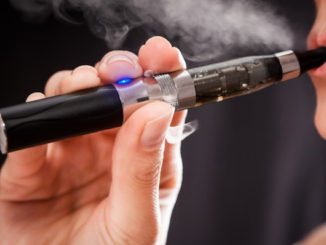
NEW YORK(TIP): New York City Health Department, on October 3, launched a new media campaign to educate teens about the dangers of e-cigarettes. The fast-paced videos alert young people to the dangers of nicotine addiction and vaping products, including the presence of toxic chemicals, like formaldehyde and benzene, which can cause cancer, or heavy metals, like nickel, tin and lead. One pod of a popular e-cigarette, JUUL, can contain as much nicotine as a whole pack of cigarettes. The $300,000 campaign will run on digital platforms—including Instagram, Snapchat, Twitter, YouTube, Hulu, Facebook, and Google search—in English and Spanish through the end of the year.
“E-cigarettes put teens at risk of addiction to nicotine and expose them to dangerous chemicals,” said Health Commissioner Dr. Oxiris Barbot. “We cannot stand by while Big Tobacco hooks a new generation on nicotine through targeted advertising and enticing flavors. We must rid the marketplace of flavored nicotine like bubblegum, mango, mint and menthol, once and for all.”
“As Big Tobacco continues to peddle perfume-coated poison into our communities, and seducing our young people into addiction for profit, we are fighting back. We want to make our city a healthier place to live — for all New Yorkers, and for future generations,” said First Lady Chirlane McCray. “That is why we are having more conversations about vaping, peer pressure, advertising and the science behind addiction. This is a matter of health justice for our families, our loved ones and our children.”
The dangers of e-cigarettes to youth are considerable. Nicotine can change the chemistry of the teen brain, worsening memory and concentration. Studies show that adolescents may be more susceptible to developing nicotine dependence than adults. In New York City, 1 in 6 public high school students (nearly 45,000 students, or 17.3%) and 1 in 15 public middle school students (about 13,000 students, or 6.7%) reported using e-cigarettes in the past month, according to surveys completed in 2017 and 2018, respectively. However, only 2.5% of adults vape in New York City.
“Vaping has reached epidemic levels among young people in New York City,” said City Council Health Committee Chair Mark Levine. “Products from JUUL and other companies are now ubiquitous not just in our high schools but even in middle schools. These companies have sold–and continue to sell–vaping products in an array of enticing flavors like chocolate mint, mango, cherry crush, and watermelon twist. These candy-like flavors are clearly designed to appeal to young people and e-cigarette companies have used savvy social media and digital media campaigns to market their products as glamorous lifestyle choices. As we work to ban these flavors in the city, this digital campaign will target teenagers where they are consuming information online and be an effective countermeasure to educate our city’s youth on the dangers of these products.”
“Teens are particularly at risk of addiction to nicotine and exposure to dangerous chemicals due to the lack of awareness of the dangers of e-cigarettes and vaping products,” said State Senator Gustavo Rivera, Chair of the Senate Health Committee. “I commend the Health Department on this full-fledged media campaign to combat Big Tobacco’s attempts to hook a new generation on nicotine through targeted advertising and enticing flavors. We must continue to raise awareness and educate young people to confront the health issues these products may cause.”
“Despite years of efforts by many well-intentioned folks, many Staten Islanders still smoke cigarettes, and the use of e-cigarettes is alarmingly on the rise among our youth,” said Staten Island Borough President James Oddo. “I am grateful to see this social media campaign to educate teens about the dangers of e-cigarettes. We must do everything we can to raise awareness of the risks of vaping and prevent young folks from becoming addicted in the first place.”
“We applaud the New York City Health Department on its new campaign empowering young people with information on the mounting dangers and unknown health consequences of e-cigarette use,” said Robin Koval, CEO and President of Truth Initiative. “It’s time to hit the stop button on this giant e-cigarette chemistry experiment being conducted on our youth, whose health and well-being is not for sale.”
Michael Seilback, National Assistant Vice President, State Public Policy, American Lung Association said, “Educating our youth about the dangers of vaping is an absolute necessity. High school e-cigarette use increased to 27.5% in 2019, with 5 million middle and high school students now using e-cigarettes. We’re glad to see a strong education campaign from the City of New York; combined with removing flavored tobacco products from our shelves, it will have a drastic effect on fighting the youth e-cigarette epidemic. We also encourage teen tobacco users and their families to visit lung.org for our expanding cessation and education resources.”
“We must be vigilant in keeping up with the tobacco industry’s ever-morphing predatory practices to attract younger customers keep current smokers addicted”, said Deidre Sully, Director of Public Health Solutions’ NYC Smoke-Free program. “This includes their move toward e-cigarettes, the use of kid-friendly flavors, and the historic underhanded practices of pushing menthol to the Black community. We must continue to thwart their efforts to normalize any form of addiction.”
“The rising use of flavored electronic cigarettes and menthol by our city’s youth is an urgent crisis. The American Heart Association strongly supports all efforts to address this public health emergency, and we look forward to the impact made by the Health Department’s media campaign. Coupled with the potential in front of City Council to remove flavored e-cigarettes and menthol tobacco from our retail shelves, the city promises to address the scourge of this industry head on,” said Robin Vitale, VP of Health Strategies, American Heart Association, NYC.
“As parent advocates, we are grateful that the Department of Health is communicating vital information directly to our kids about the very real dangers of vaping flavored e-cigarettes. JUUL and its copycats-Big Tobacco 2.0-used social-marketing and influencers, fruity flavors, and tech-chic design to convince young people that vaping is essential to a cool lifestyle: in fact, the lifestyle these predatory companies were selling our teens was one of long-term nicotine addiction. We hope the DOH’s bilingual digital campaign will counter the dangerous misconceptions that e-cig companies communicated to adolescents, many of whom continue to believe that the heated toxic brew of nicotine, carcinogens, and unknown chemicals they pull deep into their lungs is simply flavored water vapor,” said Meredith Berkman, Co-Founder of Parents Against Vaping E-cigarettes.
The U.S. currently faces an alarming epidemic in reported cases of vaping-related lung injury, with more than 800 cases and 13 deaths. While many of these cases seem to involve vaping cannabis products, no single substance, chemical or type of product has been linked to every case.
Legislation currently under consideration by the New York City Council (Int. 1362, Levine) would ban the sale of flavored e-cigarettes in New York City. A corresponding bill (Int. 1345, Cabrera) would ban the sale of menthol tobacco products, including cigarettes. Commissioner Barbot testified in support of the legislation at a City Council hearing on January 30, 2019. In September, New York State announced an emergency ban on flavored e-cigarettes and nicotine e-liquids, and last week added menthol to its emergency ban on e-cigarettes, citing the flavor’s popularity among teens.
Like e-cigarettes, menthol has long been used to make nicotine products seem less dangerous. Since the 1950s, tobacco companies have sold traditional cigarettes flavored with menthol to mask the harshness of tobacco and make a product that is easier for new users, like youth, to tolerate. In 2018, about half (49%) of New Yorkers who smoked usually smoked menthol cigarettes. Menthol use was also higher among certain demographics: 84% among Black adults who smoke, 60% among Latino adults who smoke, 59% among women who smoke, and 70% among Bronx residents who smoke. In addition, more than half of New York City middle and high school students who smoked used menthol cigarettes. Menthol has been found to increase signs of nicotine dependence among youth and can be associated with less successful quit attempts.
New York City has adopted various laws to prevent and reduce the use of e-cigarettes, including banning the sale of all tobacco products and e-cigarettes to anyone younger than 21 and prohibiting the use of e-cigarettes in all places where smoking is illegal – for example, residential common areas, restaurants, sports arenas and workplaces. In 2018, a mandatory new license for retailers selling e-cigarettes went into effect, along with a cap on the total number of available e-cigarette licenses in each community district.
The Health Department, in partnership with the Department of Education, has developed guidance for principals and other school staff on e-cigarettes and vaping, including new information they can share with families and staff on the recent outbreak of lung injury associated with vaping and educational materials for all New York City public school children and parents:
Tobacco, drug and alcohol use prevention is part of comprehensive health education and is included in the Department of Education’s recommended curriculum to help students learn skills related to decision-making, self-advocacy and peer influences. The Office of Counseling Support Programs, through its Substance Abuse Prevention and Intervention Specialists program, also provides a range of prevention and intervention services in grades K through 12.
Tips for parents:
Learn about e-cigarettes and the different types of products young people are using.
Ask your child what they have heard about vaping and if any of their friends are vaping.
Discuss the current high risks of vaping, given the recent outbreak of vaping-related illnesses.
Answer questions about e-cigarettes while encouraging your children to talk with their friends about the risks of vaping.
Share your concerns and acknowledge how hard it is to resist peer pressure.
Set a positive example by being keeping your home smoke- and vape-free.
For additional resources, including health information, updates about the lung injury outbreak, advice for parents, details about local laws, and guidance for clinicians, visit nyc.gov/health and search “e-cigarettes.”
The author is sanguine that the creation of ministry of Jal Shakti by Prime Minister Narendra Modi will address the problem of inadequate access to safe water, removing the “extreme water stress felt by 600 million people in India”.- Editor
By Sandeep Chakravorty
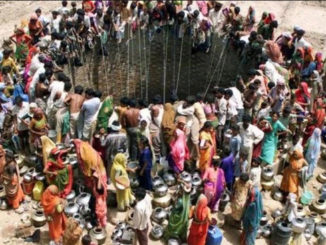
The biggest disruptor in the new government of Prime Minister Narendra Modi for India is by far the creation of a ministry of Jal Shakti. The merger of the ministries of water resources, river development, Ganga rejuvenation, and drinking water and sanitation brings about a much-needed integrated approach for India’s water issues. Water will be the limiting factor to India’s growth. According to a 2018 NITI Aayog report, 600 million Indians face high to extreme water stress and about 200,000 people die every year because of inadequate access to safe water. By 2030, the country’s water demand is projected to be twice the available supply, implying severe water scarcity for millions and an eventual 6% loss in the country’s gross domestic product (GDP). However, if the Jal Shakti ministry, the one ministry on which the future depends, achieves its objectives, all that will change.
Addressing an election rally before the 2019 Lok Sabha polls, Prime Minister Modi said, “After constructing toilets and giving dignity to women, I will focus my next term on ensuring clean drinking water.” The creation of the Jal Shakti ministry and the adoption of an integrated approach to water issues formed part of the Bharatiya Janata Party’s vision. Gajendra Singh Shekhawat, the minister of Jal Shakti, has hit the ground running, adopting an inclusive approach by spelling out his vision of partnership with states. In his interview with India Today on 8 June, Shekhawat saw India’s water challenge as an opportunity to involve stakeholders. He is keen on the use of India’s traditional water conservation knowledge whose neglect has brought us to the precipice of a water disaster. He also promised “nirmal” or clean Ganga in two years.
“Nal se Jal” (tap water) for everyone by 2024 is a delayed yet essential goal for India to break into the middle-income league and become a global economic power. It is not difficult to imagine how much economic activity this goal-setting will engender, potentially contributing billions to India’s GDP through the construction/rehabilitation of reservoirs, their linking, the laying of pipes and construction of tanks, among other civil works. Its impact on the nation’s health will also be transcendental, as most diseases in India are water-borne. Nal se Jal is also a natural companion of Swachh Bharat and the National Toilet Mission, which cannot be sustained without water availability in every household. The National Democratic Alliance government has achieved ambitious goals before, be it the 72 million Ujjwala connections, taking electricity to every village and 20 million households, constructing 92 million toilets in less than five years, and the opening of more than 300 million Jan Dhan accounts. Making piped water reach every household is daunting, but the ability to achieve it is there. It is absolutely “Mumkin hai” (possible). If not now, when?
Only 4% of the available water in India is used for drinking, whereas 80% is used for irrigation with rampant inefficiencies. About 4,000 liters of water is used in Punjab to produce 1 kg of rice, though 300 liters is sufficient. The first charge of India’s water must go to drinking water, followed by crop and then industrial production. Furthermore, placing water on top of the conservation pyramid automatically leads to conservation of soil and forests, and forests make water. The mantra of water conservation is age-old and simple: hold it where it falls, in pits, wells, trenches, reservoirs or ponds. This prevents run-off and soil erosion, recharges aquifers and replenishes sub-soil moisture, critical for plant growth and survival. I speak from my experience in the early 1990s when I spent five years of my youth in rural India espousing soil and water conservation.
Living in New York, I marvel at the city’s water supply system, which provides the world’s best potable water. Even restaurants serve tap water. The city has a network of conservation watersheds, reservoirs and aqueducts with almost 95% water supplied by gravity, conserving energy. Institutional frameworks exist for every aspect, be it conservation of the watershed, reservoirs, distribution and pricing. Watershed conservation is the central principle for providing drinking water. Even corporate water bottlers such as Poland advertise the watersheds they protect to promote their products. It is not a pipedream to expect such a reality in India.
Many states have already undertaken path-breaking work. Telangana’s Bhagiratha project is worth emulating across India. Maharashtra’s Jalyukt Shivar Abhiyan has undertaken water conservation work in 16,522 villages. Unfortunately, rainfall has been poor this year, so the impact of the work is not felt. However, this is bound to change in the coming years when real water harvesting kicks in.
There is also a great synergy between bringing water to all households and the socio-cultural-spiritual movements gaining ground in India around saving the rivers, spearheaded by people such as waterman Rajinder Singh and Jaggi Vasudev. As Vasudev recently said, “Jal Shakti is a landmark step for revitalization and conservation of our rivers and water bodies.” They are opinion makers and have far reaching influence on people. The merger of their objectives with national priorities augurs well for India. On the lines of the International Solar Alliance that India pioneered, we may lead the world on water conservation from Jal Shakti to Bharat Shakti to Vishwa Shakti.
(The author is an Indian career diplomat, presently posted as Consul General of India in New York. He can be reached at cg.newyork@mea.gov.in)
This article originally appeared in Live Mint and has been reprinted, with some additions, with the permission of the author.
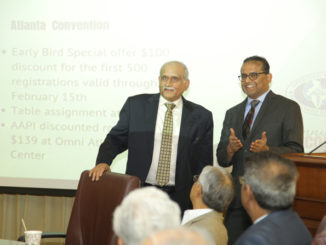
ATLANTA (TIP): Over 2,000 delegates from across the nation are attending the 37th annual convention organized by The American Association of Physicians of Indian Origin (AAPI) from July 3rd to July 7th, 2019 at the fabulous and world-famous Omni Atlanta at CNN Center and Georgia World Congress Center, Atlanta, Georgia.
Dr. Naresh Parikh, President of AAPI, says, “The 37th Annual AAPI Convention & Scientific Assembly offers an intimate setting that facilitate our ability to convey cutting-edge research and CME, promote personal, professional and business relationships, and display ethnic items. The convention is filled with cutting-edge CMEs, product theaters, women’s forum, great entertainment from Bollywood and local talent and lot more.”
It’s a well-known fact that physicians of Indian origin excel in their respective areas of work and continue to play key roles in patient care, administration, academics and medical research. In order to cater to its diversity of medical specialties, AAPI continues to use a multi-disciplinary conference format.
Shankar Mahadevan, the popular award-winning Bollywood playback singer is all set to take the delegates by storm during the Convention. Shankar Mahadevan and his troupe will perform live at the much anticipated AAPI’s annual convention enthralling over 2,000 delegates from across the nation, who are expected to attend the Convention.
Golf With Cricket Star Kapil Dev is another major attraction. Kapil Dev, the popular cricket star who won India the World Cup will be the keynote speaker at the convention. In addition, he will play Gold with AAPI members and will sign a coffee table book on Sikhism – ‘WE THE SIKHS’, by the legendary cricket star.
Preity Zinta, the famous Bollywood actor will be the keynote speaker at the much-anticipated Women’s Forum, which has come to be a popular agenda item at every convention.
In addition, there will be, for the first time a Youth Public Speaking Competition and the much anticipated and appreciated “AAPI Has Got Talent” where the AAPI members showcase their talents before their colleagues.
The Organizing committeeContinuing Medical Education and non-CME seminars by experts in their fields will provide comprehensive and current reviews and guidelines for the diagnosis and treatment of various disease states to reduce morbidity and mortality and achieve cost effective quality care outcomes. At the end of the activity, it is expected that attendees will gain an understanding of the causation, diagnosis and the best clinical practices for the management of the diverse group of diseases discussed during this program.
Dr. Hemant Yagnick, Academic Chair for the Convention, says, “Medical specialty representation includes pediatrics, psychiatry, anesthesiology/pain management, cardiology, family medicine, obstetrics and gynecology, oncology, gastroenterology pathology, endocrinology, nephrology, rheumatology along with many other fields.”
The annual convention this year is being organized by AAPI’s Atlanta Chapter, headed by Dr. Sreeni Gangasani. “The convention team is working incredibly hard to provide a delightful 4 days of events packed with educational CME credits, world-class entertainment, leadership seminars, networking opportunities, exhibits, and more,” Dr. Gangasani added. “This meeting offers a rich educational program featuring the latest scientific research and advances in clinical practice. In addition, physicians and healthcare professionals from across the country will convene to develop health policy agendas and encourage legislative priorities for the upcoming year.”
As though responding to the growing need: “Physician, heal thyself,” especially when there are growing signs of burn out among physicians, AAPI is focusing on themes such as how to take care of self and find satisfaction and happiness in the challenging situations they are in, while serving hundreds of patients everyday of their dedicated and noble profession.
“Many of the physicians who will attend this convention have excelled in different specialties and subspecialties and occupy high positions as faculty members of medical schools, heads of departments, and executives of hospital staff. The AAPI Convention offers an opportunity to meet directly with these physicians who are leaders in their fields and play an integral part in the decision-making process regarding new products and services,” Dr. Suresh Reddy, President-Elect of AAPI, added.
Dr. Raghu Lolabhattu, Co-Chair Convention and Convention Alumni Chair, said, “AAPI Convention is just around the corner, almost less than a month. As a Co-chair of the Convention, on behalf of our President Dr. Naresh Parikh, Convention Chair Dr. Sreeni Gangasani and our hard-working Convention team I would like to invite each and every one to the great gala. Our team is working relentlessly with a great enthusiasm to make this event a most successful one and I assure that you will have great time and would go home with wonderful memories.
The 37th annual AAPI Convention, while providing physicians of Indian origin an opportunity to come together in an atmosphere of collegiality, it will enable them to retrace and appreciate their common roots, culture and the bond that unites them as members of this large professional community. Giving them a platform to celebrate their accomplishments, the annual convention to be attended by nearly 2,000 physicians of Indian origin, it will also provide a forum to renew their professional commitment through continuing medical educations activities.
The annual convention this year is being organized by AAPI’s Atlanta Chapter. In addition to offering over 12 hours of cutting-edge CMEs to the physicians, CEOs Forum, fabulous entertainment, and women’s leadership forum. The convention will be addressed by senior world leaders, including US Senators, Presidential candidates, Nobel Laureates, Governors, Congressmen, and celebrities from the Hollywood and Bollywood world.
“Having Sadhguru at the Convention with his unique ability to make the ancient yogic sciences relevant to contemporary minds, and act as a bridge to the deeper dimensions of life, will make the convention and the delegates from across the nation richer, in so many ways,” said Dr. Anupama Gorimukala, Secretary of AAPI. “His approach does not ascribe to any belief system but offers methods for self-transformation that are both proven and powerful,” Dr. Anupama Gorimukala, Secretary of AAPI, added.
The convention venue is one of the best ever one has seen with tons of local attractions. Several sightseeing places like CNN tower, Coca-Cola museum, Mercedes Benz sports Arena and many other attractions are within five minutes’ walk.
“The 2019 AAPI Annual Convention & Scientific Assembly offers an exciting venue to interact with leading physicians, health professionals, academicians, and scientists of Indian origin,” says Dr. Sudhakar Jonnalagadda, Vice President of AAPI. “Physicians and healthcare professionals from across the country will convene and participate in the scholarly exchange of medical advances, to develop health policy agendas, and to encourage legislative priorities in the coming year.”
Dr. Manoj Shah, Convention Treasurer says, Guests will be treated to true Southern hospitality in one of the country’s fastest growing cities—bustling with restaurants, night life, shopping and more. We look forward to welcoming you and your family and thank you for your support in making this convention a great success.”
AAPI organization is a dynamic body, spearheading legislative agendas and influencing the advancement of medical care not only in the US, but internationally. AAPI’s impact is seen in areas such as advocating for the increasing physician work force, participating in national health initiatives such as obesity prevention, and investing in global health education. Whether practicing in medically underserved areas such as inner cities and rural communities or participating in cutting edge research & academics, Indian physicians form an impressive group.
Almost 10%-12% of medical students entering US schools are of Indian origin. Headquartered in Oak Brook, Illinois, AAPI represents the interests of over nearly 100,000 physicians, medical students and residents of Indian heritage in the United States. It is the largest ethnic medical organization in the nation.
“The 2019 AAPI Annual Convention & Scientific Assembly offers an exciting venue to interact with leading physicians, health professionals, academicians, and scientists of Indian origin. Physicians and healthcare professionals from across the country will convene and participate in the scholarly exchange of medical advances, to develop health policy agendas, and to encourage legislative priorities in the coming year. We look forward to seeing you in Atlanta, GA!” says Dr. Naresh Parekh. For more details and registration for the convention, please visit: www.aapiconvention.org and www.aapiusa.org
NEW YORK CITY (TIP): In honor of International Yoga Day 2019, HAPPY LIFE YOGA, conceptualized by Filmmaker, Restaurateur, and Ayurveda Speaker, will be launching on June 29th. The curtain raiser event for this educational platform will be inaugurated by Deputy Consul General of India in New York, Shatrughna Sinha. . Manhattan Borough President Gale Brewer will be the chief guest. Padma Shri Dr. Sudhir M. Parikh will be attending as a guest of honor, and many VIPs will be in attendance as well.
This intriguing, interactive, and entertaining experience will include a panel discussion on topics such as how to use Ayurveda in every day life, the place of Western Medicine in holistic wellness, and the benefits of Yoga. Speakers include Dr. Bhupendra Patel, M.D., Ayurvedic Dr. Bhaswati Bhattacharya, and Long Island yoga teacher Ranju Narang.
HAPPY LIFE YOGA, created by Tirlok Malik, is the yoga of life. This educational platform offers a unique holistic approach to health and happiness using tools from Ayurveda, Indian Philosophy, and Yoga to help better manage modern day challenges such as work, finances, relationships, family and other social pressures and ultimately guides you towards a happier life.
Tirlok Malik believes India has always been a spiritual teacher of the world and that Indian Philosophy provides the blueprint of how to live a happy life. Indian Philosophy teaches that we must practice balance in all four aims of human life: Artha, Dharma, Kama and Moksha. These philosophical concepts can be applied to all cultures.
An asana yoga practice and healthy eating alone will not make us healthy. Kama, the world of all our desires, can be a double edge sword and we must understand and manage this part of the four aims of human life to be healthier and happier. According to Indian Philosophy we can have it all, but as Tirlok Malik says “Fix your Kama, and be happier!”
Indu Jaiswal of The Indian American Forum, one of the oldest organizations of Indian Americans on Long Island, and Prof. Indrajit Saluja publisher and editor of the Indian Panorama, an Indian American Newspaper in New York & Dallas sponsored the event and are committed to spreading the message of HAPPY LIFE YOGA.
Tirlok Malik created HAPPY LIFE YOGA as well as Ayurveda Cafe in Manhattan. He is a happy lifestyle speaker and a New York Emmy Nominated Filmmaker. He is a proud Upper Westsider. He has promoted Ayurveda for the last 20 years and now he and the team bring the gifts of India through HAPPY LIFE YOGA.
HAPPY LIFE YOGA will provide workshops, excursions, events and more. A unique mix of tools and exercises are used in our workshops to apply these philosophical concepts in every day life. www.happylifeyoga.org
WASHINGTON (TIP): In a setback for the Trump administration, the Supreme Court on Thursday, June 27, rejected its stated reason for adding a question on citizenship to the census, leaving in doubt whether the question would appear on the census forms sent to every household in the nation next year., says New York Times.
Chief Justice John G. Roberts Jr., writing for the majority, said the explanation offered by the Trump administration for adding the question “appears to have been contrived.” But he left open the possibility that it could provide an adequate answer.
Executive branch officials must “offer genuine justifications for important decisions, reasons that can be scrutinized by courts and the interested public,” the chief justice wrote. “Accepting contrived reasons would defeat the purpose of the enterprise. If judicial review is to be more than an empty ritual, it must demand something better than the explanation offered for the action taken in this case.”
The practical impact of the decision was not immediately clear. While the question is barred for now, it is at least possible that the administration will be able to offer adequate justifications for it. But time is short, as the census forms must be printed soon.
President Trump commented on Twitter, writing that he had “asked the lawyers if they can delay the Census, no matter how long, until the United States Supreme Court is given additional information from which it can make a final and decisive decision on this very critical matter.”
“We do not hold that the agency decision here was substantively invalid,” the chief justice wrote. “But agencies must pursue their goals reasonably. Reasoned decision-making under the Administrative Procedure Act calls for an explanation for agency action. What was provided here was more of a distraction.”
Justices Ruth Bader Ginsburg, Stephen G. Breyer, Sonia Sotomayor and Elena Kagan joined the key part of the chief justice’s opinion.
In dissent, Justice Clarence Thomas said the majority had done something extraordinary. “For the first time ever,” he wrote, “the court invalidates an agency action solely because it questions the sincerity of the agency’s otherwise adequate rationale.”
Justices Neil M. Gorsuch and Brett M. Kavanaugh joined Justice Thomas’s partial dissent.
Justice Samuel A. Alito Jr. filed his own partial dissent.
“To put the point bluntly,” he wrote, “the federal judiciary has no authority to stick its nose into the question whether it is good policy to include a citizenship question on the census or whether the reasons given by Secretary Ross for that decision were his only reasons or his real reasons.”
Government experts predicted that asking the question would cause many immigrants to refuse to participate in the census, leading to an undercount of about 6.5 million people. That could reduce Democratic representation when congressional districts are allocated in 2021 and affect how hundreds of billions of dollars in federal spending are distributed.
Long Island Advocates React to Supreme Court Decision on the Citizenship Question
MELVILLE,NY . Government and nonprofit leaders gathered at the Health & Welfare Council of Long Island’s office , June 27, in response to the Supreme Court ruling that the explanation for inclusion of the Census question was inadequate.
The decision will now be handed back down to the lower courts siting sufficient reason for concern about why the Department of Commerce wanted to add the question, and insufficient explanation.
“While a partial and temporary victory- this is still a win. In these times in which we are living where there is assault after assault on our neighbors- every win- every moment, when humanity is reaffirmed, must be recognized.” Said Rebecca Sanin, President/CEO of the Health & Welfare Council of Long Island.
“I welcome the news that all communities on Long Island will receive their fair share from the Federal Government and we must make sure that everyone is counted on Long Island.” Said New York State Senator Monica Martinez.
“This is a significant win for making sure every person in Nassau County can be counted,” said Nassau County Comptroller Jack Schnirman. “We must keep up the pressure on Washington so that we have a fair and accurate count and get the resources our communities deserve. The stakes are too high for the entire region.”
There are still significant challenges to ensuring that Long Island has a complete and accurate count in the 2020 Census. From anti-immigrant rhetoric to raids, to suburban sprawl, there is a lot to overcome less than a year out from the Census. To address these significant challenges, Nassau & Suffolk Complete Count Committees have been convening community leaders across the Island to understand the hurdles ahead, pool resources and knowledge bases, and devise strategies we can utilize to achieve a Complete Count in 2020.
“Let us all come together today and be ambassadors of the Census,” said, Rebecca Sanin, President/CEO of the Health & Welfare Council of Long Island. “Let us use this momentary victory as a call to action- to start speaking to everyone we encounter about the need to be counted, about how every human counts, and let’s create a sustainable, inclusive and hopeful future for all Long Islanders.”
Census Facts:
An undercount of more than .6 percent, could result in New York losing representation in Washington.
800 billion dollars is allocated based on Census data in this country.
Suffolk & Nassau County are the fourth and fifth hardest to count counties in all of New York State.
Over 800,000 people on Long Island live in hard to count areas.
$73 billion is allocated from 55 spending programs based on the Census-including Medicaid, school funding, Headstart, WIC, school breakfast, Title 1 and special education.
BIG WIN! The Citizenship Question will NOT be added to the 2020 Census: SALDEF
WASHINGTON: The Supreme Court ruled that the Citizenship Question will not be added to the census, “‘saying that the administration’s explanation for adding it is insufficient’”. The unprecedented citizenship question has now been put on halt until further notice. While the U.S. Census Bureau is bound by Title 13 of the United States Code, prohibiting the information on the census from being disclosed. Inclusion of a citizenship question in the future has the potential to spark fear in immigrant communities.
SALDEF Executive Director Kiran Kaur Gill said, “we are thrilled by the win today at the Supreme court and hope that all will now feel safe in participating in the Census. I encourage all individuals to take part in the 2020 Census to ensure a complete representation of the Sikh community and all communities.”
The reinstatement of the citizenship question was introduced by Commerce Secretary Wilbur Ross in March 2018. Since then, Ross has been accused of trying to depress minority responses for political purposes. The citizen question sparked fear by immigrant groups of targeted harassment including deportation, that would have resulted in an undercount of the actual number of people living in a community. The count is used to allocate federal funding for communities, and resources such as food stamps, public schooling, and assistance programs. Giving a distorted count to the Census Bureau may leave immigrant communities with insufficient federal resources.
The Asian Americans Advancing Justice group recognizes that along with federal funding, the Census data allocates the number of representatives communities will receive. The data provides communities an opportunity to “engage their elected officials in advocating for support and solutions for their community’s needs.” With distorted Census data, the voices of and concerns of immigrant communities will be suppressed. Lastly, the census data is used for redistricting and not giving immigrant communities substantial political power due to inaccurate Census data may falsify the outcomes of state-level elections.
Meanwhile, Trump is asking his lawyers whether Census can be delayed for the Citizenship question.
Washington Post says President Trump said Thursday, June 27, that he is seeking to delay the constitutionally mandated census to give administration officials time to come up with a better explanation for why it should include a citizenship question.
Trump’s announcement, in tweets sent from Japan, came hours after the Supreme Court put on hold his administration’s plan to add a citizenship question to the 2020 Census, saying it had provided a “contrived” reason for wanting the information. He said census would be ‘meaningless’ without citizenship question.
NEW YORK (TIP): Consulate General of India in collaboration with Friends of Yoga celebrated the 5th International Day of Yoga on June 23rd, 2019 at Fair Bridge Hotel & Conference Center, 195 Davidson Avenue, Somerset, NJ 08873. Over 2000 Yoga enthusiasts joined this grand celebration. World’s oldest Yoga instructor and practitioner Padma Shri Ms. Tao Porchon Lynch taught some Yoga Asanas at the event. Mr. Vikas Khanna, celebrity chef and film maker spoke at the event. Motivational Speaker Mr. Gaur Gopal Das also spoke to the audience about the importance of Yoga. Assemblyman Mr. Daniel R. Bensen, New Jersey, Mr. Philip Kramer, Mayor, Franklin Township, New Jersey, Mr. Rajiv Prasad, Councilman At-Large, Franklin Township, New Jersey and Ms. Crystal Pruitt, Council woman At-Large, Franklin Township, New Jersey also attended the IDY 2019 celebration.
Yoga enthusiasts doing Yoga
Welcoming the participants to the Yoga Day celebrations, Mr. Sandeep Chakravorty, Consul General of India in New York, said that ‘Yoga for all and all for Yoga’ should be our motto. He highlighted worldwide momentum that Yoga is gathering in combating lifestyle related diseases, he noted that Yoga is a timeless gift from India to humanity. A guided yoga session based on the Common Yoga Protocol was performed by the participants.
The session was led by Dr. Dayashankar Vidyalankar, Teacher of Indian Culture at the Consulate General of India, New York. Various other yoga sessions were conducted by professionally trained Yoga teachers. The Consulate had organized several curtain-raiser events in collaboration with yoga organizations resulting in a record turnout for the Yoga Day celebrations. In addition to the Consulate’s flagship event, Yoga enthusiasts gathered to celebrate the 5th International Day of Yoga in Pittsburgh, Westchester and Time Square, New York. The Times Square’s Summer Solstice Yoga event saw a gathering of over 11,000 participants.
Representatives of participating organizations and guest speakers with Consul General Sandeep Chakravorty, Deputy Consul General Shatrughna Sinha who coordinated the celebrations, and the Consulate staff who all made it a memorable event. Seen in chair is Padma Shri Ms. Tao Porchon Lynch
International Day of Yoga 2019 successfully managed to create a broad-based awareness about the benefits of yoga to all sections of the society and also reintroduced the ancient mind -body practice and breathing techniques to a technology driven, fast-paced world. The celebration in Somerset, NJ offered a wonderful and enriching experience thanks to the energetic performance by yoga schools and associations. The IDY event also featured several cultural performances by talented local artists and partner organizations.
More than 30 organizations participated with the Consulate in the celebration of International Day of Yoga 2019. More than 15,000 people participated in the various Yoga day Celebration this year.
Yoga is an ancient Indian discipline, which has evolved over thousands of years for physical and spiritual wellbeing of the humankind. The word ‘Yoga’ derived from Sanskrit, means to join or to unite, symbolizing the union of body and consciousness. It has gained worldwide popularity due to its immense health benefits. It not only helps in improving physical health but also brings about inner peace by reducing stress and anxiety. Medical research in recent years has uncovered many physical and mental benefits that Yoga offers, corroborating the experience of millions of practitioners.
The United Nations General Assembly (UNGA) on December 11th, 2014 declared June 21st as the International Day of Yoga. The date of June 21st was chosen since this is the summer solstice which is the longest day of the year in the northern hemisphere and has special significance in many parts of the world.
RANCHI (TIP): Prime Minister Narendera Modi performed yoga along with around 30,000 people in Ranchi on Friday, June 2, on the occasion of the fifth International Yoga Day.
The session continued for around 45 minutes at the Prabhat Tara ground here. The Prime Minister first addressed the participants before the session began.
“Yoga has always been associated with peace and harmony. I thank people for adopting Yoga. I urge people to embrace it,” Modi said in his address prior to the session.
He also spoke in English for a few minutes to reach out to the global audience.
Saying “Yoga is beyond caste, religion, region and any boundaries”, the Prime Minister added “there is a solution to alcoholism and diabetes in Yoga”.
“This year, Yoga’s theme is Heart Care. There has been a manifold increase in the heart-related problems in the country, particularly among the young generation. Yoga should be adopted as preventive measure,” the Prime Minister added.
The session was conducted by M. Baswa Reddy, director of the New Delhi-based Morarji Desai National Yoga Institute.
Different forms of yoga postures, including how to control blood pressure and strike metal peace, were performed.
After the session was over, the Prime Minister spent time with the participants, where children and youth even clicked selfies and shook hands with Modi.
“IT was a great moment for us to see our prime Minister from nearby,” said a participant.
Echoing her view, another woman said: “I could not shake hand with the Prime Minister but his aura was enough.” Modi was accompanied by Jharkhand Governor Draupdi MUrmu, Chief Minister Raghubar Das, Ayush Minister Sripad Naik, state Health Minister Ramchandra Kesari, along with other senior government officials.
International Yoga Day is celebrated annually since its inception by Modi in 2015.
At the meeting of the Governing Council of the NITI Aayog , middle of June, , Prime Minister Narendra Modi announced the target of a $5 trillion economy for India by 2024. It is necessary to think big when seeking to make a difference, for transformation does not come from modest plans. Hopefully, the Prime Minister will also use the drive to growth to place India’s official statistics on a firmer footing, so that we can be sure that economic policymaking is based on reality. However, getting the numbers right will not ideally end the task. What this task is may be illustrated by a question that was asked some years ago when a high-speed expressway connecting the polar extremities of one of our States had been proposed. A wit had asked what we would hope to find once we have reached our destination.
A similar question can be asked of plans for growing the economy. What would we like to see in the proposed $5 trillion economy? Moreover, unlike in the case of an expressway, which can always be built by simply borrowing money and ideas from the global market, a quantum leap in the size of the economy is not so easily achieved. It will require design, funding and governance.
Without investment
The importance of funding, and to an equal extent design, may be seen in the failure of the quite sensible aspiration, ‘Make in India’. Though technically applicable to every sector, it was clearly focused on manufacturing. Articulated very early on in Mr. Modi’s first term (2014-19), and accorded a certain prestige in the pronouncements that followed, it played out as a damn squib. One of the reasons for this was the absence of commensurate investment outlay. To raise the share of manufacturing in the economy from its present 16% to 25%, an ambition declared by both the United Progressive Alliance and National Democratic Alliance governments, requires a scaling up of investment. This did not come about.
Whether this was due to the corporate sector, Mr. Modi’s chosen vehicle, not having the wherewithal or due to it not being convinced of the plan is beside the point. Investment there must be and if the private sector is, for whatever reason, not coming forward to invest, then the government must. This is no more than accounting, but Mr. Modi’s government seems to be unfavorable to this diagnosis, perhaps on ideological grounds. Remember ‘minimum government’?
A small digression should clarify matters. The first attempt to make in India was in the 1940s. Finance Minister Shanmukham Chetty’s first budget speech had identified increasing “internal production” as the economic priority. And this was achieved quite soon. Along with the quickening of the economy as a whole, the share of manufacturing had risen, the mocking epithet ‘Hindu rate of growth’ notwithstanding. This had not emerged as part of the moral victory of an oppressed people. The reason was that it had resulted from a surge in investment, led by the government. That resources could have been mobilized on such a scale in so short a time in an economy devastated by colonial rule is testimony to the availability of the three ingredients — design, resources and governance — necessary when contemplating a move to the next level, which is what aiming at a $5 trillion economy amounts to.
The wish list
While lauding the efforts of leaders of early independent India, however, we would do well to remember their follies. Principal among them was the failure to articulate, possibly even adequately imagine, the contents of the economy that was being raced towards. If this is repeated now, a moment of triumphalism different in character but nevertheless there, it would amount to not having learned the lessons of history. Something missing from “internal production” and ‘Make in India’ is the difference these intentions would make to the lives of Indians. At least in the 1940s, the priority was to get the economy moving in the first place. This is no longer the issue. Today the economy must be evaluated in terms of how much it contributes to the ease of our living. So what would be some of the characteristics of a valuable economy?
First, Indians should feel empowered by the economy. We know that currently they do not feel so. India is placed very low in the United Nations’ World Happiness Report. Happiness, best understood as a sense of well-being, is directly related to empowerment, or being able to undertake the functioning’s we value. This is, in the first instance, related to being educated and experiencing good health. We are in India facing an education sector that is broken down and the majority are battling with almost non-existent public health infrastructure. The private sector has some worthy initiatives in these areas but they await an effective public presence on a gigantic scale. So, the first attribute of the valuable economy would be access to quality health and education for all.
The second attribute of a valuable economy would be equality of opportunity. For over three decades now income inequality has been rising in India. According to some measures, India is today more unequal than China, itself a society widely perceived as highly unequal. Now some part of inequality of opportunity is related to unequal distribution of income but a part of it is not. Gender inequality manifested as women having less opportunity in life is not going to go away with a re-distribution of income along class lines or across social groupings. India is a serious outlier in this regard, and becoming richer as a society may do little to change the status quo. Shockingly, a sex ratio, already unfavorable to women, has shown a secular worsening since 1947. Inequality in India can only be ended by equalizing capabilities across individuals. Concerted public action via education is the means to this outcome. Income transfers, pushed relentlessly by policy entrepreneurs, evade the issue altogether.
Conserving nature
Finally, an economy, whatever its size, cannot be meaningfully evaluated independently of the extent of presence in it of natural capital. Till now, by referring to the imperative for growth, to eradicate poverty, any effort to conserve nature has not just been ignored but treated with derision, by both right and left. This is no longer a credible political stance. Two-thirds of the world’s most polluted cities are in India, when we accept less than a fifth of its population. Air pollution shortens lives and lowers productivity, reducing the capacity to earn a living when alive. The poor are the most affected as they cannot afford to live in gated communities that somehow manage to commandeer scarce natural resources. Some part of environmental depletion in India is due to the pursuit of unbridled growth.
This implies that any improvement in the life of the majority would require a re-alignment of the growth process so that it is less damaging. This would very likely require that we have slower growth but the process can be configured to channel more of it towards poorer groups. We may end up in a situation of less tangible goods in the aggregate than otherwise but one in which more people are happier than in the past. Such an economy is more valuable.
(The author is Professor of Ashoka University, Sonipat and Senior Fellow of the Indian Institute of Management, Kozhikode)
WASHINGTON (TIP): An amendment introduced by Indian American Rep. Ami Bera (D-CA), which increases funding to help partner nations prevent the proliferation of biological weapons, and detect and respond to deadly diseases, passed June 18 in the House of Representatives with strong bipartisan support (381-46). The amendment would restore a $15 million cut to the Cooperative Biological Engagement Program and adds an additional $5 million funding to this vital program.
“Recent news of Ebola spreading from the Democratic Republic of Congo to Uganda is a reminder of how easy it is for deadly diseases to spread quickly,” said Rep. Bera, M.D. “This amendment strengthens the ability of partner countries to detect and respond to the spread of dangerous diseases before they become a threat to the United States.”
The amendment was included in the Labor, Health and Human Services, Education, Defense, State, Foreign Operations, and Energy and Water Development Appropriations Act, which passed the House.
As a doctor, Congressman Bera has always been a strong supporter of American leadership in global health. In March 2019, Rep. Bera led a bipartisan letter urging Congress to sustain global health security funding. In May 2018, Rep. Bera successfully urged the Administration to halt short-sighted Ebola funding cuts. He also led efforts by the Foreign Affairs Committee to address the global Zika epidemic and has pushed Congress to do more to stop future outbreaks.
Rep. Bera is Chairman of the House Foreign Affairs Oversight and Investigations Subcommittee.
UNITED NATIONS (TIP): 5th International Day of Yoga celebrations kicked off at the United Nations, with a laser lighting display of Yoga at the iconic United Nations building, June 19.
After the overwhelming success of last few years’ International Day of Yoga celebrations, Permanent Mission of India to the United Nations made it larger in the fifth edition. Instead of a single day celebration, this time it is a larger than life event.
Ambassador Syed Akbaruddin, India’s Permanent Representative to the UN in New York said: “ UN has a special place in the remarkable growth of Yoga in our own lifetimes. It was here that the ancient practice of Yoga was transformed into an annual global observance”.
While addressing the 69th session of UNGA on Septembe2014, Prime Minister Narendra Modi urged the world community to adopt an International Day of Yoga. On December 11, 2014, the 193 members UNGA approved the proposal by consensus to declare 21 June as “International Day of Yoga.” In its resolution, the UNGA recognized that Yoga provides a holistic approach to health and well-being and wider dissemination of information about the benefits of practicing Yoga for the health of the world population. Yoga also brings harmony in all walks of life and thus, is known for disease prevention, health promotion and management of many lifestyle-related disorders. Keeping these in mind, the Government of India has adopted IDY Logos and a Common Yoga Protocol, a booklet intended to give a brief overview about Yoga and Yogic practices in order to orient the readers towards comprehensive health for an individual and the community.
From its maiden year IDY became hugely popular around the globe. Yoga Day also follows different themes each year. The theme for this year’s World Yoga Day is ‘Yoga for Heart’ which highlights how beneficial yoga is towards reducing cardiovascular risk.
On the occasion of the 5th International Day of Yoga, the Permanent Mission of India to the United Nations in New York has organized five events at the United Nations Headquarters in New York:
EVENT ONE
Projection of Yoga Postures
On North Facade of UN Headquarters Building
Wednesday 19 June 2019
EVENT TWO
Yoga with the Gurus
Thursday 20 June 2019
North Lawn, United Nations Headquarters
The outdoor event at North Lawn of United Nations had a Yoga Session led by Yoga Gurus Swami Paramananda of (Sivananda), Kevin Tobar and his associates from Bhakti Cente and Sunaina Rekhi from India. In addition, there was musical and dance performances by” Indian Raga”. Amina J. Mohammed, Deputy Secretary-General was the Chief Guest.
EVENT THREE
Panel Discussion
Theme: Yoga for Climate Action
Friday 21 June 2019
ECOSOC Chamber, United Nations Headquarters
1100-1230 Hrs
Moderator
Ambassador K. Nagaraj Naidu,
Deputy Permanent Representative
Panelists
Gaur Gopal Das
Lifestyle coach & motivational speaker
Srinivasan
Acharya, International Sivananda Yoga Vedanta Centre
Eddie Stern
Yoga teacher, author & lecturer
Simon Haas
Author, speaker & philosopher
Kusumita Pedersen
Professor of Religious Studies, St. Francis College, Brooklyn
EVENT FOUR
PANEL DISCUSSION
Theme – Yoga and Climate Action
1300 – 1500 Hrs
ECOSOC CHAMBER
Moderator
Renee Mehrra
Panelists
Kyle McDonald (Institute of International Social Development, NGO with the UN)
Renee Mehrra (Science of Spirituality, NGO with the UN, UNSRC SOS Club)
Poonam Gupra (Laughter Yoga)
Germany Bravo-Casas (UNSRC Yoga Club)
Guru Dileepji (World Yoga Community)
EVENT FIVE
Exhibition on Yoga
South Wall, Near East Lounge
United Nations Headquarters
On display until 21 June
Exhibition on International Day of Yoga – World Photo Series
HOUSTON, TX (TIP): The Consulate General of India, Houston in collaboration with Friends of Yoga, is organizing several events across Texas to celebrate the 5th International Day of Yoga.
This ancient Indian practice received unprecedented global attention four years ago when the United Nations recognized June 21st as the International Day of Yoga. An initiative of India’s Prime Minister Narendra Modi, who himself starts his morning with yoga, the first IDY in 2015 saw people turning out in huge numbers stretching and breathing mindfully at public parks, convention centers and open spaces.
Yoga’s soaring popularity can be seen from the crowds that join in the celebration every year. From serious yoga practitioners to curious beginners, each successive IDY has been drawing bigger crowds and garnering greater interest. As with every year, this year too will feature a lineup of common yoga practices, relaxation techniques and guided meditation by well-known yoga instructors. An added attraction is an Indian Vegetarian Food Festival which will be held at select places to mark the 150th year of Mahatma Gandhi’s birth anniversary,
Houston will celebrate IDY on Friday, June 21 on the lush green lawns of Midtown Park (2811, Travis St, Houston Texas 77006).
The event will begin at 6:00 pm with a demonstration of some of the more difficult yoga postures (asanas) and a cultural program. After brief remarks from the Consul General of India, Dr. Anupam Ray, the guided group yoga (Asanas or Postures), Relaxation, Pranayama and Meditation will be led by different yoga experts. The event will wrap up at 7:30 pm with a color powder dance party or Holi as it is known in India. (RSVP at yogadayoftexas2019.eventbrite.com)
Coordinator of Houston’s yoga events and a firm believer in yoga for optimum health, Sharad Amin expressed his appreciation for the cooperation from Houston’s yoga community in celebrating IDY for the past four years. Yoga is a precious gift given by Indian sages to humanity, he noted, and emphasized the importance of practicing yoga for good health every day. “Each one should teach one” the health benefits of yoga as it is key to “being and well-being,” he added.
The Hindu Temple of The Woodlands will host the event on Saturday June 22 from 7:30 -10am at the Town Green Park. (2099 Lake Robbins Drive, The Woodlands, TX 77380). Opening remarks will be made by Consul General Dr. Anupam Ray followed by yoga practices from participating yoga studios, Surya Namaskars or the Sun Salutation practice by HTW Yoga Group and the 35-minute yoga protocol set by the Government of India led by renowned yoga instructors Sriram Sarvotam and his wife Ekaterina Jeleva. The morning will conclude with a guided meditation session.
Yoga Teachers
The Consulate General of India, Houston has also planned a series of events in Austin, Dallas and San Antonio.
IDY will be observed in front of the stately State Capitol building in Austin on Saturday June 15 at 6:00 pm (1100 Congress Ave. Austin, Texas 78701), in Dallas on 22nd June, Saturday at 8:00 am at the Mahatma Gandhi Memorial Plaza (1201 Hidden Ridge Dr., Irving, Texas, 75038) and in San Antonio on 21st June, Friday at 6:00 pm at the Riverwalk Mall (San Antonio, TX – 78205).
In addition to these main events, multiple events are being organized at churches, temples, community centers, Arya Samaj Greater Houston, Brahma Kumaris, India House, Hindu Swayamsevak Sangh Shakas (HSS), Jamatkhanas and Patanjali Yogpeeth USA Trust between 15th and 23rd June.
Please visit the following links for more information:
The events are free and open to all. Bring your yoga mats and plan to arrive 20 minutes ahead to find a comfortable spot.
(The events are being organized in association with The Art of Living Foundation, Arya Samaj Greater Houston, Brahma Kumaris Texas, Ekal Vidyalaya, Hindus of Greater Houston, Hindus Swayamsevak Sangh, Hindu Temple of the Woodlands, His Highness Aga Khan Council for the Southwestern United States, IMAGH, India House, IDoYoga, Isha Foundation, JK Yog, Mahatma Gandhi Memorial of North Texas, Midtown Houston, Patanjali Yogapeeth USA Trust, Pralaya Yoga, Sahaj Yoga, Sewa International, Youniversoul Fest, Vyasa USA, Yoga Studios, Yoga Friends and volunteers.)
LONDON (TIP): Boris Johnson on Thursday, June 13, secured his position as the frontrunner in the race to succeed Theresa May as British prime minister as he won the highest number of votes in the first round of the leadership poll.
The former Cabinet minister received 114 votes in the first round of a secret ballot of Tory MPs held in the House of Commons, followed by UK foreign secretary Jeremy Hunt in second place with 43 and environment secretary Michael Gove third with 37 votes.
Three contenders – Mark Harper, Andrea Leadsom and Esther McVey – were knocked out of the race after failing to secure the minimum requirement of 17 votes.
It leaves seven candidates in the fray for the second round of voting next week, including former Brexit secretary Dominic Raab in fourth place with 27 votes, home secretary Sajid Javid fifth with 23, health secretary Matt Hancock sixth with 20 and international development secretary Rory Stewart in last place with 19.
The two most popular MPs from among the seven will be put to the wider Tory party members in a final vote later this month, with the winner of the contest to succeed May in Downing Street expected to be announced in the week of July 22.
“Thank you to my friends and colleagues in the Conservative and Unionist Party for your support. I am delighted to win the first ballot, but we have a long way to go,” said Johnson, after the results were announced by the Conservative Party’s 1922 Committee, in charge of the election process.
A large number of supporters of fellow pro-Brexiteers McVey and Leadsom are now expected to fall in behind Johnson, who was widely expected to sail through the first round of voting.
NEW YORK (TIP): The Senate Democratic Majority June 5 passed the Stop Hacks and Improve Electronic Data Security Act (SHIELD Act). This bill, S.5575-A, sponsored by Indian American Senator Kevin Thomas, Chair of the Consumer Protection Committee, will return control of personal data back to New Yorkers and require businesses to put customers’ privacy over profits. Specifically, the SHIELD Act will broaden the definition of a data breach, expand the scope of information subject to current data breach notification laws, and empower the Attorney General to bring action over privacy violations.
Bill Sponsor, Senator Kevin Thomas said, “It is critical that our laws keep pace with the rapidly changing world of technology. The SHIELD Act raises security standards so that no more New Yorkers are needlessly victimized by data breaches and cyber-attacks. This legislation serves as a collaborative approach to privacy and consumer protection that will set the standard for New York and the rest of the nation.”
The SHIELD Act, S.5575-A, will:
Expands the scope of information subject to the current data breach notification law to include biometric information, email addresses and their corresponding passwords or security questions and answers, and protected health information as defined under HIPAA.
Broadens the definition of a data breach to include unauthorized access to private information. It applies the notification requirement to any person or entity with the private information of a New York resident, not just to those that conduct business in New York State.
Updates the notification procedures companies and state entities must follow when there has been a breach of private information.
Creates reasonable data security requirements tailored to the size of a business and provides protection from liability for certain entities that take steps to verify their safeguarding of private information.
Aries: Ganesha says you look at new horizons and new targets and set very high goals for yourself. You also get indulgent and, if not careful, this could lead to medical problems. You will have to exert strong discipline over yourself. Get to a gym or hire a personal trainer. Watch your intake of food and drink too. You can gain weight easily and this is the cause of most of their health issues.
Taurus: You need to take special care of yourself. You could also visit spas, go for healing massages, and look at preventive alternative treatments. Hard work and no play can be disastrous. There are also several new expenses on both, the work and personal fronts. The family needs more attention and children, in particular, may need medical help. Elders in the family may need hospitalisation too.
Gemini: There is rapid recovery from the troubling issues of the last period. But this is also an intense phase with more work and more demands on your time. You look closely at more opportunities to make money and also find them. You have a lucky streak, maybe even the Midas touch. There is love, or may I say, more accurately, a lot of lust in the air.
Cancer: You lose yourself in the arms of a new partner. Passion overwhelms you. You neglect work and family duties in this moment of madness. To err is human, what more can I say? Ganesha asks you to be careful while playing with fire. Put a cap on your famed passion and temper as they are both very inflammable and could only get you into trouble.
Leo: You will also have to pay off loans, possibly take new loans, and strengthen your monetary base. It is a mixed bag with many things happening all at once and Ganesha wants you to slow down and take stock of the situation. You are at the crossroads; please look at both sides and drive carefully. Ganesha urges you to make the most of it.
Virgo: The period favours travels / meetings / conferences / interviews / trips / more brain power / contacts / communication / correspondence / contracts. The period has a special connection with the circuits of the brain. Chess, crossword and other such games belong to you. Your sustained hard work over the last period provides results. You haven’t buckled down to pressures and you get your due.
Libra: There is tremendous appreciation for your work and loyalty and your image catapults into the stratosphere. You are basking in the spotlight. The 3 P’s – power, pelf and privileges – are yours. It is time for you to have your feet on the ground now as fame can be heady and life has a way of imparting valuable lessons. Is it any wonder that the University of Life is the greatest teacher of all!
Scorpio: There is a good chance that you could indulge in philanthropy. You may visit homes for the destitute and institutions for the challenged and help out. This is a good sign, says Ganesha as it will keep you grounded and prepare you for more important tests in the days to come. You are reaching out to all corners now. You cast your net wide. You meet with friends and extended family and take a break from the mundane and the humdrum.
Sagittarius: You look at new machinery for business expansion. Technology and its uses seem to excite you and you look at new ways of streamlining your work. This is also party time and you seem to be overdoing the bubbly. You will make inroads into many new areas of your life and there will be rapid business expansion. Ganesha blesses you in each and every way.
Capricorn: The work area intensifies. You slog away and burn the midnight oil. There is a lot of paperwork and accounts to attend to, and you count the pennies despite making huge profits. It may be wise to loosen the purse strings a bit. You are in expansion mode and are making new contacts and connections. There could be a rich haul if all the new contacts are optimised. You see many opportunities and go all out to seize them.
Aquarius: You are now in travel mode and renewing old contacts and making new ones. There are journeys of all kinds ahead. You go full steam to achieve your goals. You are a great hit with people. Though normally reticent and retiring by nature, you make waves in group activities. This surprises everyone and you are the toast of the party. This is a lucky phase and you seem to make one conquest after another.
Pisces: This period makes you sensitive and emotional. You get moody and may brood. You think about the past and the mistakes you have committed. This maudlin note is not in your temperament which is normally sunny, and the sooner you snap out of it the better. You are not the party animal and prefer the comfort and sanctuary of the indoors of a romp in the outdoors. But now you spend more and more time alone and with your innermost thoughts.
* 20 MPs take oath of office as cabinet ministers for the first time
* 24 cabinet ministers, ministers of state sworn in
* Nine sworn in as MoS (Independent charge)
* Smriti Irani, 5 other women in Modi government
NEW DELHI (TIP): Narendra Modi took oath of office and secrecy as the Prime Minister of India for a second consecutive term amid thunderous applause from a select gathering in the sprawling forecourt of the Rashtrapati Bhavan, May 30th evening.
President Ram Nath Kovind administered the oath to Modi, 24 Cabinet colleagues, nine Ministers of State (Independent Charge) and 24 Ministers of State. The loudest cheer was reserved for BJP chief Amit Shah, whose induction means the party will have to elect a new president.
The event was marred by ally Janata Dal (United) deciding not to take oath even as party chief Nitish Kumar marked his presence by attending the ceremony. Among the allies, Lok Janshakti Party chief Ram Vilas Paswan retained his place in the Cabinet, as did Harsimrat Kaur Badal of the SAD.
Arvind Sawant, who defeated Milind Deora in South Mumbai, made it from the Shiv Sena quota. There was no representation from Tamil Nadu. Tamil-speaking Nirmala Sitharaman, who took oath as a Cabinet minister, represents Karnataka in Rajya Sabha.
Besides Shah, the new members from the BJP include Prahlad Joshi, former Chief Ministers Ramesh Pokhriyal Nishank and Arjun Munda, while party’s UP chief Mahendra Nath Pandey makes a comeback into the Council of Ministers and has been elevated to Cabinet rank, as was Giriraj Singh, who was MoS (Independent Charge) earlier.
Former Foreign Secretary S Jaishankar was the lone surprise inductee into the Cabinet, becoming the second former ranking Indian Foreign Service officer to be drafted into the new team led by Modi. Modi has retained former diplomat Hardeep Singh Puri as Minister of State (Independent Charge).
Missing among the Cabinet ministers from the outgoing government were Arun Jaitley and Sushma Swaraj. While the former opted out, Swaraj did not contest the polls, both citing health concerns.
Similarly, missing from the MoS (Independent Charge) list were Dr Mahesh Sharma, Rajyavardhan Singh Rathore and K Alphons, while Manoj Sinha failed to make the cut as he lost the election.
The new Ministers of State include Nityanand Rai, Suresh Angadi and first-time MPs G Kishan Reddy (Telangana), Debosree Chowdhury (West Bengal) and Pratap Chandra Sarangi (Odisha).
PM Narendra Modi has dropped parliamentarians and key economic ministers in the previous NDA government like Suresh Prabhu, Jayant Sinha and Manoj Sinha. The name of Rajyavardhan Singh Rathore was also missing from the list of ministers who took oath.
WASHINGTON (TIP): In a testimony to the strength of India-US relations, unprecedented congratulatory messages have been received from over 50 US leaders in every domain, including the Administration, Congress, business, academia/think tanks on the historic electoral victory of India’s Prime Minister Narendra Modi.
ADMINISTRATION
President Donald Trump
Just spoke to Prime Minister @NarendraModiwhere I congratulated him on his big political victory. He is a great man and leader for the people of India -they are lucky to have him!
Vice President Mike Pence
Congrats to an American ally & friend PM @narendramodi, on his party’s win in India’s parliamentary election. This was a strong display of the Indian people’s commitment to democracy! We look forward to continuing to work with India for a freer, safer, & more prosperous region.
Secretary Mike Pompeo
Congratulations to @narendramodi and the NDA for their victory in India’s election, and to the Indian people for casting their votes in such historic numbers. As the world’s largest exercise in democracy, #India’s election is an inspiration around the world.
Ivanka Trump, Advisor to the President
Congratulations @narendramodi on a great victory! Exciting times ahead for the wonderful people of India!
Governor Phil Murphy (New Jersey)
Congrats to Prime Minister @narendramodi and the NDA on your historic election! New Jersey has a vibrant Indian American population and deep ties to the world’s largest democracy –we look forward to strengthening our relationship in the years ahead.
Governor Greg Abbott (Texas)
Prime MinisterModi, Congratulations on your election win. I view it as a very important to the future of India. Texas looks forward to continuing to work with you as we advance the economies of India and Texas
CONGRESS
Senator Chris Coons (D-DE)
Congratulations to the new government and the people of India for concluding the world’s largest democratic election in which 600 million votes were cast for the country’s leadership.·I look forward to continuing my work to strengthen and deepen ties between the United States and India, two of the world’s great democracies, in the years ahead.
Senator Mark Warner (D-VA)
As co-chair of the Senate India Caucus, I want to congratulate the Indian people on today’s historic election —the largest democratic election in history. I look forward to continuing our work with PM Modi’s administration to strengthen our important alliance with India.
Senator Kevin Thomas
Congratulations to @narendramodi on his win in the Indian elections today. India and the U.S. share a great relationship and looking forward to continuing cooperation going forward.
Senator John Cornyn
Congratulations @narendramodi on your historic victory. Looking forward to seeing you soon
enator Dan Sullivan
I want to congratulate @PMOIndia@narendramodion achieving a commanding victory in his reelection bid today. Modi, a steadfast friend of America and free people everywhere, has clearly earned a strong and lasting confidence among the people of India.
Congressman Ted Yoho (R-FL)
The world’s largest democracy and one of our strongest partners in the Indo-Pacific has chosen their leadership in free and fair elections. Congratulations to @BJP4India and @narenbramodi on your historic re-election.
Congressman Jim Banks (R-IN)
Congratulations to @narendramodi and his party for their landslide victory in India’s election. The relationship between India and the United States has never been stronger!
Congressman Tom Suozzi (D-NY)
Congratulations to @narendramodi on his re-election! The India-U.S. relationship is based upon shared values. This alliance will be very important overthe next 50 years & I am looking forward to continuing our work with PM Modi & Indian government to strengthen our alliance.
Congressman Raja Krishnamoorthi
Congratulations to Prime Minister @narendramodi on his re-election —it was truly an inspiration to see so many Indians exercise their democratic rights, and I look forward to working with PM Modi and the Indian government to strengthen the US-India partnership.
Congressman Steny Hoyer
Congratulations @NarendraModi on winning re-election this week. I look forward to strengthening the important U.S.-India partnership.
Congressman Ami Bera
Great job to the people of #India on their historic election. Never before have so many voted in a single democratic election. Congratulations to PM Modi for his win and I look forward to working with his government to strengthen the ties between our two great nations.
Congressman Ro Khanna
One lesson from Modi’s win is that dynastic, establishment candidates are weak. Democrats need to make sure that our candidate against Trump can connect with people’s frustration and offer a positive vision for change.
Congrats to @narendramodi on a decisive reelection and to the Indian people on the largest display of participation in democracy in the history of the world. Looking forward to furthering the strong bilateral ties between our two great democracies. @IndiainNewYork
THINK TANKS/ ACADEMICS
Ambassador Nikki Haley , Stand for America
India continues to have amazing potential and is a strong US partner. Congratulations to @narendramodi on your success with the elections and the direction you are taking India. We look forward to seeing our partnership continue to strengthen
Ambassador Nicholas Burns, Professor, Harvard Kennedy School
A major victory for PM Modi and the BJP in #India. The Trump Administration now has an opportunity to expand our military and economic partnership with Delhi, particularly to limit China’s ambitions in the Indo-Pacific.
Renu Khator, President of University of Houston ·Congratulations to Prime Minister Modi on his decisive victory in election…1.3 billion people have chosen their leader to continue to shape India’s future at home and abroad!
BUSINESS
Bill Gates, Microsoft
Congratulations @NarendraModi on a remarkable win in #IndianElections2019. Your continued commitment to improve health, nutrition, and development will significantly improve lives of many.
IBM CEO Ginni Rometty
IBM congratulates Prime Minister Modi on his reelection, and I look forward to continuing to work with him on issues that are critical to India and its people -from skills to emerging technologies like AI.
Ajay Banga, President & CEO, Mastercard
Congratulations to Prime Minister Narendra Modi on this historic win with this decisive mandate from the world’s largest democracy, he will propel the country further on all fronts. We are proud of our long-standing commitment to India and its citizens. And, we are excited to expand our investments and local partnerships in the country to deliver on the Digital India vision and help power it’s continued economic growth.
“There are some parts of the world that, once visited, get into your heart and won’t go. For me, India is such a place. … I had been seeing the world in black & white and, when brought face-to-face with India, experienced everything re-rendered in brilliant Technicolor”
– Keith Bellows, late Editor, National Geographic Traveler
“The more we understand culture and diversity, the more acceptance and tolerance children and youngsters learn.”
– Archana Athalye, Founder-Director
It is believed that a lifetime isn’t enough to see and truly understand India!
Ever wished you could re-live your Indian childhood and introduce your kids to the multi-splendored wonders of Indian culture?
Headquartered in Rutherford, NJ, Kulture Kool, an Indian cultural center dedicated to developing creative potential in the performing arts for children and adults, announced their 10th Anniversary with an Indian Odyssey, a grand cultural show on June 8 at Victoria Theater, NJPAC at 2 pm. The show, featuring more than 250 performers, will showcase music, dances and audio visuals from the 28 states in India, taking the audience on a cultural Odyssey across the country.
They say a lifetime isn’t enough to see and truly understand India. Keith Bellows, the late editor of the National Geographic Traveler, said, “There are some parts of the world that, once visited, get into your heart and won’t go. For me, India is such a place. … I had been seeing the world in black &
white and, when brought face-to-face with India, experienced everything re-rendered in brilliant Technicolor.”
To know, love, be exasperated, irritated and confounded but always surprised by this land is to capture her ageless spirit. A spirit that blazes even stronger in the hearts of those who have built new homes and lives in other countries. Their identity and that of their children will forever be
shaped by this overwhelming cradle of humanity.
Kulture Kool is on a mission to spread the joy and wisdom of India by sharing different aspects of the grandmother of all cultures with youngsters and adults through the performing arts and language education, community events, cultural outreach programs in schools, museums and libraries and enrichment workshops across the tri-state area. The school also offers the option to get certification from prestigious boards and institutes from USA and UK, for all Indian Classical dance & music and western instrumental music programs.
“Our goal is to simplify all aspects of Indian performing arts including classical and popular forms, making culture relevant, relatable and enjoyable to children’s life here in the USA. We have courses for children as well as adults in Hindustani Vocals, Carnatic Vocals, Tabla, Sitar, Piano, Guitar,
Drums, Kathak, Bharata Natyam, Bollywood Dance, Theater & Voice to Language enrichment with an enviable roster of talented teachers”, said Archana Athalye the founder and director, who is very passionate about promoting cultural education through workshops and assemblies at schools,
libraries and museums. “The more we understand culture and diversity, the more acceptance and tolerance children and youngsters learn. Cultural Education should be an integral part of school curriculums from elementary school. The mindset of cultural curiosity and tolerance will be essential for succeeding in our global economy”, she added.
About Kulture Kool:
Since its launch in 2009, Kulture Kool is the first center in North Jersey to provide year-round comprehensive programs and workshops in Indian Classical and Instrumental music, Indian Classical Dance, Indian Popular and Folk dance, and has enjoyed tremendous success in Bergen County with its Rutherford venue, leading it to expand its brand beyond to Glen Ridge, Hoboken and West New York. Kulture Kool has an enviable roster of highly trained exponents and talented teachers that teach more than 15 programs to over 280 students of all ages and all ethnicities. The school also carries out year-round outreach programs in libraries, public and private schools and community events throughout the state.
(Mabel Pais writes on the Arts and Entertainment, Social Issues, Spirituality, and Health & Wellness)
TAMPA, FL (TIP): Indian American cardiologist and entrepreneur Dr. Kiran Patel’s company Concept Medical Inc. (CMI) has been granted ‘Breakthrough Device Designation’ from the US Food and Drug Administration (FDA) last month for MagicTouch, its sirolimus drug-coated balloon (DCB) catheter, for the treatment of coronary in-stent restenosis (ISR).
The goal of the FDA ‘Breakthrough Devices Program’ is to provide patients and health-care providers in the US with timely access to these medical devices by speeding up their development, assessment, and review, while preserving the statutory standards for premarket approval, 510(k) clearance, and De Novo marketing authorization, consistent with the Agency’s mission to protect and promote public health.
The Breakthrough Devices Program offers manufacturers an opportunity to interact with the FDA’s experts through several different program options to efficiently address topics as they arise during the premarket review phase, which can help manufacturers receive feedback from the FDA and identify areas of agreement in a timely way. Manufacturers can also expect prioritized review of their submission. Under the program, FDA will provide CMI with priority review and interactive communication regarding device development and clinical trial protocols, through to commercialization decisions.
“The FDA’s designation of MagicTouch for the Breakthrough Device Program will allow CMI to meet its ambition to provide this promising technology and innovative treatment for ISR patients in the USA. Our confidence in MagicTouch emanates from the positive feedback that we are receiving from the users of our product from current and ongoing commercial sales of MagicTouch in many European countries” said cardiologist Dr. Kiran Patel, Chairman of CMI. “CMI is encouraged that the selection of MagicTouch, with its unique drug delivery technology, for the FDA’s Breakthrough Device Program may allow timely access of this promising new technology to the US patients with coronary ISR with a potential to provide safe and effective treatment”, he further added.
Dr. Patel is the Founder and Chairman of the ‘Drs. Kiran and Pallavi Patel Family Foundation‘, well known for their philanthropy efforts, globally.
WEEHAWKEN, NJ (TIP): Indian Health Camp of New Jersey held their annual Health Fair at Shree Swaminarayan Temple (ISSO) in Weehawken, NJ on May 4 and 12, 2019. Comprehensive health screening and cancer screening were provided to more than 100 needy people in the community.
The health fair was divided into two days where May 4th was kept for the blood draw and May 12th was to review blood test results, physical, dental, eye screening and other services.
The health fair was open to participants without any medical insurance or people who are underinsured with high deductible to receive preventive screening, education and counseling on medical, dental and mental health disorders. The comprehensive health screening included blood test, EKG, vision screening for glaucoma and diabetic retinopathy, physical examination, cardiology and physical therapy and rheumatology counseling, various types of cancer and chronic diseases screening for diabetes, hypertension, cardiovascular disorders and mental health disorders. The physicians, mental health providers and other allied health care professionals from various specialties of internal medicine, cardiology, ophthalmology, physical therapy, phlebotomists, EKG techs, medical assistants, nurses, social workers and medical students provided their services on these days to screen and educate patients on various chronic diseases to provide screening and education to needy people in the community.
The mental health education and counseling was provided by mental health experts from SAMHIN to recognize and treat depression, stress, anxiety and many other disorders which are common but not discussed in South Asians due to social taboo, misbelief and denial. Indian Health Camp of NJ and their dedicated committee members and volunteers provided their self-less and dedicated service to support the health fair activities on this day. Rupen Patel of Accurate Diagnostic Labs provided free basic blood test services for this fair. The management of Weehawken Temple once again extended their self-less services by providing the venue and resources to help communities at large.
The mental health education and counselling was provided by mental health experts from SAMHIN
Narendra Modi, who once sold tea at a railway station has become the most influential Indian leader in generations, winning a landslide in election results announced, May 23, 2019. Modi’s own party, BJP won an absolute majority – 302 seats. The BJP combined with its alliance, the NDA, won 351 seats. As votes were tallied early Thursday, May 23 afternoon, Modi’s chief rival, the Indian National Congress, was leading in just 50 races, the second consecutive dismal showing in a national election for what was once India’s most powerful political party.
Modi, 68, was born to a poor family in Gujrat State, where he developed a strong dislike for the ruling Congress Party as a result of hanging around a political office near his father’s tea stall. While still a child, he started attending daily meetings of the RSS (Rashtriya Swayamsevak Sangh), said to be the world’s largest volunteer organization, whose Hindu nationalist ideology envisions the country’s diverse Hindu population as a single nation with a sacred culture that should be given primacy in India.
Hindu nationalists were sidelined by India’s founding Prime Minister, Jawaharlal Nehru, whose vision of India was of a secular nation at ease with its bewildering plurality. Their parties, including Modi’s Bharatiya Janata party (BJP), struggled to win more than 10% of the national vote for decades until the 1990s, when they started to expand on the back of a national campaign to demolish a 16th-century Mughal mosque in Ayodhya, U.P. and replace it with a Hindu temple. That push culminated in the destruction of the mosque by a mob of 150,000 Hindu activists, which triggered rioting across India that killed estimated 2000 people. Still, the BJP’s support was limited to wealthier Hindus in the country’s north and west, with resistance to the party from poor, marginalized Hindus, Muslims, and South Indians thought to be permanent hurdles to Hindu nationalist domination.
Modi’s magnetism, especially his personal branding as a tea boy who climbed to the country’s highest ranks, has changed those calculations, drawing vast support from the country’s emerging middle and lower-middle classes. “He has managed to create this voting bloc—other party’s voters who are voting for the BJP just for Modi,” said Rahul Verma, a fellow at the Delhi-based Center for Policy Research. “The shifts are actually happening among the more aspirational voters, who think Modi can fulfil their economic aspirations…This leader, who has risen from the ranks of a poor family, has become a symbol.” This symbolism was especially potent among young Indians, a vital and growing electorate in a country with a median age younger than 28. “They have grown up seeing the way of life in the West and in places like Singapore and China,” said Vivan Marwana, a journalist who is writing a book on young Indians. “And Modi came on to the scene in 2014 and promised them bullet trains, a million new jobs, the world’s largest statue of Sardar Vallabhbhai Patel, a former Dy. Prime Minister and Minister of Defense. It is all very aspirational.”
Young Indians had grown up being told their country was on the cusp of becoming a superpower. In Modi, they had a leader who spoke as if it already was. Alongside aspiration, the BJP promotes a vision of Hindu cultural supremacy that sidelines the country’s 300 million minority population. As Chief Minister of Gujarat state, Modi was a firebrand Hindutva campaigner. In 2002, anti-Muslim riots in his state killed at least 1,000 people, resulted in the future Prime Minister becoming an international pariah who was banned from entering the U.S. In response, Modi presented himself as an outsider being attacked by elites: a refrain that would become a central part of his political messaging. “He would say he was constantly being targeted by the English-speaking media out of Delhi,” said Nilanjan Mukhopadhyay, author of a biography of the Indian leader. “He made himself the symbol of the underdog, projected himself as somebody who is against the status quo forces. The times came to suit Modi. When the popular disgust at corruption scandals plaguing the previous Congress government boiled over into street protests in 2011, it provided the rightwing populist leader a national springboard.
“Modi was at the forefront of projecting this strong, centralizing leadership,” said Milan Vaishnav, the director of the South Asia program at the Carnegie Endowment for International Peace. “He realized what people are looking for is somebody who gets stuff done.”
HIS MASTERY OF POLITICAL THEATRE, AND FINGER ON THE PULSE OF INDIANS, HAS NOW SECURED HIM THE STRONGEST MANDATE OF ANY LEADER IN DECADES.
But it will do little to create jobs, alleviate financial stress in the country’s vast agriculture sector or grow the economy on the backdrop of a US trade war and a global slowdown.
“Issues of economy will be the focus of his first 100 days,” said Rajat Sethi, a fellow at the influential BJP-aligned India Foundation think-tank. He said Modi could also look to broaden a program of targeted payments to farmers and other struggling groups.
The scale of Thursday’s victory creates room for Modi to ram through reforms, but also the possibility that he may not have to, said Giles Verniers, a political scientist who teaches at Haryana State’s Ashoka University. “It is a peculiar result because there were a multitude of ground realities that were clearly going against the BJP. It won despite jobless growth, rural distress, a tepid economy,” said Verniers. “It’s as if all those adverse factors did not matter at all. “And so the worry is that it could translate into a belief that the BJP can win despite poor performance, and that may not necessarily translate into incentives to address the deeper issues with the economy.”
UNEMPLOYMENT has gone up from 2.2% in 2011 to 6.1% in 2019. It is hoped that Modi will finally build the necessary infrastructure to build large scale factories to manufacture 100 million pieces of varieties of clothing needed by American consumers. The former Reserve Bank of India Governor, Raghuram Rajan, now Professor at the University of Chicago has argued that India needs to create an export-oriented economy. Fortunately, President Trump currently negotiating terms of trade with China is anxious not to depend on China for many of its imports. President Trump will be happy to do business with India provided India has the capacity and capability to deliver the needs of American consumers.
100% TRANSFER OF TECHNOLOGY will allow India to manufacture for several reasons. First, India has a large supply of engineers and professionals. Second, India has a comparative advantage with China and the USA. Third, President Trump must also cope with the skyrocketing prices of drugs manufactured in the U.S.A. Fourth, India has a large supply of biotechnologists, microbiologists, and other health care scientists and professionals. Sixth, making drugs in India will cost a miniscule of what it costs in the USA. The US drug industry can expand its global market share by making drugs in India.
Lockheed Martin, United Technologies, Ratheyon, General Dynamics and other military manufacturers can cut the cost of production if they were to make their products in India. Thus, a confluence of factors such as supply of engineers, scientists and professional managers; comparative advantage in wages and salaries; skyrocketing prices of drugs and military hardware in the US; deterioration of US-China relations in trade; national security and cybersecurity problems; and others look attractive for Prime Minister Modi. He has a huge mandate now and nothing but a Modi economic revolution could solve many problems with one stroke.
Never before, Modi had the good fortune of not facing any major opposition for his initiatives or policies. Modi has almost two thirds majority in the Parliament. Modi must translate the mandate and the extraordinary goodwill from the electors and the global community into Modi economic revolution that will modernize India. The roadmap should call for GDP growth of 10 to 12% for the next decade. Hope Prime Minister Modi comes up with a roadmap for the next 100 days.
(The author, former CEO, First Asian Securities Corporation, NY and Senior Adviser, Imagindia Institute, a New Delhi think tank lives in Scarsdale, NY. He can be reached at vpwaren@gmail.com)
Signup to our Newsletter!
Don’t miss out on all the happenings around the world