Tag: BJP

  • Sonia slams govt over fuel price hike, farmer stir, says country standing at crossroads

    Sonia slams govt over fuel price hike, farmer stir, says country standing at crossroads

    New Delhi (TIP): Congress president Sonia Gandhi on Thursday, Jan 7, attacked the Modi government over the ongoing farmer agitation and the hike in fuel prices, and said the country was today standing at the crossroads for the first time since Independence.
    On the hike in fuel prices, she accused the government of profiteering and said it is turning a disaster into an opportunity to fill its coffers.
    She also alleged that the government was breaking the back of the poor, the farmers, and the middle class due to its “insensitivity”.
    “I demand from the government that the rates of excise duty on petrol and diesel be made similar to that during the UPA regime and provide immediate relief to the affected people. I once again appeal to the government to repeal the three farm laws immediately and fulfil all the demands of farmers,” she said in a statement.
    Congress leader Rahul Gandhi also accused the government of “looting” the people by imposing heavy taxes on fuel and alleged that that was the reason it was not bringing them under the purview of the Goods and Services Tax (GST).
    “There has been unprecedented ‘development’ in prices of petrol and diesel. The Modi government is looting the public by charging heavy taxes on fuel. This is the reason why the government is not willing to bring petrol-diesel under GST,” he said in a tweet in Hindi.
    Sonia Gandhi said in the midst of a collapsing economy due to the coronavirus pandemic, the Modi government was trying to turn the disaster as an opportunity to fill its coffers.
    She said while the price of crude oil was USD 50.96 per barrel — just Rs 23.43 per litre internationally — diesel is being sold for Rs 74.38 and petrol at Rs 84.20 per litre in the national capital.
    This was the highest in the last 73 years, she alleged.

  • Covishield, Covaxin to be available very soon in India: Health minister

    Covishield, Covaxin to be available very soon in India: Health minister

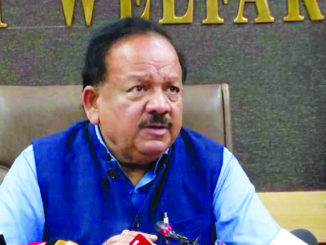
    New Delhi (TIP): Ahead of the Covid-19 vaccine dry run on 8 January, Union Health Minister Harsh Vardhan met the health ministers of states and Union Territories on Thursday, January 7. Guiding the state health ministers on conducting the dry run, Harsh Vardhan said, “Feedback on the dry run of Covid vaccine in four states was reviewed. We have made improvements based on the feedback. Tomorrow dry run will be done in 33 states and Union Territories.””Covid-19 vaccines ‘Covishield’ and ‘Covaxin’ are on the verge of being available in the country. Our efforts are to ensure seamless last-mile delivery of the vaccine,” Harsh Vardhan said.
    The Health Minister also said that priority groups have been decided for vaccination as advised by the experts’ group formed by Prime Minister Narendra Modi.
    On spike in coronavirus cases, he said, “Maharashtra, Kerala and Chhattisgarh have seen a sudden spike in coronavirus cases recently. This gives us a warning that we shouldn’t forget precautions and continue our fight against Covid-19.”
    Meanwhile, news agency ANI reported that the transportation of coronavirus vaccines might begin today or tomorrow.
    The Centre has allowed passenger aircraft to transport the Covid-19 vaccines. Pune will be the central hub from where the vaccine distribution will take place, the report said.
    Around 41 destinations across the country have been finalised for the delivery of vaccines.
    New Delhi and Karnal will be made mini hubs for delivery of coronavirus vaccines in northern India. For the eastern region, Kolkata will be the hub and will also be a nodal point for the northeast.
    Chennai and Hyderabad will be the designated points for Southern India.
    India has two vaccines against the novel coronavirus which are ready for rollout. One is Covaxin, which has been developed by Hyderabad-based Bharat Biotech in collaboration with the Indian Council for Medical Research (ICMR) and the National Institute of Virology. The other one is Covishield, a vaccine developed by the University of Oxford and pharmaceutical giant AstraZeneca. Its India partner is Pune-based Serum Institute of India.

  • India to chair UNSC panels on counter-terrorism, sanctions

    India to chair UNSC panels on counter-terrorism, sanctions

    New Delhi (TIP): India will chair the Taliban and Libya sanctions committees and the Counter-Terrorism Committee of the UN Security Council during its tenure as non-permanent member of the powerful 15-nation UN body. India, which has been at the forefront of the years-long efforts to reform the UNSC, began its two-year tenure at the Council on Friday last.
    “The UN Security Council establishes subsidiary bodies on specific issues, including on the sanctions regimes.
    “I’m happy to announce that India has been asked to chair three important committees of the Security Council, which include the Taliban Sanctions Committee, Counter-Terrorism Committee (CTC) and the Libyan Sanctions Committee, India’s Permanent Representative to the UN Ambassador T.S. Tirumurti said in a video message on Thursday, January 7.
    Tirumurti said the Taliban Sanctions Committee, also known as the 1988 Sanctions Committee, has always been a high priority for India, keeping in mind the country’s strong interest and commitment to peace, security, development and progress of Afghanistan.
    “Our chairing this committee at this juncture will help keep the focus on the presence of terrorists and their sponsors threatening the peace process in Afghanistan. It has been our view that peace process and violence cannot go hand in hand,” he said.
    Tirumurti will chair the CTC in 2022, the year in which India will commemorate the 75th anniversary of its independence. “India will also chair the Counter-Terrorism Committee in 2022, which coincides with the 75th anniversary of India’s independence. The chairing of this committee has a special resonance for India, which has not only been in the forefront of fighting terrorism, especially cross-border terrorism, but has also been one of its biggest victims,” he said.
    Tirumurti said the Libya Sanctions Committee, also called the 1970 Sanctions Committee, is a very important subsidiary body of the Council, which implements the sanctions regime, including a two-way arms embargo on Libya and assets freeze, a travel ban and measures on illicit export of petroleum.
    “We will be assuming the chair of this committee at a critical juncture, when there is international focus on Libya and on the peace process,” he said.
    The three committees are highly significant subsidiary bodies of the UNSC and India chairing them is a ringing endorsement of the country’s leadership to steer the panels. India is a leading voice at the UN in the fight against the global scourge of terrorism, particularly the threat posed in the region by cross-border terrorism emanating from Pakistan.
    India has underscored that the fight against terrorism will be a key priority for it as it sits at the UN high-table for the 2021-22 term. Prime Minister Narendra Modi had said as a Council member, India will not hesitate to raise its voice against the enemies of humanity, including terrorism and will always speak in support of peace, security and prosperity.
    Former Indian Ambassador to the UN, Hardeep Singh Puri, had chaired the CTC for the term 2011-12 when India was last in the UNSC as the non-permanent member.
    The CTC, established in the wake of the 9/11 terror attack in the US, works to bolster the ability of UN member states to prevent terrorist acts both within their borders and across regions. It is assisted by the Counter-Terrorism Committee Executive Directorate (CTED), which carries out the policy decisions of the body, conducts expert assessments of each member state and facilitates counter-terrorism technical assistance to countries.
    Tirumurti thanked Permanent Representative of St Vincent and the Grenadines Ambassador Rhonda King, who, as the chair of the informal Working Group on Security Council Working Methods, had steered this process to its logical conclusion.
    The 1988 Sanctions Committee relating to Taliban oversees the sanctions measures imposed by the Security Council. Individuals and entities are designated on the 1988 Sanctions List as individuals, groups, undertakings and entities associated with the Taliban in constituting a threat to the peace, stability and security of Afghanistan.

  • To defuse crisis, Centre plans to turn to Akal Takht jathedar

    To defuse crisis, Centre plans to turn to Akal Takht jathedar

    Jalandhar (TIP): With talks deadlocked, the Centre has started roping in heads of religious sects in Punjab to break the impasse on the farm laws.
    While Union Agriculture Minister Narendra Singh Tomar met Baba Lakha Singh of Nanaksar Gurdwara on January 7, the BJP is now contemplating involving Giani Harpreet Singh, Akal Takht Jathedar, for mediation between the Centre and protesting farmers. “As negotiations aren’t moving beyond ‘yes’ and ‘no’, we need a third party whom both sides look up to. There has been trust deficit and spiritual leaders can help bridge the gap. We will approach Giani Harpreet Singh — head of the highest temporal seat of Sikhs,” said BJP national spokesperson Kamaljit Soi.
    Soi claimed it was tough to come to conclusion on any point with around 40 union leaders, attending talks from the farmers’ side. “It’s terribly cold and even Baba Lakha Singh was of the view that all farmers, particularly women and children, should return home,” he added.
    About the proposed mediation, SGPC chief Jagir Kaur said, “Though the ongoing crisis is no way related to religion, it’s up to Giani Harpreet Singh to decide. Moreover, the Centre has a battery of intellectuals who can play mediator.”
    BKU (Ugrahan) general secretary Sukhdev Singh Kokri Kalan said by roping in dera heads and priests, the Centre was “trying to play a religious card”. “If we don’t agree to what the Jathedar tells us, they might say we are not even following the Akal Takht diktat. It’s purely a legal matter and we won’t succumb to such tactics,” he said.
    Baba Ram Singh, who recently died at the protest site, too was from the Nanaksar sect. Baba Lakha Singh has been running a 24-hour ‘langar’ at Singhu since the protests began on November 25. (Source: The Tribune)

  • Mohinder Kaur files plaint against Kangana

    Mohinder Kaur files plaint against Kangana

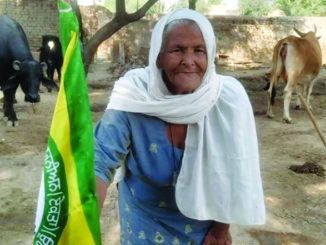
    Bathinda (TIP): Mohinder Kaur of Bahadurgarh Jandian village here, who hit the headlines after Kangana Ranaut tweeted her picture claiming that she was the same “Dadi” who was part of the Shaheen Bagh protest, has filed a complaint against the actress. The complaint has been filed in a court here and a hearing has been fixed for January 11. In the complaint, filed though advocate Raghubir Singh Behniwal, Mohinder Kaur claimed that due to Kangana’s false tweet, she suffered grave mental tension, agony, botheration, harassment, humiliation, loss of reputation, defamation in eyes of her family members, relatives, co-villagers and public in large. Further, she also claimed that due to the allegation, she had fallen in her own estimation and also in the eyes of protesting farmers. The complaint also said Kangana had not apologised to her or farmers.

  • Opposition slams govt: Show compassion to farmers, not rules

    Opposition slams govt: Show compassion to farmers, not rules

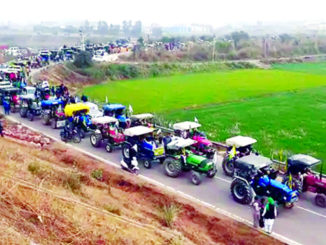
    New Delhi (TIP): As the eighth round of talks between the government and farmer’s unions ended inconclusively, the Opposition on Friday, January 8, hit out at the government, accusing it of trying to tire out the farmers by holding meeting after meeting.
    “Our farmers are fighting for justice and deserve compassion and sensitive understanding, not merely technical reading of rules. The government and the Hon’ble Supreme Court must understand that while farmers will survive Covid, their satyagrah is for their very survival,” senior Congress leader Anand Sharma said.
    Congress communication department head Randeep Surjewala said the government is trying to tire out the farmers by holding meeting after meeting. “But the farmers will neither get tired nor bow down,” Surjewala said.
    Sharma said that in a free country, the farmers would have had the right to protest inside the national capital and not be stopped at the borders.
    Alleging that the BJP government has crossed all limits of “cruelty” and “ruthlessness”, AICC general secretary Priyanka Gandhi Vadra said “the country has to think whether laws for farmers should emerge from their fields or in made the drawing rooms of a handful of billionaire friends of the BJP government.” She said the Congress will not back down from its demand that the laws should be repealed.
    Former Congress president Rahul Gandhi tweeted in Hindi: “Those whose intentions are not clear, it is their strategy to give one date after another.” Condemning the attitude of the government, CPI general secretary D Raja said the government must be sincere in holding talks and sensitive to the concerns of farmers. “The government remains rigid, adamant and arrogant, not accepting the demand of the farmers. It should accept the demand of farmers and repeal the three agri-laws,” he said.
    Farmers’ protest in Delhi political, not part of it: Bharatiya Kisan Sangh
    The Bharatiya Kisan Sangh (BKS), a farmers’ body associated with the Rashtriya Swayamsevak Sangh (RSS), came out in support of the Union government on the new farm laws in Gandhinagar on Friday saying that they are not part of the ongoing farmers’ protest on the Delhi border as it is “political” in nature.
    The Sangh also announced a countrywide campaign on Republic Day to educate people on the new farm laws.
    Speaking at a press conference in Gandhinagar on Friday, Mohini Mohan Mishra, national secretary of BKS, said, “We are not part of this agitation because it has given ample space to politicians to spread their agenda and these people (protestors) have no control over violence. The agitation that is going on at the Delhi border is primarily due to issues faced by the farmers of Punjab and Haryana.”
    Mishra added, “We believe that the new farm laws are for the benefit of farmers across the country… especially small, landless farmers. To repeal the laws for a section of farmers (those protesting) is not a viable option. At the beginning of the farmers’ agitation, BKS was in dilemma as we could see many political figures hijacking the agitation. We told the agitating Kisan unions to not allow any political figures at their protests but today we all know the path this agitation has taken.”
    The BKS also added that it has given its own set of demands to the union government on the new farm laws and said that they will hold an agitation in the future in a peaceful manner.

  • Scams and frauds bleed India in 2020

    Scams and frauds bleed India in 2020

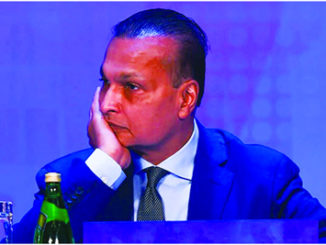
    India’s infamous fallen billionaire, Anil Ambani, may have claimed that his ‘net worth is zero’ but Indian banks aren’t buying it.In the midst of Reliance Communications’ bankruptcy resolution process, three Indian banks — the State Bank of India (SBI), Union Bank of India (UBI) and the Indian Overseas Bank (IOB) — are classifying the company’s accounts and the accounts of its units as fraudulent.

    Sources told the Economic Times that the three banks, which includes India’s largest lender, are looking to launch a deeper probe into the transactions from the account of three Anil Ambani-led Reliance Group entities — Reliance Communications, Reliance Infratel and Reliance Telecom.

    However, the Delhi High Court has directed Union Bank of India and Indian Overseas Bank to maintain the status quo in a matter pertaining to the classification of accounts as fraudulent until the next hearing on January 13.

    SBI and the Reliance Anil Dhirubhai Ambani Group declined to comment on the issue. The accusation of fraud puts Reliance Communications’ resolution plan at risk. According to the company’s official website, it owes Rs 49,193 crore in dues. In addition to that, Reliance Telecom owes Rs24,306.27 crore and Reliance Infratel owes Rs 12,687.65 crore.

    Cumulatively, this adds up to Rs 86,188 crore — while still excluding the Rs 28,837 that’s owed in spectrum dues.

    This is ten times more than what another fallen billionaire, Vijay Mallya, owed Indian banks, with debt amounting to Rs 9,000 crore. Compared to Nirav Modi, who owes at Rs 7,409.07 crore, Reliance Communications’ debt is even more than a ten-fold hike.

    Bankruptcy resolution hangs in the balance

    These allegations come nearly a year after a forensic audit unearthed questionable transactions worth Rs 5,500 crore in the three Anil Ambani-led Reliance Group entities.

    At the time, the probe found three suspicious large entries buried between hundreds of thousands of other transactions between May 2017 and March 2018, which indicated fund diversion.

    However, the reclassification of Reliance Communication and affiliated companies’ accounts comes at a time when the bankruptcy resolution was finally moving along. The National Company Law Tribunal (NCLT) gave its approval to the resolution plan on December 5 after at least 11 months of negotiations.

    This opens up the path for Anil Ambani’s brother, Mukesh Ambani, to pick the company’s tower and fibre assets for his own telecom enterprise, Reliance Jio. The total consideration is pegged at around Rs 20,000 to Rs 23,000 crore to be paid over the next seven years. Meanwhile, Reliance Communications and Reliance Telecom Infrastructure will go to the UV Asset Reconstruction Company.

    Other scams that rocked India

    TRP scam

    Television Rating Points (TRPs) are the basis on which television channels rake in the moolah. Advertisers put their campaigns on a channel with high TRPs, programmes are shut or extended while weighing in these ratings.

    The Broadcast  Audience Research Council (BARC) has installed “Bar-O-meters” in over 45,000 empanelled households. While watching a show, members of the household register their presence by pressing their viewer ID button — every person in household has a separate ID — thus capturing the duration for which the channel was watched and by whom, and providing data on viewership habits across age and socio-economic groups.

    In October, the Mumbai Police said they unearthed a “major racket” of gaming TRPs, by at least three channels, including Republic TV, and arrested four people, contending that the manipulated audience numbers were crucial because they directly translated into advertising revenue. The police filed a 1,400 page chargesheet in the fake TRP case. The crime branch has so far arrested 14 accused, including distribution head of Republic TV Ghanshayam Singh, in the case.

    Kerala gold smuggling case

    On July 5, 2020, 30 kg of gold worth around Rs 15 crore was seized by the customs department at Thiruvananthapuram airport in Kerala. The gold was found in a diplomatic luggage meant for delivery to the United Arab Emirates (UAE) consulate at Kerala’s capital.

    A former PRO of the consulate, Sarith Kumar, had come to claim the bag. When the consulate was asked, they said they had not authorized Kumar to make any claims on their behalf. Kumar was arrested and he pointed fingers at Swapna Prabha aka Swapna Mohammed, a former consulate employee who was fired in 2019.

    The can of worms opened, Swapna was recommended for the job by M Sivasankar, the principal secretary for the Chief Minister Pinarayi Vijayan. Sivasankar was suspended. The BJP and the Congress trained its guns towards Vijayan and demanded his resignation and questioning by the Enforcement Directorate. The CM dismissed the charge saying, “The Opposition is trying to foist the doings of officials on the government.”Uttar Pradesh Chief Minister Yogi Adityanath

    J&K’S ROSHNI LAND SCAM

    Before the year ended, a major scam broke out in Jammu and Kashmir. It related to a decision by the Jammu and Kashmir government in 2001 to regularise the unauthorised occupation of the government land. The ownership of the land was to be transferred for payment of a fee.

    The money collected from this scheme was to be used for the power project in Jammu and Kashmir. Hence, the enabling law was called the Roshni Act. The government set a target of Rs 25,000 crore to earn from the fees against title ownership to the beneficiaries.

    In 2014, the CAG found that the Roshni Act proved to be a tool for land grab by several powerful people in Jammu and Kashmir. In November this year, the CBI registered a case in the Roshni land scam.

  • Bihar has strong message for Opposition

    Bihar has strong message for Opposition

    The results of the Bihar elections have a message for all states headed for polls in the months ahead on taking on the BJP under Modi.

    By Neerja Chowdhury

    Bihar has sent a strong message to the Opposition parties. They will have to combine effectively to have any chance of taking on the Modi-led BJP in states going to the polls. The RJD’s alliance with the Left parties in Bihar— CPI(ML), CPI(M) and CPI— did well, leading to a high strike rate.

    Even though Nitish Kumar has been weakened, the BJP will find it difficult to replace the chief minister with one of its own, having burnt its fingers in Maharashtra, where Uddhav Thackeray, denied the chief ministership, joined hands with the Congress and the NCP. The BJP is expected to tread more carefully in Bihar after the outcome.

    Economic distress of an unprecedented kind, compounded by a health pandemic of the last nine months, the migrant march of lakhs of workers on foot with probably the largest number walking back to their villages in Bihar, incursions made into Indian territory by China in the last few months which could have created a nationalistic upsurge against the government, palpable anger against Chief Minister Nitish Kumar that was evident — if these could not bring about a change of government in Bihar, it only shows that the other factors were more dominant. This when, in this instance, there was a clear alternative in Tejashwi Yadav leading the charge on the Opposition side and getting a popular response.

    Clearly, Brand Modi managed to slow down the Tejashwi chariot, though it was a closely run race. And Tejashwi, though not able to form a government in Patna, has established himself as a leader of the Mahagathbandhan at the age of 31. He set the terms of the poll narrative when he flagged ‘joblessness’ as the central theme of Bihar 2020, for the first time giving an economic — and aspirational — spin to caste which has determined poll outcomes in Bihar for three decades and more.

    Given the downturn in the economy, creation of jobs is increasingly going to find resonance, particularly among the young, as also in other states going to polls in the next few months. The first phase of the election was going the Tejashwi way. The turning point came with Narendra Modi’s invocation of ‘jungle raj’ of the Lalu Yadav-Rabri Devi years. This sent those among the most backward castes and women, who were beginning to look at Tejashwi with new eyes — Yeh naya ladka hai— scurrying back to the NDA again. The upper castes are anyway more enamored of the Hindutva, nationalist theme than of any economic hardship, and stayed by the BJP’s side.

    Bihar has reinforced the invincible image of Narendra Modi. He swayed the voters in national elections. This was not always the case in state polls. The BJP did not make it in many states, be it Maharashtra, Jharkhand, Telangana, Andhra Pradesh, Karnataka, Delhi, Rajasthan, Madhya Pradesh and Chhattisgarh. In Bihar, the Prime Minister made a difference to the poll outcome. The Bihar strategy may help the BJP in states which are going to the polls in the coming months — in West Bengal, Assam, Punjab, Kerala and then UP in 2022. It combined Modi’s undimmed popularity and sharp articulation, with Hindutva and nationalism (Ayodhya, Pulwama, Jai Shree Ram) as not so covert a theme, undergirded by a subtle appeal to certain castes. The PM has for some time now emphasized the help given to the poor by his government at the Centre, through the programs he has initiated. So, if money was transferred to the people in Bihar during COVID-19 times, they saw it coming ‘from Narendra Modi’ and ‘not from Nitish Kumar’. In the handling of the pandemic, which exacerbated the problems of the migrants, the Central Government successfully managed to shift the responsibility to the chief ministers. In Bihar, the BJP went one step further. It even managed to distance itself from the Bihar CM, even though it was part of the government headed by him. By going hammer and tongs at only Nitish Kumar, and urging the people to vote for the BJP, Chirag Paswan helped shield the BJP while directing the popular ire towards the CM. The BJP’s seats went up substantially, and those of the JD(U) came down, equally substantially. The BJP as the senior partner in the government will have its obvious advantages, and will increase its clout in the decision-making process.

    Even though Nitish Kumar has been weakened, the BJP will find it difficult to replace the chief minister with one of its own. Having burnt its fingers in Maharashtra, where Uddhav Thackeray, denied the chief ministership, joined hands with the Congress and NCP, the BJP is expected to tread more carefully in Bihar. For Nitish Kumar, with his reputation for doing ‘flip flops’, can always extend outside support to Tejashwi Yadav, if the BJP tries to replace him. Unless the BJP can, at a future date, break the JD(U), the Congress and wean away MLAs also from the RJD to form its ‘own’ government. But that does not seem to be on the cards for the moment.

    Bihar has sent a strong message to the Opposition parties. They will have to combine effectively to have any chance of taking on the Modi-led BJP in states going to the polls. The RJD’s alliance with the Left parties in Bihar— CPI(ML), CPI(M) and CPI— did well, leading to a high strike rate.

    Tejashwi Yadav might have just made it, had he not allowed Mukesh Sahni’s Mallah (Most backward)-based VIP party to leave the Mahagathbandhan over the issue of seat-sharing. This might have been possible had he given less seats to the Congress and accommodated the ‘VIP’ party and enabled Left parties to fight more seats, the ticket distribution based on the ground level strength of the parties today rather than on the position they enjoyed in the past. This Congress’ tally came down from what it was in 2015. While the RJD was able to transfer its votes to the Congress, the Congress could not ensure this for the RJD candidates. As it is, the Congress’ kitty does not have much to transfer.

    The five seats won by Asaddudin Owaisi, who did well in the Muslim-dominated areas of Bihar (Seemanchal) should come as a wake-up call for the Congress. The Muslims, who feel beleaguered and apprehensive, particularly with the way they have been targeted by the BJP, after the NRC, CAA and abrogation of Article 370, have looked to the Congress as the only party which would be able to take on the BJP nationally. For them to turn to Owaisi’s party which was not in a position to form the government in Bihar, being part of the small so-called ‘Third Front’, and not to the Congress, shows their growing sense of alienation from the grand old party. This is not good news for the Congress.

    The crisis — and drift — in the Congress is not likely to go away unless the party settles the question of its leadership, which is hanging out there unaddressed.

    Given the Bihar outcome, will the Opposition parties look afresh at the new challenge being mounted by a BJP determined to increase its footprint all over India, state after state, and go for one-party dominance in the country? Or will it remain business as usual?

    (The author is a senior political commentator)

  • Political takeaways from the Bihar campaign

    Political takeaways from the Bihar campaign


    By Seema Chishti

    Tejashwi Yadav’s campaign in Bihar is frustrating the ruling party as it is using that very powerful appeal against a 15-year-old regime by citing the absence of bread and butter issues and taking the campaign out to the State’s youth. His primary emphasis during the election campaign has been on 

    the high rate of unemployment, forming the backbone of his promise of providing 10 lakh new government jobs to the youth of Bihar. The BJP has been forced to play catch-up. After the results come in, there will be much to theorize on how caste politics has changed in north India. Enough has already been said about how this is the last of the Mandal elections (with Nitish Kumar on the backfoot, Lalu Prasad not campaigning and Ram Vilas Paswan no more); but on closer scrutiny, this is more about evolution of the social justice plank than its burial.

    Bihar’s Champaran farmlands served as the brewing fields for Gandhi’s ruminations and eventual journey to a Mahatma more than a century ago. Later, the State was quick to catch the sparks off Gujarat’s student revolt and lend the anti-Emergency movement the fury that was to become a prairie fire which consumed the invincible Indira Gandhi. Bihar is renowned for its intangible political energy, equations and trends that have gone on to shape India’s political firmament.

    Throwbacks to the past

    The final election results notwithstanding, not that the voters’ mandate is sacrosanct — consider Goa, Manipur, Karnataka, Maharashtra and Madhya Pradesh — the election campaign has provided important political takeaways. Like all elections in the last six years, including the municipal polls in the capital in 2017, Narendra Modi has campaigned with admirable energy and dedication in Bihar. The Prime Minister’s campaigning is an opportunity to peep into his vision and priorities for the people of the State and the country.

    A quick glance at his speeches shows that Mr. Modi’s refrain is Ayodhya’s Ram temple and Article 370 in Kashmir (Darbhanga on October 28 and Champaran on November 1), “Jungle Raj” spoken of often, a reference to the “double Yuvrajs” ostensibly of Tejashwi Yadav and Rahul Gandhi (Chhapra on November 1) struggling to “keep the simhasan/throne”, “BIMARU” Bihar, referring to an outdated acronym for Bihar, Madhya Pradesh, Rajasthan and Uttar Pradesh no longer used even in seminars. Almost all of the Prime Minister’s repeated references are jaded throwbacks to the past: Ayodhya’s Babri Masjid was brought down in 1992, ‘jungle raj’, referring to pejoratives for Lalu Yadav and Rabri Devi’s time as Chief Minister is 15 years ago and the last time that either Tejashwi Yadav or Rahul Gandhi’s fathers held public office was several years ago — there is certainly no ‘simhasan’ for them to defend. It is a negative agenda of a campaign anchored selectively in the past.

    No vision, invoking fear

    Nitish Kumar has been in power in the State for the past 15 years, mostly with the Bharatiya Janata Party (BJP), and there is little in the achievement columns of his report card for Mr. Modi to seek votes on. Soliciting support for another five years of a jaded government is tough, and thus the argument seems to be that “we are bad but they are worse” — not the most inspiring political pitch. More surprising is the lack of vision for either Bihar or India from the Prime Minister. The selective recall of the 1990s is odd when at 57.2%, Bihar has the highest proportion of those below 25 years of age in the country. This is like the captain’s proverbial yearning for the safety of the shore when the boat is in choppy waters mid-ocean, when, instead, it needs a vision to navigate ahead.

    The exponential rise of the BJP, now dominating the political scene with more than half of India’s States under its rule and having 302 Lok Sabha seats (as on October 1, 2020), began by leveraging the upheaval of the 1990s as the polity was challenged by newly opened fissures of caste, religion and economic disparity. Social and cultural issues are an integral part of Indian electoral politics, but to invoke the divisive issues of the past at this time points to a poverty of vision for the future, of the missing destination the ship of governance is aiming for when at sea. Instead of taking matters to a higher level of ‘aspiration’, the country’s top leadership has chosen to invoke not hope but fear.

    A lost opportunity and why

    When India has gone from one of the fastest growing three economies in the world to among the slowest, with an unprecedented decline of 23.9% in the first quarter of 2020, the country would have benefited from learning of the Prime Minister’s plan to get the economy back in shape. The novel coronavirus pandemic also offered an opportunity to speak of public health as a sharp arrow in its quiver, and take his party’s campaign to another high level. Quite the contrary happened when a free vaccine was offered as an election sop, hitting another new low for the BJP in 2020. Public health, at a time of a rapidly growing infectious disease, has always been handled centrally and has been universal and free. The smallpox vaccine, BCG or even the tuberculosis programme has been centrally driven and unconnected with electoral cycles.

    The appeal that proved invincible and lent a deathly blow to the Congress-led United Progressive Alliance in 2014 was a dream that Mr. Modi associated himself with. The ‘Gujarat model’, notwithstanding its merits, was about hope, about vikas, development (if not progress), and overall about improving lives of Indians, a formula that proved unbeatable. The promise, plastered on all available billboards was about ‘two crore jobs’ every year, ₹15 lakh in every bank account and the burnishing of an entrepreneurial spirit that would bring welfare and prosperity. Mr. Modi would make India great again and improve the conditions of its millions, who came out and voted for that dream. This appeal was developed on the campaign that Mr. Modi had carefully crafted around ‘Vibrant Gujarat,’ which had shut down his critics. It was Mr. Modi as the doer and the Vikas Purush that won accolades and eventually the seat of power in Delhi. The core Hindutva spirit that he stood for was just the backstory: Mr. Modi in 2014 worked, as he offered himself and much more.

    The youth connect

    Turning the tables on this, Tejashwi Yadav’s campaign in Bihar is frustrating the ruling party as it is using that very powerful appeal against a 15-year-old regime by citing the absence of bread and butter issues and taking the campaign out to the State’s youth. His primary emphasis during the election campaign has been on the high rate of unemployment, forming the backbone of his promise of providing 10 lakh new government jobs to the youth of Bihar. The BJP has been forced to play catch-up. After the results come in, there will be much to theorize on how caste politics has changed in north India. Enough has already been said about how this is the last of the Mandal elections (with Nitish Kumar on the backfoot, Lalu Prasad not campaigning and Ram Vilas Paswan no more); but on closer scrutiny, this is more about evolution of the social justice plank than its burial. Tejashwi Yadav in 2020 is doing a Narendra Modi in 2014, by not making it overtly about social justice alone. The Mandal campaign of the 1990s in north India was particularly anxious to underscore that it was not economics but social oppression that rankled and needed urgent redress. By threading economic upliftment seamlessly into the idea of social justice, Tejashwi Yadav has confounded his opponents. He need not even loudly talk about backward caste or utter the phrase social justice, any more than Mr. Modi had to proclaim that he is a proud bearer of Hindutva.

    In 2015 when Nitish Kumar and Lalu Prasad struck an alliance, they stumped the BJP by turning it into a ‘forward versus backward’ election. That was a case of political innovation in the face of the BJP juggernaut, at a time when the electoral machine of the BJP, with its freshness, was at its peak. But this time, what has annoyed Nitish Kumar and visibly frustrated the BJP is Tejashwi Yadav coming up from behind and smoothly introducing Social Justice 2.0 into the campaign in his own unique manner. The results of the elections will be known soon but if there is already a winner for political reimagination, it is Tejashwi Yadav against a weary Nitish Kumar and a rear-view mirror-gazing Narendra Modi.

    (The author  is a journalist based in New Delhi)

    (Source: The Hindu)

  • Raking up Ayodhya

    BJP needs to prioritize revival of jobs in Bihar

    The invocation of Ram Mandir by PM Narendra Modi during his election rallies in Bihar on Wednesday, even as the first phase of polling was in progress, indicates how desperately the BJP is clutching at straws. The temple lost its worth as a vote-catcher once the Supreme Court cleared the decks last year for its construction. It’s undoubtedly a non-issue in a state grappling with the Covid-19 pandemic and crippling job losses. No less irrelevant to Bihar is the abrogation of Article 370, which has been raked up by UP CM Yogi Adityanath and other party leaders in their recent speeches in the state. The fact that Union Finance Minister Nirmala Sitharaman, no less, promised free Covid-19 vaccine on priority for Bihar residents shows the BJP’s failure to gauge the massive impact of reverse migration, triggered by the nationwide lockdown.

    Bihar was among the states that bore the brunt of the lockdown. According to the Centre for Monitoring Indian Economy (CMIE), the state’s unemployment rate was a staggering 46 per cent in April-May this year. Though it fell to 11.9 per cent in September, still higher than the national figure of 6.7 per cent for the corresponding period, the CMIE has cautioned that such a drop is misleading as the labor participation rate and the employment rate are going down as well. The stark reality is that only one out of every three adult Biharis is employed.

    Reviving livelihoods in a time-bound manner should take precedence over other matters. The promise made by the Mahagathbandhan’s CM face Tejashwi Yadav to sanction 10 lakh government jobs has prompted the BJP to announce — almost as an afterthought — the creation of 19 lakh employment opportunities. However, the party — which has shared power with the JD(U) for the past three years — needs to explain first why 4.5 lakh government jobs are still vacant in the state, as claimed by Tejashwi. The BJP doesn’t seem to have learnt much from the stinging losses in the pre-Covid polls in Delhi and Jharkhand, where local issues resonated with the voters.

    (Tribune, India)

  • Rajasthan slugfest: Need for impartial probe into horse-trading allegations

    Rajasthan slugfest: Need for impartial probe into horse-trading allegations

    What had initially appeared to be an intra-Congress tussle in Rajasthan has turned into a ‘Congress vs BJP’ slanging match after the emergence of audio clips in which Union minister Gajendra Singh Shekhawat is purportedly heard having a conversation with a Congress MLA and a BJP leader about toppling the Ashok Gehlot government. The state’s Special Operations Group has promptly registered a couple of FIRs on a complaint by the Congress. An impartial, time-bound inquiry is needed to verify the authenticity of the recordings and unearth the underlying conspiracy, irrespective of which political party is at fault, even as Shekhawat has denied that the clips have his voice. The development has provided ammunition to the Congress to accuse the ruling BJP at the Centre of horse-trading. The onus is on the NDA government to convince all and sundry that it has no hand in the goings-on in the border state.

    Attempts to subvert democracy and the electoral process have become far too common in recent years. Several states have witnessed post-poll machinations and short-lived governments, with the latest casualty being Madhya Pradesh. The Congress had wrested power from the BJP by winning the 2018 MP Assembly polls, but the latter turned the tables on the ruling party earlier this year with the help of some obliging MLAs. In Goa and Manipur, which produced hung Assemblies in 2017, the BJP formed the government despite having won fewer seats than the Congress. Last year, the long-drawn-out Karnataka ‘nataka’ and the Maharashtra muddle also amounted to a betrayal of the voters’ mandate.

    Whenever a government finds itself on shaky ground, the clamor for strengthening or reviewing the anti-defection law gets louder. Indeed, loopholes in this law enable unscrupulous elected representatives to switch loyalties as whopping sums of money allegedly change hands. With the power struggle in Rajasthan set to get uglier inside as well as outside the courts, the credibility of the parties concerned has come under sharp scrutiny. How the major players acquit themselves will demonstrate their respect, or lack of it, for democracy.

    (Tribune, India)


  • What Sachin Pilot fiasco teaches Congress

    What Sachin Pilot fiasco teaches Congress

    By George Abraham
    The RSS has powerful ideologues, ideology, and cadre, which fuels and propels the BJP.  Until the Congress party makes an earnest effort to create a new cadre of leadership from the grassroots who are truly committed to the dearly held values and principles of the party, those who parachuted to the top using their patronage and money will continue to be easy prey for BJP’s nefarious political games, says the author.

    History continues to repeat itself. It was Karnataka, then Madhya Pradesh and now Rajasthan that is embroiled in a power struggle that could delegitimize an election and undermine the will of the people. What is taking place in India’s political landscape before our very own eyes does not bode well either for democracy or the institutions that support it.

    Sachin Pilot undoubtedly was considered one of the future promises for the Congress party that is increasingly lacked any long-term vision or strategic planning. There is little doubt that the party is mired in the past without necessary grassroots support or needed financial resources. More and more, Smt. Sonia Gandhi, who has rescued the party from its dire straits in the ’90s, appears to be in a caretaker mode. The indecision of the Party hierarchy to fill the void created by the resignation of Rahul Gandhi as Party president has consequences far and beyond, and the Rajasthan crisis plainly points to that.

    Having said that, I am as confused and perplexed as anyone how a bright young man like Sachin Pilot who has become a Member of Parliament at the age of 26 and a Central Minister by 32 appeared to have walked away from a party that nurtured him and made it possible to scale these greater heights. When this crisis started, he held the positions of the PCC President as well as that of the Deputy Chief Minister of Rajasthan.  It is indeed a phenomenal rise for a young man at the age of 42, especially in a country where the patriarchy and age-old wisdom still holds the key to power and prestige.

    It says a lot more about this generation who have become narcissists in their thinking and self-indulging in their behavior.  When one decides to devote his/her lifetime in public service, it is a huge commitment that deserves appreciation and community support.  However, the objective is to ‘serve’ the people, without arrogance and rashness, who entrusts their confidence and vote them into powerful offices.  Mr. Sam Pitroda, who helped transform India’s Telcom sector, said recently, “Values, Character, and fundamentals matter the most in life and leadership. What do you believe in, defines you? Are you for posts and positions or selfless service to people?”

    Today, the number of young leaders in the Congress party lacks any devotion to the ideals that governed the party for a century or more. Even in the best of times, the party had its share of crisis. History is replete with fights by these erstwhile leaders on issues and winning or losing their arguments. However, those conflicts were ideological and often mirroring their deeply held beliefs and reflecting their passion for justice and fairness.

    However, What the Scindias and Pilots are fighting for? Are they advocating any policy differences or expressing concerns that the democracy itself is in peril under Modi-Shah duo or frustrated at the party’s lackadaisical approach to bring the issue into focus? Are they in rebellion because the Congress party has not provided adequate support for the cause of migrant laborers? Or the party has failed to highlight the rising unemployment among the youth? Or they are fleeing the party because it has drifted away from the cherished principles?

    It is none of the above! It is simply blind ambition, hunger for power and greed driving a section of the youth in the Congress party today. It is not difficult to see that these folks owe their rise in power and visibility to patronage.  Rahul Gandhi once said about Jyotiraditya Scindia that he could walk into his home any time of the day. Their proximity has indeed defined their places in the political landscape; however, they appear to have betrayed their trust for sheer opportunism.

    If we recollect, many of these young leaders quickly applauded Prime Minister Modi when Article 370 was revoked. There is a clear indication now that many of them are softening their stand towards the philosophy of Hindutva.  The BJP’s assault on secularism through the weaponization of Hindutva is paying off, as many of them are even reluctant to defend those core party principles. There is a slow drift towards ‘majoritarian thinking’, and any minority accommodation is increasingly seen in a negative light. That explains how easily they could transform their mindset switching to BJP.

    The RSS has powerful ideologues, ideology, and cadre, which fuels and propels the BJP.  Until the Congress party makes an earnest effort to create a new cadre of leadership from the grassroots who are truly committed to the dearly held values and principles of the party, those who parachuted to the top using their patronage and money will continue to be easy prey for BJP’s nefarious political games.

    (The author  is a former Chief Technology Officer, United Nations, and the Vice-Chairman of the Indian Overseas Congress, USA)

  • The BJP’s  hegemonic narrative

    The BJP’s hegemonic narrative

    By Zoya Hasan

    Since 2014, the BJP’s stated objective of a Congress-free India has seen attempts to unsettle and unseat Congress governments in several States. One of Prime Minister Narendra Modi’s first statements after taking over as the chairman of the BJP’s election campaign committee in 2013 was the declaration that getting rid of the Congress would be “the solution to all problems facing the country”. “The Congress party is a burden on this nation,” he said. Since coming to power in 2014, the BJP has been using various means, notably money power and the coercive power of state agencies, to achieve this goal by bringing down elected Congress governments in State after State.

    Ever since the colossal defeat of the Congress in the 2019 general election, there has been a ceaseless debate in the media and in political circles about the future of the Congress party. The defection of Jyotiraditya Scindia to the Bharatiya Janata Party (BJP) and the replication of a similar script by Congress leader Sachin Pilot has intensified this debate which centers around the leadership, organizational and ideological challenges confronting the Congress. After Rahul Gandhi’s resignation as Congress President in July 2019, the party has witnessed disintegration in States including Karnataka, Madhya Pradesh and Rajasthan. Several prominent leaders have quit the party and joined the BJP. Defections, splits and electoral decline are not new phenomena in the party’s long history, but the crisis the Congress faces in the wake of two massive defeats in the last two Lok Sabha elections is unprecedented and has clearly been aggravated by its inability to resolve the leadership issue.

    A clutch of young(ish) leaders close to Mr. Gandhi have resigned. These leaders have caught the media’s attention more than many others who have quit in the last one year. The narrative in sections of the media built around these rebellions is that the Congress mishandled the crisis and the concerns of these leaders regarding the party’s functioning. The dominant argument is that the Congress lacks inner party democracy and hence cannot keep young leaders in its fold. Sections of the mainstream media blame Mr. Gandhi for the crisis and want him to vacate space to make way for other leaders.

    Two important dimensions

    Big-ticket leaders leaving the Congress should be a matter of concern for the party. But to view Mr. Pilot’s rebellion in Rajasthan as only the result of failure of leadership and organizational politics misses two important dimensions of this crisis. Mr. Pilot was willing to sacrifice the government, of which he was the Deputy Chief Minister until a few days ago, because he has differences with Chief Minister Ashok Gehlot. Even though he says he is not joining the BJP, Mr. Pilot does not put much distance between himself and the party. Mr. Pilot made it clear that he was unwilling to settle for anything less than the chief ministership even though he has the support of just 18 MLAs. Mr. Pilot is heading a minority faction but making claims to the top job is a sign of the neoliberal times we live in where ambition trumps commitment to party and ideology.

    The narrative in sections of the media that younger leaders are not allowed to grow in the Congress is not evident from the career graphs of some of these leaders. They had been given top posts by the Congress. That they still chose to rebel is an aspect disregarded in the narrative built up around them. Many of them are exiting the Congress with alacrity because the party is out of power and is not in a position to offer the loaves and fishes of office to leaders waiting in the departure lounge. When the party was in power it could adjust and accommodate conflicting interests and ambitions in multiple ways but it is much harder to do so in Opposition. The BJP, on the other hand, is routinely able to attract disgruntled leaders to its side. Arguably, it has given in to Mr. Scindia’s huge demands in Madhya Pradesh to attract Mr. Pilot in Rajasthan. The bottom line is this: Mr. Pilot’s escapade into Haryana couldn’t have taken off without the BJP’s support. His jaunt to ITC’s Best Western can’t be passed off as a struggle for inner party democracy in the Congress.

    The second and more important dimension of the Rajasthan crisis is the concerted effort mounted by the ruling party to topple the Congress government in the State. The pursuit of this single-minded objective amid the pandemic has been given short shrift in the loud narrative of sections of the media. Since 2014, the BJP’s stated objective of a Congress-free India has seen attempts to unsettle and unseat Congress governments in several States. One of Prime Minister Narendra Modi’s first statements after taking over as the chairman of the BJP’s election campaign committee in 2013 was the declaration that getting rid of the Congress would be “the solution to all problems facing the country”. “The Congress party is a burden on this nation,” he said. Since coming to power in 2014, the BJP has been using various means, notably money power and the coercive power of state agencies, to achieve this goal by bringing down elected Congress governments in State after State.

    Hunt for power

    We have seen many States witnessing a change of guard. In 2016, in Arunachal Pradesh, the BJP backed the rebel Congress faction when deep cracks surfaced within the ruling party. The BJP lost the election but managed to replace the Congress government with its own in Karnataka (in 2019) and in Madhya Pradesh (in 2020). In 2019, the Congress emerged the single largest party in Goa, but the BJP was quick to cobble together a coalition and form a government. Now Rajasthan is on the cusp of change though the game is not over yet.

    In Goa, Karnataka and Madhya Pradesh, scores of Congress legislators were allegedly lured into deserting the Congress which enabled the BJP to gain power after losing in elections. These reports are in the realm of speculation but one thing is clear: the BJP is not short on resources for financing defections given its absolute power at the Centre. The Association of Democratic Reforms estimates that a whopping 95% of all electoral bond money before the 2019 election went to the BJP. The Congress received less than 10% of bond money. The loss of so many State governments further reduces the party’s financial power and the opportunity to generate funds.

    Although the BJP disclaims authorship of this long-running drama, Rajasthan’s political crisis has underlined once again its unscrupulous hunt for power. Given its enviable record in forming governments through political defections, the perception that a government with a clear majority is being deposed may not really matter to the party. However, it should matter to the media. But the media spotlight is not on the BJP’s dubious methods of destabilizing elected governments, but on the disarray in the Congress, which allows the BJP to get away even with constitutional transgressions. Thus far, the Congress has managed to save its government in Rajasthan. Regardless of the final outcome, an obvious conclusion to draw from this crisis would be that the Congress party has to put its house in order to stop further desertions and breakup. It has to bring an end to the unmitigated drift and elect a new president and begin the process of rebuilding the party.

    That so many in the media have seen Mr. Pilot’s unhappiness with the Congress as an example of a talented politician being forced to jump ship to the BJP shows that the BJP’s narrative is completely hegemonic. That so many in the political class (including Congress politicians) and the media are echoing the same line (as though it’s a party line), and are willing to overlook the majoritarian might of the BJP, the illegitimacy of the power grab, and the wholly unjustified attempt to dislodge an elected government betokens a debasement of politics and a disregard for democratic norms that should concern us all.

    (The author  is Professor Emerita, Centre for Political Studies, JNU)

  • Anupam Kher should be kicked out of BJP for using Guru Gobind Singh’s words to describe Sambit Patra: Bittu

    Anupam Kher should be kicked out of BJP for using Guru Gobind Singh’s words to describe Sambit Patra: Bittu

    NEW DELHI (TIP): Congress MP Ravneet Singh Bittu on Thursday, July 2.  strongly rebuked actor Anupam Kher for using the “sacred words of Guru Gobind Singh” to describe Bharatiya Janata Party spokesperson Sambit Patra.

    On Wednesday, Kher tweeted: “सवा लाख से एक भिडा दूँ !:) @sambitswaraj.”

    Kher’s tweet seemed to reference the fact that Patra was heavily criticized on social media after he posted a picture of a child sitting on his grandfather— who was shot dead in Kashmir on Wednesday, July 1—with the caption: “PULITZER LOVERS ??”

    Bittu called Kher’s tweet an attempt by RSS to dilute the “strong tenets of Sikhism.”

    He tweeted: “How dare @AnupamPKher use sacred words of Guru Gobind Singh ji to describe the spokesperson of BJP. It spoils the martial image of Sikhs. It is a bid of RSS to dilute strong tenets of Sikhism. PM Modi should tender immediate apology and kick out Kher and his wife from bjp.”

  • The fall of the ‘last Citadel’ of justice: Supreme Court of India

    The fall of the ‘last Citadel’ of justice: Supreme Court of India

    Former Chief Justice of India (CJI) Ranjan Gogoi takes oath as Rajya Sabha MP during the ongoing Budget Session of Parliament, in New Delhi, Thursday, March 19, 2020. (RSTV/PTI Photo)(PTI19-03-2020_000012B)

    “I am surprised as to how Justice Ranjan Gogoi, who once exhibited such courage of conviction to uphold the independence of the judiciary, has compromised the noble principles on the independence and impartiality of the judiciary,” said retired Justice Kurian Thomas.

    He was reacting to the appointment of recently retired Chief Justice of the Supreme Court to the Rajya Sabha by the Modi Administration. “Mr. Gogoi’s decision to accept the nomination to Rajya Sabha has certainly shaken the confidence of the common man on the independence of the judiciary,” Mr. Joseph added.

    It is to be noted that not so long ago, on January 12, 2018, to be exact, Mr. Gogoi was part of the four-member Supreme Court Justices along with Justice Kurian Joseph, who held an unprecedented news conference to warn about dangers of political interference in the judiciary. “The four of us are convinced that unless this institution is preserved and it maintains its equanimity, democracy will not survive in this country,” Justice Jasti Chelameswar said during the press conference held at his home.

    Since independence, the Supreme Court remained a firewall against abuse of power by the Executive branch or the elites in the ruling class. The integrity of judges has been a critical component in rendering impartial decisions that have far-reaching effects on every segment of society. Judicial independence is vital in reassuring the public that judges would dispense cases with honesty and impartiality only in accordance with the law and evidence presented to them. The Supreme court must be free of fear and favor from the Executive, then only it would be trusted by the public.

    If we look at the record of Gogoi as the Chief Justice, he has headed a five-member constitution bench that delivered a historical and unanimous judgment deciding the fate of the Babri Masjid land in Ayodhya in favor of Hindus and also headed the bench that put SC’s stamp of approval on the Rafale fighter jet deal between India and France clearing the BJP government of serious corruption charges from the Opposition. Moreover, Supreme Court headed by Gogoi appeared to have dragged its feet in setting up a quick hearing on the violations of the civil rights of Indian citizens in Kashmir after the abrogation of Article 370 by the Modi Administration.

    Therefore, his nomination to the Rajya Sabha raises a serious question of quid pro quo that would have a diminishing effect on the judges who serve in the Court and debilitating impact on the Institution and its Independence the public have come to rely on for its final word. One may argue that Mr. Ranjan Gogoi’s nomination to Rajya Sabha is not unprecedented as it has happened under the rule of the Congress Party as well. When Justice Rangnath Mishra, the former Chief Justice of India, was nominated to Rajya Sabha in 1998, most observers also saw it as a case of quid pro quo. Two wrongs don’t make it right.

    There are indeed widespread criticisms around this nomination, and some of the prominent citizens have spoken out loud. “What concerns me is that Justice Gogoi had relinquished charge as the CJI as recently as on November 17, 2019, exactly four months ago. In my view, offering the higher members of the judiciary nominated positions such as the Governor of a State or a Membership in the Rajya Sabha undoubtedly sets an unhealthy precedent, as it tends to weaken the institution of the judiciary,” wrote E.A.S Sarma, a former IAS officer of 1965 batch in a letter written to President Ram Nath Kovind.

    Some others are also wondering about the evolution of Ranjan Gogoi from an independent justice who has spoken out against the tyranny of the executive interference in the judiciary to a vassal of a Machiavellian ruling hierarchy that is hellbent on controlling the judicial process promoting their political agenda. As soon as Mr. Gogoi was nominated to the position of CJI, a 35-year-old junior court assistant wrote to 22 Justices in the Supreme Court, accusing him of sexual harassment. Later, a three-member Supreme Court panel investigating the allegations gave a clean chit to Gogoi in the matter. The woman who filed the charges was fired, and her family was said to be harassed. In a statement, the complainant said, “Today, my worst fears have come true, and all hopes of justice and redress from the highest Court of the land have been shattered. “However, in a curious and shocking twist and turn to the whole story, the woman was magically reinstated after Gogoi has vacated his office. One indeed wonders who is behind this entire drama and how the justice may have been compromised!

    When those four justices, including Gogoi, conducted that famous 2018 press conference, they were expressing their disapproval about how then Chief Justice Dipak Misra was assigning the cases, especially the one pertaining to a petition seeking an independent investigation into the mysterious circumstances surrounding the death of BH Loya in 2014. At the time of death, Loya was presiding over the Sohrabuddin encounter case, in which the current Home Minister was a prime accused. In November 2017, the caravan reported the shocking claims raised by the family of Judge Loya.

    In Expressing their strong disapproval of the process, on behalf of the four Justices, Mr. Chelameswar said “they don’t want another twenty years later some very wise men in the country to say that Chelameswar, Ranjan Gogoi, Madan Lokur and Kurian Joseph sold their souls; they didn’t take care of their institution; they didn’t think of the interest of the nation. So, we place it before the people of the country,”

    Only time will tell whether Mr. Ranjan Gogoi has sold his soul or compromised the noble principles. Still, his actions during his tenure as CJI and now his acceptance of Rajya Sabha seat from BJP has indeed cast a cloud suspicion around him and may have irreparably damaged the independence of the institution he was sworn to protect and proclaimed to defend. Moreover, for the people India, it is a steep and tragic fall of the ‘last citadel’ of justice and a threat to freedom itself!

    (Writer is a former Chief Technology Officer of the United Nations and Vice-Chairman of the Indian Overseas Congress, USA)

  • Madhya Pradesh Congress Government Falls as Chief Minister Kamal Nath Resigns Ahead of Floor Test

       Kamal Nath


    BHOPAL (TIP): Kamal Nath on Friday, March 20,  announced his decision to resign as Madhya Pradesh Chief Minister, thereby putting an end to the ongoing political drama and crisis in the state, thereby paving the way for the Opposition BJP to take over.

    Recounting the works and accomplishments of his government during its short tenure, while berating the BJP and turncoats for “engineering” the crisis, Nath said he would submit the resignation to the Governor shortly.

    Making the announcement minutes before the floor test, Nath said people of the state were watching the machinations and would pay back all those who helped topple the popular government elected by them.

    Who will be the next chief minister is on the mind of everyone.

    The BJP legislature party will make the decision in a meeting with observers from the Centre, party leaders say, dismissing speculation of “several claimants and differences and factionalism” in the party.

    Reports of senior state leader Shivraj Singh Chouhan’s “history of rivalry with Prime Minister Narendra Modi” is the main reason for the speculation.

    It is one of the reasons that while the most obvious name appears to be that of three-time chief minister Chouhan, names of other contenders like Gwalior-Chambal leader Narottam Mishra who, along with Chouhan, is among those the Congress has accused of “horse-trading” to dislodge the Kamal Nath government, are also doing the rounds.

    Apart from Chouhan and Mishra, others in the fray are Morena MP Narendra Singh Tomar, the Minister of Agriculture and Farmers Welfare and Minister of Rural Development in the Narendra Modi cabinet. Also being mentioned are Leader of Rajya Sabha Thawar Chand Gehlot, Union Minister of Social Justice and Empowerment Prahlad Singh Patel and Kailash Vijayvargiya, the fire spitting BJP old horse from Indore.

    (Source: PTI)


  • Lok Sabha passes Citizenship (Amendment) Bill

    Lok Sabha passes Citizenship (Amendment) Bill

    NEW DELHI (TIP): The Lok Sabha passed the Citizenship (Amendment) Bill, which seeks to provide Indian citizenship to non-Muslim refugees coming from Pakistan, Bangladesh and Afghanistan after facing religious persecution there, a little past midnight on Monday, December 9, after a heated debate that lasted over seven hours.

    The Bill, which was passed in the Lok Sabha with 311 members favoring it and 80 voting against it, will now be tabled in the Rajya Sabha for its nod.

    Several amendments brought by opposition members, including one by a Shiv Sena MP, were defeated either by voice vote or division.

    According to the proposed legislation, members of Hindu, Sikh, Buddhist, Jain, Parsi and Christian communities, who have come from Pakistan, Bangladesh and Afghanistan, till December 31, 2014 facing religious persecution there, will not be treated as illegal immigrants but given Indian citizenship.

    In a hard-hitting reply to the debate on the proposed legislation, Union Home Minister Amit Shah said people belonging to any religion should not have any fear under the Modi government as he asserted that the bill will give relief to those minorities who have been living a painful life after facing persecution in neighboring countries.

    Shah also said the Modi government will definitely implement the National Register of Citizens (NRC) across the country and when it will be done, not a single illegal immigrant will remain in the country.

    Shah said there is a difference between illegal immigrants and those who have come after facing religious persecution in the three neighboring countries.

    “No one should have any fear of being persecuted under the Narendra Modi government,” he said after nearly seven-hour-long debate which was marked by fiery speeches by MPs belonging to both the opposition and the ruling alliance.

    The home minister said had India not been divided on religious lines in 1947, there was no need for the Citizenship (Amendment) Bill.

    “Muslim population in India has increased from 9.8 per cent in 1951 to 14.8 per cent in 2011 while the Hindu population has decreased from 84 per cent in 1951 to 79 per cent in 2011.

    “Whereas, the minority population in Pakistan has decreased from 23 per cent in 1947 to 3.7 per cent in 2011. Similarly minority population in Bangladesh has decreased from 22 per cent in 1947 to 7 per cent in 2011,” he said, adding India does not discriminate against anyone on the basis of religion.

    The home minister said the Citizenship Bill will give relief and constitutional respect to those who have been living a painful life after facing persecution in neighboring countries.

    Shah dismissed the suggestions that the Bill is violative of Article 14 of the Constitution, which guarantees equality for everyone, as it aims to give citizenship to persecuted people only.

    “This Bill is not unconstitutional and not in violation of Article 14 and has nothing to do with Muslims in India,” he said but made it clear that Rohingya Muslims, coming from Myanmar, will not be given Indian citizenship.

    The home minister countered the Congress charges that the bill is communal in nature, by taking a dig at the opposition party, saying “Congress is such a secular party which partners Muslim League in Kerala and Shiv Sena in Maharashtra”.

    “Modi government’s only religion is the Constitution,” he asserted.

    He also said India doesn’t need a refugee policy as the country has enough laws for the protection of refugees.

    Earlier, initiating the debate, Shah said the bill has the endorsement of India’s 130 crore citizens as it was part of the BJPs’ election manifestoes in 2014 and 2019.

    Opposition leaders Adhir Ranjan Chowdhury, Saugata Roy, N K Premchandran, Gaurav Gogoi, Shashi Tharoor and Asaduddin Owaisi opposed the introduction of the bill, saying it was violative of various provisions of the Constitution, including move to grant citizenship on the basis of religion.

    While defending the introduction of the bill, Shah said the Congress had “divided” the country on the basis of religion that is why it was necessary to bring the bill and added that it was brought on the basis of reasonable classifications provided under the Constitution.

    The tabling of the emotive bill through division of votes came in the wake of protests and incidents of violence in Northeastern states with most of the student unions and regional political parties opposing it, saying it will nullify the provisions of the Assam Accord of 1985, which fixed March 24, 1971, as the cut-off date for deportation of all illegal immigrants irrespective of religion.

    “We will have to differentiate between intruders and refugees. Citizenship amendment bill does not discriminate against anyone and does not snatch anyone’s rights,” Shah said while initiating the debate on the contentious bill.

    Trying to allay apprehensions of people of the Northeast, Shah said the Narendra Modi Government is committed to protect the customs and culture of people of the region and informed that Manipur will be brought under Inner Line Permit regime, where the proposed law will not be applicable.

    The home minister said under the proposed legislation, citizenship will be granted to refugees coming from the three countries after facing religious persecution there even without documents, including ration cards.

    Noting that India has given similar rights to people in the past, Shah said Manmohan Singh and L K Advani could become prime minister and deputy prime minister respectively due to this after they came from present-day Pakistan.

    “This bill is not even .001 per cent against Muslims. It is against infiltrators,” he said earlier while introducing the bill.

    During the debate, which was marked by heated arguments, AIMIM chief Asaduddin Owaisi also tore the bill, saying it was aimed at making Muslims “stateless” and will lead to another partition.

    Opposing the bill, Congress MP Manish Tewari said the bill is “unconstitutional” and “contrary to the spirit of the Constitution which is secular”.

    “Equals cannot be treated as unequal. When a person comes to India, he is a refugee. You cannot discriminate against him on the basis of religion,” he said during the debate.

    “The bill is against the Constitution, against the spirit of Constitution and against the ideology propounded by Babasaheb Ambedkar,” Tewari said.

    Discrimination on the basis of religion, he further said, was not in tune with the Preamble of the Constitution which specifically mentions the word ‘secularism’.

    “Secularism is embedded in the Constitution,” he said.

    Supporting the bill, BJP MP Rajender Agarwal said the country cannot ignore the suffering of the people who have come here after facing religious persecution.

    He said Pakistan has failed to protect its minorities under the Nehru-Liaquat pact.

    While NDA allies the JD(U) and the LJP extended support to the bill, fence sitters, including the BJD and the YSRCP also supported the bill while suggesting that Muslims should also be included in the bill.

    Meanwhile, West Bengal Chief Minister Mamata Banerjee said the NRC and the CAB will never be allowed in Bengal as long as the TMC is in power.

    “It’s a divisive bill and shall be opposed at any cost,” she said in Kharagpur while claiming that at least 30 people have committed suicide in the state due to panic over the implementation of the National Register of Citizens (NRC).

    Adhir Ranjan Chowdhury, Leader of the Congress in Lok Sabha, said the government was trying to create impression that by opposing the legislation, the party was anti-Hindu.

    “We are opposing the bill because it is discriminatory in nature. It wreaks havoc on the very foundations of the Constitution. This is a step towards Hindu Rashtra. India should maintain the essence of humanity,” Chowdhury said.

    Surpriya Sule (NCP) said the perception is that every Muslim is feeling insecure and the largest minority community should not be felt left out.

    Referring to DMK MP K Kanimozhi, Sule also asked, “What happens to those who practice atheism?”

    As per the bill, “on and from the date of commencement of the Citizenship (Amendment) Act, 2019, any proceeding pending against a person under this section in respect of illegal migration or citizenship shall stand abated on conferment of citizenship to him.”

    “Provided that such person shall not be disqualified for making application for citizenship under this section on the ground that the proceeding pending against him and the central government or authority specified by it in this behalf shall not reject his application on that ground if he is otherwise found qualified for grant of citizenship under section.”

    The BJP-led NDA government had introduced the bill in its previous tenure and got Lok Sabha’s approval. But it did not introduce it in Rajya Sabha, apparently due to vehement protests in the Northeast and lack of majority in the House. That bill lapsed following the dissolution of the last Lok Sabha.

    (Source: PTI)

  • IUDF opposes dividing the Indian American community by Hindutva groups

    NEW YORK (TIP): The Indo-US Democracy Foundation (IUDF), a newly formed think tank, deplores the attack on elected representatives in the U.S. by a cadre of people belonging to the Hindutva group, who support ideologies opposed by America.

     They are virtually threatening U.S. Representatives like Ro Khanna (California) and Pramila Jayapal (Washington) for not towing their line of Hindutva politics, which want to reshape India as a Theocracy or Hindu Rashtra. They even threatened Rep. Tom Suozzi of New York, a good friend of the Indian community, for demanding the restoration of democracy in Kashmir.

    The Hindutva forces in the U.S. follow the ideology of RSS, a militant organization in India, who want to make India a Hindu Rashtra and keep the Muslims, Christians, Sikhs, Dalits, and others as second class citizens, denying them equality in their ancestral land. It is not acceptable. It is un-American to profess such a fascist ideology in this land of the free.

     Rep. Khanna’s grandfather was a freedom fighter for India’s independence struggle and suffered greatly in jail for many years. Rep. Khanna rightly says that his grandfather fought for all Indians, and he cannot support divisive ideologies now. Rep.  Jayapal, too, demanded democratic rights for Kashmiris, who are citizens of India.

     The Hindutva forces in the U.S. may have money, power, and numbers; however, they forget that they have reached this level of success because of the democratic, secular, and tolerant fabric of this great country. While they enjoy the freedom and great opportunities in this nation, they are working hard on the sideline to deny these same rights and liberties to minorities and lower castes in India.

    These wolves in many garbs are busy trying to influence policies in Washington, often masquerading as champions for the Indian community in America.  Moreover, many Asian Indians in this country remained quiet for too long, under the false impression that India needed lobbying by these Hindutva groups for a better bilateral relationship. However, upon careful examination, these folks are exposed as more militant and strident in their voices than their so-called mentors in India, which is sad. It appears that they have brought their whole baggage of racism and bigotry to these shores and are working hard to convert others into the same.  In internet forums and discussion groups, they attack and denigrate anyone who is opposed to their ideology, often calling them traitors. Traitors to whom? These people seem to forget that their behavior is inconsistent with the values and traditions of this great country and is un-American.

     It is quite astonishing that some of these folks who are highly educated and better positioned in the social strata, denigrate Christianity and attack Islam in heinous terms. To intimidate others, they often use the legal system and also threaten actions from the Government of India, such as visa denial or cancellation of OCI Card.

    The Indian Diaspora is diverse and comprises many religions, regions, and languages. According to a Pew Research poll, 50% of the Indian Diaspora consists of Non-Hindus. And the majority of the Hindus in this country may also want to live in peace with one another. However, it is unfortunate that a small band of radical Hindutva supporters in this country is in the process of ruining the peace and harmony for everyone else.

    Here is a quote from the editorial of the Indian Panorama newspaper that captured the essence of the sentiment of the majority of the Indians who live here: “There is no harm in exercising one’s democratic rights in a democratic country. For long, Khalistanis have been demanding a Khalistan in India. It does not make a difference that there are people here who want a Hindu Rashtra. If the Khalistanis demanding Khalistan are anti-India and enemies of the nation, the same yardstick could be applied to those demanding a Hindu Rashtra. What is the difference? The demands of both the Khalistanis and the Hindutva supporters are divisive and against the interests of India and its 1.3 billion people.

     It is unfortunate that Indians who now are citizens of America should attempt to create hatred among people of Indian origin and divide them here in the U.S., where hundreds of ethnicities have learned to live in brotherhood and peace. Aren’t they committing a crime against America and American people? Nobody should be allowed to take advantage of the freedoms offered by the greatest nation on the earth. Nobody should be allowed to practice any form of terrorism in the greatest democracy in the world, which prides itself on the values of freedom and fraternity. President Trump, who has been bold enough to deal with the terrorism of all shades, should find a way to lock up people of foreign origin who promote hatred and create divisions and are a threat to the American National Security.

     Nobody should be allowed to take advantage of the freedoms offered by the greatest nation on the earth. Nobody should be allowed to practice any form of terrorism in the greatest democracy in the world, which prides itself on the values of freedom and fraternity. President Trump, who has been bold enough to deal with the terrorism of all shades, should find a way to lock up people of foreign origin who promote hatred and create divisions and are a threat to the American National Security.”

    Ref: https://www.theindianpanorama.news/other-stories/from-defending-a-diplomats-statement-to-advocating-hindutva-and-demanding-a-hindu-rashtra/

    https://indicanews.com/2019/09/07/ro-khannas-statement-against-hindutva-riles-bjp-supporters-but-is-hailed-by-others/


  • Indian Overseas Congress, USA calls for ‘Bharat Bachao’ rally in New York on December 14

    NEW YORK (TIP): The Indian Overseas Congress, USA  has called for a ‘Bharat Bachao’ rally in front of the  Indian Consulate office (3 East 64th St, New York) on Saturday, December 14 at 1PM to protest the BJP Government’s anti-people policies especially economic slowdown, farmer’s distress, and rising unemployment.

    IOC USA is following the call by the AICC to stage protests across the globe where NRI supporters of the Congress party are concerned about the deteriorating economic situation in India and to stand in solidarity with their fellow citizens in India. The protests will be held across India on the same day, and similar protests are also in the plans by the IOC Units in London, Sydney, and Berlin.

    ‘While the country is going through a severe economic crisis, the Modi-Shah government is attempting to focus on divisive and polarizing issues to divert attention away from the real issues affecting people’s lives,’  said Mohinder Singh Gilzian, President of the Indian Overseas Congress, USA. “We are inviting all those who love India and are concerned about the future of the republic to join us to make our voices heard,” added Mr. Gilzian.

    For further information, please contact 646-732-5119.


  • Maharashtra Mahabharat :  Devendra Phadnavis Announces his Resignation as Chief Minister

    Maharashtra Mahabharat : Devendra Phadnavis Announces his Resignation as Chief Minister

    MUMBAI(TIP):  The beleaguered Devendra Fadnavis announced at a press conference here on November 26 that he will submit his resignation to the Governor.

    Fadnavis in his statement said that the people of Maharashtra had given a clear mandate to BJP- Shiv Sena combine to form a government. But Shiv Sena claimed chief minister’s position with BJP on a rotational basis, something BJP had never agreed to. BJP made all efforts to have its old alliance partner to drop the demand but was stonewalled. Shiv Sena chose the parties it had always opposed.

    NCP offered BJP support to form a government and a claim of majority was submitted to the governor who invited Fadnavis to form the government.

    However, situation has changed.  “We do not have majority. We will sit in the opposition”, said Fadnavis.

    All eyes are now on Maharashtra Governor who is expected to accept the resignation of Fadnavis and invite the leader of the legislature party of Shiv Sena-NCP-Congress alliance to form a government.

    (It is a developing story)

  • Maharashtra Mahabharat:  Supreme Court Orders Floor Test on November 27

    Maharashtra Mahabharat: Supreme Court Orders Floor Test on November 27

    Sena, NCP, Congress hail apex court order; BJP says will prove majority

    Ajit Pawar resigns as deputy chief minister

    Ajit Pawar has resigned as deputy chief minister

    Developing story

    I.S. Saluja

    NEW DELHI / MUMBAI(TIP): The high drama over government formation in Maharashtra is full of surprises and interesting twists.  The efforts for a ghar vapasi of Ajit Pawar seem to be succeeding with Ajit Pawar resigning as deputy chief minister, November 26 afternoon.

    Earlier in the morning, Supreme Court of India delivered its verdict on petitions filed by Shiv Sena, NCP and Congress challenging Maharashtra Governor’s “arbitrary and unconstitutional” action in inviting Fadnavis to form a government and swearing him in as chief minister who does not command majority. The petitioners claimed that they had the numbers and demanded immediate floor test.

    The Supreme Court directed that the floor test for Chief Minister Devendra Fadnavis to prove his majority in the Maharashtra Assembly be conducted on Wednesday, November 27.

    It directed Governor Bhagat Singh Koshyari to ensure that all elected members of the House were sworn in on Wednesday itself.

    The apex court said the entire proceedings had to be telecast live. Voting in the Assembly would not be on the basis of secret ballot, it said.

    Fadnavis was sworn in as chief minister and NCP’s Ajit Pawar as his deputy by the governor at a hush-hush ceremony in Raj Bhavan on Saturday morning.

    In the 288-member House, the BJP will have to prove support of 145 MLAs to remain in power.

    The BJP and the Sena, which fought the last month’s Assembly polls in an alliance, secured a comfortable majority by winning 105 and 56 seats, respectively.

    The Sena, however, broke its three-decade-long ties with the BJP after the latter declined to share the chief minister’s post.

    The NCP and Congress won 54 and 44 seats, respectively.

    Welcoming the Supreme Court’s order calling for a floor test in the Maharashtra Assembly on Wednesday, the Shiv Sena, NCP and Congress on Tuesday said truth would win and asserted that the BJP would be defeated.

    On its part, the BJP said it respected the verdict and expressed confidence that it would prove majority on the floor of the House.

    NCP chief Sharad Pawar, whose nephew Ajit Pawar rebelled against the party last week and supported the BJP to form government in the state, hailed the apex court for upholding the constitutional principles.

    “I am grateful to Hon’ble SC for upholding democratic values and constitutional principles. It’s heartening that the Maharashtra Verdict came on the #ConstitutionDay, a Tribute to Bharatratna Dr Babasaheb Ambedkar!” Pawar tweeted after the ruling.

    Shiv Sena’s Rajya Sabha MP Sanjay Raut said truth could not be defeated.

    “Satyamev jayate” (truth shall prevail), Raut tweeted.

    “Satya pareshan ho sakta hai…parajit nahi ho sakta…Jai Hind!!” (Truth can get frustrated, but cannot get defeated), he said in another tweet.

    Sena leader Eknath Shinde said Chief Minister Devendra Fadnavis should resign as the Uddhav Thackeray’s party-led coalition had the support of “162 MLAs” to prove majority in the Maharashtra Assembly.

    He claimed that during the floor test, the ‘Maha Vikas Aghadi’ of the Sena, NCP and Congress would have the support of “170 legislators”.

    NCP chief spokesperson Nawab Malik also hailed the Supreme Court order.

    “Satyamev Jayate BJP ka khel khatm (Truth alone shall win, end of the BJP’s game),” Malik said on the micro-blogging site.

    Welcoming the ruling, the Congress said the Constitution is supreme in a democracy, “which is more powerful than money and muscle power”.

    Maharashtra BJP president Chandrakant Patil exuded confidence that his party would be able to prove majority on the floor of the House.

    “We respect the court order. We are ready to prove majority and we will show it,” Patil told reporters here.

    The BJP would hold a meeting of its senior leaders on Tuesday to work out a strategy ahead of the floor test, he said.

    (With inputs from agencies)

  • Maharashtra Government Formation: Sena approaches SC, calls Maharashtra Governor’s action arbitrary, malafide

    Maharashtra Government Formation: Sena approaches SC, calls Maharashtra Governor’s action arbitrary, malafide

    Dilip Patil replaces rebel Ajit Pawar as leader of NCP legislature party

    I.S. Saluja

    MUMBAI/NEW DELHI (TIP): Maharashtra government formation is presenting swift and interesting scenes. After the Maharashtra Governor Bhagat Singh Koshyari swore in Devendra Fadnavis as the chief minister on November 23 morning, the ShivSena challenged the Governor’s “arbitrary and malafide actions and decisions” in the Supreme Court.

    The party has filed a writ petition in the apex court against the state governor, a Sena functionary said here.

    Meanwhile, NCP leader Sharad Pawar held a meeting of NCP legislators in Mumbai. At the meeting, Dilip Patil was elected leader of the legislature party in place of the rebel Ajit Pawar who claimed support of 22 MLAs and was sworn in as Deputy Chief Minister in Phadnavis government.

    Addressing a press conference, Sharad Pawar, who was accompanied by Shiv Sena chief Uddhav Thackeray, said Chief Minister Devendra Fadnavis did not have the numbers to win the vote of confidence in the Maharashtra Assembly.

    Pawar also produced three MLAs of the NCP, who accused Ajit of luring them to the Raj Bhavan where they were paraded before Maharashtra Governor Bhagat Singh Koshiyari.

    “Ten to 11 MLAs had gone with Ajit Pawar to the Raj Bhavan this morning. Of them three are with me here and the others will soon follow,” Sharad Pawar said.

    He added that the MLAs who were still with Ajit Pawar knew that they stood to lose their membership of the state Assembly under the anti-defection law. “All the MLAs who went with Ajit Pawar are in touch with us,” Sharad Pawar said.

    The Maratha chieftain pointed out that as leader of the NCP legislature party, Ajit Pawar had a list of signatures of all the party MLAs. “I assume he has submitted the same list to the Governor. I will have to speak to the Governor and find out,” Pawar said.

    Three MLAs, who were taken to the Raj Bhavan by Ajit Pawar, showed up at Sharad Pawar’s press conference where they alleged that they were duped by the younger leader. “Ajit Pawar had called me to discuss something where I found some other MLAs. We were all suddenly taken to Raj Bhavan and before we could understand what was happening, the oath-taking ceremony was completed,” NCP MLA Rajendra Shingane told reporters. His testimony was backed by two other NCP MLAs, Sandip Kshirsagar and Sunil Bhusara, who said they were unwittingly taken to the Raj Bhavan for the oath-taking ceremony.

    The three leaders said they immediately came to Sharad Pawar as soon as they got out of Raj Bhavan.

    Addressing the media, Uddhav Thackeray said the BJP is practicing horse-trading. “Let them try luring any Shiv Sena MLA and they know what awaits them,” Thackeray said.

    Hitting out at Fadnavis, Thackeray said the CM did not respect democratic values. “…..from now on there is no need for election. Instead of saying ‘I will return’ some people should simply apply Fevicol to their chair and sit on it,” Thackeray said.

    Later in the day, senior BJP leader Sudhir Mungantiwar said Ajit Pawar gave the letter of support on behalf of all 54 NCP MLAs. “There is no need for a separate letter from each legislator. The letter from the leader of the Legislature Party is sufficient,” Mungantiwar told reporters.

    The month-long political impasse, after the October 24election results, ended dramatically with Devendra Fadnavis returning as the chief minister, backed by the Sharad Pawar-led NCP.

    NCP leader Ajit Pawar was sworn in as Deputy Chief Minister.

    Governor Bhagat Singh Koshyari administered the oath to the two in the morning ceremony, where only official media was present.

    “People had given us a clear mandate, but Shiv Sena tried to ally with other parties after results, after which President’s rule was imposed. Maharashtra needed a stable government, not a ‘khichadi’ govt,” Fadnavis said.

    Ajit Pawar, after taking oath as Deputy Chief Minister, said: “From result day on October 24, no party was able to form the government. Maharashtra was facing many problems, including farmer issues. So, we decided to form a stable government.”

    Sharad Pawar on Thursday, November 21 night had said there was a consensus among the NCP, Congress and Shiv Sena that Uddhav Thackeray should lead the new government.

    The political situation in Maharashtra is fluid and nobody can possibly predict the next scenario. However, one thing appears to be certain that given the fact that BJP is determined to have control of Maharashtra, it will go to any extent to remain in power now that Phadnavis is sworn in as chief minister. It may well be the repeat of Karnataka. Thanks to availability of huge funds and no accountability on sources of funding and spending, political parties will freely go in for horse trading, something which is an integral part of the political culture of India, as widespread corruption from top to bottom is. Reports are that each political party is securing its MLAs, keeping them in hiding, to prevent crossovers.

    (With inputs from PTI)

  • BJP bag of tricks & deceit

    BJP bag of tricks & deceit


    By Rajeev Dhavan

    If the BJP wins J&K by such plans, it will be at the expense of the unity and integrity of India, of which the state is an indelible part. India is on the verge of losing J&K, not to Pulwama-style attacks but by alienating the Valley to dissolve civil liberties and fair elections, says the author.

    The Modi-Shah plan to conquer all of India through elections and President’s rule, by fair means or foul, is self-evident. They have used allies in the Northeast, but the alliances in J&K have failed. They have burnt all boats in the Valley. No one will align with them. The only hope being the Jammu region and the Hindu vote. The latest maneuver is to increase the reserved seats by using President’s rule and parliamentary majorities, so that Jammu and Hindu constituencies acquire a dominant edge. This is nothing short of gerrymandering by using the Delimitation Commission to increase the Jammu seats to make it Hindu versus Muslim and also Hindu region versus Muslim region. Presently, Jammu has 37, Kashmir 46 and Ladakh four seats, with populations and areas, respectively, at 54.9% and 15.8% (Kashmir), 42.9% and 25.9% (Jammu) and 2.2% and 58.3% (Ladakh). The post-general election plan unfurled by Amit Shah is towards forced delimitation before the state elections to give the BJP an advantage. The plan is to empower Gujjars, Bakarwals, Gaddis, Sippis (SC and ST) with special seats to the Assembly and increase the Hindu share in the state as a whole. The English adage applies: ‘Play the game according to the rules, but if in doubt, change the rules.’

    The concept of delimitation is to examine the population (demography) with accessibility (topography). In Kashmir, different valleys cannot be arbitrarily merged. In Ladakh, the surface area is large but demography low. Delimitation is necessarily for readjustment after a Census (Article 82, Constitution) through delimitation Acts. At times, delimitation has been controversial. In 2002, constituencies were frozen till 2026 for Parliament on the basis of the 1971 Census, and for state Assemblies it was the 2001 Census. Similarly, Article 47 of the J&K Constitution freezes readjustment in its Assembly till 2026. The next delimitation will come in 2031, before which a Census should take place. The freezing was done for the pragmatic reason of preserving Lok Sabha seats in various states, numerically and qualitatively, irrespective of population increase in some states at the expense of others. This must apply within reasonable limits to parts of states favorable to a political party or religion. The Farooq Abdullah freeze of 2002 was upheld by the high court. The Supreme Court rejected the Panther Party’s argument for SC and ST seats in the Valley. While the last delimitation was made by the KK Gupta Commission in 1995 with great difficulty, Governor Jagmohan had used President’s rule to enable the exercise. But for this freeze in J&K, the next exercise would have been done in 2005. Defreezing for one state but not the others is obviously an invidious political advantage.

    It is obvious that in J&K under normal democratic rule, a new delimitation would not be possible. Ghulam Nabi Azad’s attempt of a 25% increase (22 seats) in J&K did not fructify because it required a two-third vote in the Assembly. So echoing 1993-95, the game plan is to proceed undemocratically under emergency rule. With J&K under President’s rule, the Governor can make legislative changes that would clearly not have passed in the Assembly. The Governor is the BJP-appointed Satya Pal Malik, who may be biased. A politically controversial delimitation exercise would destroy democracy even before the electoral process starts.

    J&K has had its share of undemocratic misfortune, including Sheikh Abdullah’s arrest in 1953; Congress playing musical chairs with chief ministers; the rigged election in the 1980s, when Rajiv Gandhi was in power at the Centre; the subversion of power by Governors, including Jagmohan; and ruthlessness of the BJP at the Centre in bringing down its own Mehbooba Mufti coalition. But with the Modi-Shah duo hungry for an all-India conquest, J&K has become target No. 1. The proposed exercise to seek victory through manipulating seats is blatantly communal. The idea is to seek electoral division and cause a rift between J&K to make Jammu triumph over Kashmir. Since two separate states cannot be created, this plan would test drive a virtual partition running through the state, which the BJP wants to exploit to the hilt.

    Pakistan would love such a solution which would make its claim to the Valley stronger. This plan would divide the state communally on the grounds of religion by fiddling with constituencies to increase the Hindu electoral power over Muslims. The purpose behind this is both anti-Muslim as well as to secure an electoral victory for the BJP in the forthcoming elections. After shouting from the rooftops that the BJP is not a communal party, it now sports a religious appeal and plays with communal agendas within days of its re-election. The idea is to have a Hindu chief minister. The tragedy is that these antics have begun soon after the recent election victory. If this represents a beginning, it will be followed by further Hindu fundamentalist measures through stealth and deceit. If the plan succeeds, would such a Hindu chief minister be from the saffron clan? Could we call this a surgical strike to defend India’s ‘secular’ democracy?

    This, by itself, dashes all hope of a BJP secular agenda to bring communities and faiths together. If the BJP wins J&K by such plans, it will be at the expense of the unity and integrity of India, of which the state is an indelible part. India is on the verge of losing J&K, not to Pulwama-style attacks but by alienating the Valley to dissolve civil liberties and fair elections.

    Amit Shah is the Home Minister of all of India and has sworn to uphold  the Constitution which he ‘promises’ to trample on by deceit.

    (The author is a Senior Advocate, Supreme court of India)

    (Courtesy / The Tribune)


  • Narendra Modi  Takes Oath as Prime Minister of India for the Second Term

    Narendra Modi Takes Oath as Prime Minister of India for the Second Term

    *  36 ministers sworn in for a second term

    *  20 MPs take oath of office as cabinet ministers for the first time

    *  24 cabinet ministers, ministers of state sworn in

    *  Nine sworn in as MoS (Independent charge)

    *  Smriti Irani, 5 other women in Modi government

    NEW DELHI (TIP): Narendra Modi took oath of office and secrecy as the Prime Minister of India for a second consecutive term amid thunderous applause from a select gathering in the sprawling forecourt of the Rashtrapati Bhavan,  May 30th evening.

    President Ram Nath Kovind administered the oath to Modi, 24 Cabinet colleagues, nine Ministers of State (Independent Charge) and 24 Ministers of State. The loudest cheer was reserved for BJP chief Amit Shah, whose induction means the party will have to elect a new president.

    The event was marred by ally Janata Dal (United) deciding not to take oath even as party chief Nitish Kumar marked his presence by attending the ceremony. Among the allies, Lok Janshakti Party chief Ram Vilas Paswan retained his place in the Cabinet, as did Harsimrat Kaur Badal of the SAD.

    Arvind Sawant, who defeated Milind Deora in South Mumbai, made it from the Shiv Sena quota. There was no representation from Tamil Nadu. Tamil-speaking Nirmala Sitharaman, who took oath as a Cabinet minister, represents Karnataka in Rajya Sabha.

    Besides Shah, the new members from the BJP include Prahlad Joshi, former Chief Ministers Ramesh Pokhriyal Nishank and Arjun Munda, while party’s UP chief Mahendra Nath Pandey makes a comeback into the Council of Ministers and has been elevated to Cabinet rank, as was Giriraj Singh, who was MoS (Independent Charge) earlier.

    Former Foreign Secretary S Jaishankar was the lone surprise inductee into the Cabinet, becoming the second former ranking Indian Foreign Service officer to be drafted into the new team led by Modi. Modi has retained former diplomat Hardeep Singh Puri as Minister of State (Independent Charge).

    Missing among the Cabinet ministers from the outgoing government were Arun Jaitley and Sushma Swaraj. While the former opted out, Swaraj did not contest the polls, both citing health concerns.

    Similarly, missing from the MoS (Independent Charge) list were Dr Mahesh Sharma, Rajyavardhan Singh Rathore and K Alphons, while Manoj Sinha failed to make the cut as he lost the election.

    The new Ministers of State include Nityanand Rai, Suresh Angadi and first-time MPs G Kishan Reddy (Telangana), Debosree Chowdhury (West Bengal) and Pratap Chandra Sarangi (Odisha).

    PM Narendra Modi has dropped parliamentarians and key economic ministers in the previous NDA government like Suresh Prabhu, Jayant Sinha and Manoj Sinha. The name of Rajyavardhan Singh Rathore was also missing from the list of ministers who took oath.

  • Unprecedented congratulatory messages pour in for Modi from over 50 US leaders

    Unprecedented congratulatory messages pour in for Modi from over 50 US leaders

    WASHINGTON (TIP): In a testimony to the strength of India-US relations, unprecedented congratulatory messages have been received from over 50 US leaders in every domain, including the Administration, Congress, business, academia/think tanks on the historic electoral victory of India’s Prime Minister Narendra Modi.

    ADMINISTRATION

    President Donald Trump

    • Just spoke to Prime Minister @NarendraModiwhere I congratulated him on his big political victory. He is a great man and leader for the people of India -they are lucky to have him!

    Vice President Mike Pence

    • Congrats to an American ally & friend PM @narendramodi, on his party’s win in India’s parliamentary election. This was a strong display of the Indian people’s commitment to democracy! We look forward to continuing to work with India for a freer, safer, & more prosperous region.

    Secretary Mike Pompeo

    • Congratulations to @narendramodi and the NDA for their victory in India’s election, and to the Indian people for casting their votes in such historic numbers. As the world’s largest exercise in democracy, #India’s election is an inspiration around the world.

    Ivanka Trump, Advisor to the President

    • Congratulations @narendramodi on a great victory! Exciting times ahead for the wonderful people of India!

    Governor Phil Murphy (New Jersey)

    • Congrats to Prime Minister @narendramodi and the NDA on your historic election! New Jersey has a vibrant Indian American population and deep ties to the world’s largest democracy –we look forward to strengthening our relationship in the years ahead.

    Governor Greg Abbott (Texas)

    • Prime MinisterModi, Congratulations on your election win. I view it as a very important to the future of India. Texas looks forward to continuing to work with you as we advance the economies of India and Texas

    CONGRESS

    Senator Chris Coons (D-DE)

    • Congratulations to the new government and the people of India for concluding the world’s largest democratic election in which 600 million votes were cast for the country’s leadership.·I look forward to continuing my work to strengthen and deepen ties between the United States and India, two of the world’s great democracies, in the years ahead.

    Senator Mark Warner (D-VA)

    • As co-chair of the Senate India Caucus, I want to congratulate the Indian people on today’s historic election —the largest democratic election in history. I look forward to continuing our work with PM Modi’s administration to strengthen our important alliance with India.

    Senator Kevin Thomas

    • Congratulations to @narendramodi on his win in the Indian elections today. India and the U.S. share a great relationship and looking forward to continuing cooperation going forward.

    Senator John Cornyn

    • Congratulations @narendramodi on your historic victory. Looking forward to seeing you soon

    enator Dan Sullivan

    • I want to congratulate @PMOIndia@narendramodion achieving a commanding victory in his reelection bid today. Modi, a steadfast friend of America and free people everywhere, has clearly earned a strong and lasting confidence among the people of India.

    Congressman Ted Yoho (R-FL)

    • The world’s largest democracy and one of our strongest partners in the Indo-Pacific has chosen their leadership in free and fair elections. Congratulations to @BJP4India and @narenbramodi on your historic re-election.

    Congressman Jim Banks (R-IN)

    • Congratulations to @narendramodi and his party for their landslide victory in India’s election. The relationship between India and the United States has never been stronger!

    Congressman Tom Suozzi (D-NY)

    • Congratulations to @narendramodi on his re-election! The India-U.S. relationship is based upon shared values. This alliance will be very important overthe next 50 years & I am looking forward to continuing our work with PM Modi & Indian government to strengthen our alliance.

    Congressman Raja Krishnamoorthi

    • Congratulations to Prime Minister @narendramodi on his re-election —it was truly an inspiration to see so many Indians exercise their democratic rights, and I look forward to working with PM Modi and the Indian government to strengthen the US-India partnership.

    Congressman Steny Hoyer

    • Congratulations @NarendraModi on winning re-election this week. I look forward to strengthening the important U.S.-India partnership.

    Congressman Ami Bera

    • Great job to the people of #India on their historic election. Never before have so many voted in a single democratic election. Congratulations to PM Modi for his win and I look forward to working with his government to strengthen the ties between our two great nations.

    Congressman Ro Khanna

    • One lesson from Modi’s win is that dynastic, establishment candidates are weak. Democrats need to make sure that our candidate against Trump can connect with people’s frustration and offer a positive vision for change.

    Asm. Raj Mukherjee, Assembly Majority Whip, NJ Legislature

    • Congrats to @narendramodi on a decisive reelection and to the Indian people on the largest display of participation in democracy in the history of the world. Looking forward to furthering the strong bilateral ties between our two great democracies. @IndiainNewYork

    THINK TANKS/ ACADEMICS

    Ambassador Nikki Haley , Stand for America

    • India continues to have amazing potential and is a strong US partner. Congratulations to @narendramodi on your success with the elections and the direction you are taking India. We look forward to seeing our partnership continue to strengthen

    Ambassador Nicholas Burns, Professor, Harvard Kennedy School

    • A major victory for PM Modi and the BJP in #India. The Trump Administration now has an opportunity to expand our military and economic partnership with Delhi, particularly to limit China’s ambitions in the Indo-Pacific.

    Renu Khator, President of University of Houston ·Congratulations to Prime Minister Modi on his decisive victory in election…1.3 billion people have chosen their leader to continue to shape India’s future at home and abroad!

    BUSINESS

    Bill Gates, Microsoft

    • Congratulations @NarendraModi on a remarkable win in #IndianElections2019. Your continued commitment to improve health, nutrition, and development will significantly improve lives of many.

    IBM CEO Ginni Rometty

    • IBM congratulates Prime Minister Modi on his reelection, and I look forward to continuing to work with him on issues that are critical to India and its people -from skills to emerging technologies like AI.

    Ajay Banga, President & CEO, Mastercard

    • Congratulations to Prime Minister Narendra Modi on this historic win with this decisive mandate from the world’s largest democracy, he will propel the country further on all fronts. We are proud of our long-standing commitment to India and its citizens. And, we are excited to expand our investments and local partnerships in the country to deliver on the Digital India vision and help power it’s continued economic growth.