Vivekananda Yoga University (VaYU) Launched in commemoration of IYD
I.S. Saluja / Bidisha Roy
NEW YORK (TIP): : The world celebrated June 21 the Sixth International Day of Yoga. The United Nations General Assembly on Dec 11, 2014, endorsed by record 177 members, recognized that “yoga provides a holistic approach to health and well-being, and that wider dissemination of information about the benefits of practicing yoga would be beneficial for the health of the world population.” The resolution invited all nations, UN and world organizations as well as civil society and NGOs to observe IDY to raise awareness of the benefits of practicing yoga.
The UN resolution followed Modi’s call during his address to UNGA on Sept 27 , 2013 wherein he stated: “Yoga is an invaluable gift of India’s ancient tradition. It embodies unity of mind and body; thought and action; restraint and fulfillment; harmony between man and nature; a holistic approach to health and well-being. It is not about exercise but to discover the sense of oneness with yourself, the world and the nature.”
June 21 was suggested for the Yoga Day because it is the Summer Solstice (longest day of the year in the northern hemisphere), and from the perspective of yoga, it marks the transition in the Sun’s celestial passage from north to south.
The Indian Panorama received reports about the celebrations from various places and organizations.
Indian Embassy in Washington DC Celebrated the IDY
In Washington DC, the embassy of India celebrated the 6th International Day of Yoga (IDY) with the theme, “Yoga at Home and Yoga with Family” on Saturday, June 20, 2020 at the Ambassador’s Residence. The IDY 2020 was organized in partnership with Friends of Yoga and several organizations supporting Yoga in the United States.
Welcoming the participants joining the celebration online, Ambassador Taranjit Singh Sandhu highlighted the unifying force of Yoga, its immense benefits and how the International Day of Yoga has become part of the global calendar. In these testing times, he said, “World needs Yoga and meditation more than ever”.
Consulate General in New York Celebrated IDY
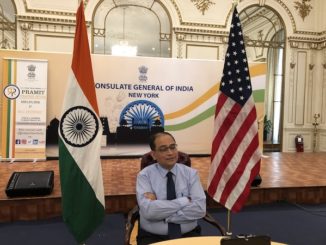
Sandeep Chakravorty, Consul General of India in New York along with members of the community joined the online Yoga session
The Consulate General of India, New York organized the virtual yoga sessions on the theme “Ghar Se Yoga-Yoga at Home’ to celebrate the 6th International Day of Yoga which falls on June 21st every year. In previous years, the day had been commemorated at prominent venues in and around New York with community participation. This year it was presented virtually due to COVID- 19 related restrictions in place and requirements of social distancing.
Various yoga and community organizations had lined up an array of virtual programs in the run-up to IDY 2020. All events were featured LIVE on the Consulate & the organization’s Facebook page. Vihangam Yoga, Indo-American Arts & Cultural Forum, Govardhan Ecovillage, Indo-Cultural Association of North America, Isha Foundation, World Yoga Community, Heartfullness, Art of Living, Federation of Indian Associations (FIA), The Hindu Temple Society of North America, Swaminarayan Gurukul USA and Bruhan Maharashtra Mandal Uttarang partnered with the Consulate to celebrate IDY 2020. Various yoga sessions were conducted by professionally trained Yoga teachers. A guided yoga session based on the Common Yoga Protocol was performed by the
The Consulate’s flagship event, held on June 21st, 2020, was attended by Congressman, Tim Ryan. In his virtual message, Congressman underscored that practices like yoga don’t have to be a ‘religious practice’ to really experience its deep He also noted that during the COVID-19 pandemic, the practice of yoga can help communities heal together; ensure physical and mental well-being as people around the world deal with increased anxiety, uncertainty and unemployment.
Sandeep Chakravorty, Consul General of India in New York, said yoga originated in India but the US has become its second home, with more than 36 million Americans practicing yoga regularly. He said India, the US and other countries in the world have been facing the challenge of COVID-19 for the last few months. Amid this, yoga has come to our aid to help us maintain our physical health and mental wellbeing. Dr. Dayashankar Vidyalankar, Teacher of Indian culture at the Consulate, demonstrated Yoga asanas.
Several officials and staff from the Consulate General of India, New York along with members of the community joined the online Yoga sessions. All events were viewed by more than 1.5 Lakh people.
Vivekananda Yoga University (VaYU) Launched
Vivekananda Yoga University launched . Seen in the forefront: V. Murlidharan, minister of state for external affairs; in the middle: P.P. Choudhry, chairman standing committee External Affairs In the background L to R: Prem Bhandari, chairman, Jaipur Foot USA and founding Director VaYU; Ashok Pandey, member Jaipur Foot USA; Consul General Sandeep Chakravorty; Deputy Consul General Shatrughna Sinha; Rajender Bafna, secretary JFU ; Alok Kumar former president, FIA and member JFU.
As part of the 6th International Day of Yoga celebrations, the world’s first yoga university outside India, Vivekananda Yoga University (VaYU), was jointly launched by Mr. V. Muraleedharan, Hon’ble Minister of State for External Affairs and Mr. P.P. Chaudhary, Chairperson, Standing Committee on External Affairs, in a virtual event on June 23, 2020. The event was jointly hosted by Consulate General of India, New York and Jaipur Foot USA. Mr. Prem Bhandari, Chairperson, Jaipur Foot USA and founding director of VaYU, and other prominent members of the community were also present on the occasion.
The announcement of courses by the university came within three months of receiving official recognition from the Bureau for Private Post-secondary Education, California to offer yoga-based higher education programs in November 2019. SreeSreenath, Professor from Case Western University, has been named its President. Indian yoga guru Dr. H. R. Nagendra, Chancellor of Swami Vivekananda Yoga Anusandhana Samsthana (SVYASA) is the first Chairman of VaYU.
Founded on the principles of Swami Vivekananda’s prescription for universal welfare, VaYU will offer online graduate programs based on scientific principles and modern research approaches to the ancient Indian practice of yoga. VaYU faculty has been recruited from Swami Vivekananda Yoga Anusandhana Samsthana (SVYASA) – the first Yoga university in India. VaYU will facilitate collaborative research, credit transfers and joint programs with multiple premier universities across the world.
In his virtual live message, Hon’ble Minister of State for External Affairs expressed his gratitude to Prime Minister Shri Narendra Modi for making yoga a universal activity. He also noted that Yoga has become a large movement that even with COVID-19 restrictions, International Day of Yoga was celebrated with great aplomb across the world.
The university will help thousands of yoga teachers in the US whose yoga education was limited to 200 or 500 hours of certificate programs to progress further into university-based higher education, remarked Mr. P.P. Chaudhary. The efforts of Prime Minister Shri Narendra Modi who was instrumental in getting the UN declaration of International Day of Yoga on June 21st to popularize Yoga will get a boost with the establishment of a Yoga university in the US, he said.
Sandeep Chakravorty, Consul General of India in New York, mentioned that New York has deep ties with Yoga. Swami Vivekananda’s journey bought him to New York where he lived many years and wrote books on Yoga. Many years later the resolution to commemorate International Day of Yoga was also passed by the U.N. in New York in 2015.
The university will offer online master’s program in Yoga. The applications for fall 2020 semester are open with the first day of classes starting on August 24 in a virtual mode.
WASHINGTON (TIP): The Centers for Disease Control and Prevention on Thursday broadened its warning about who is at risk of developing severe disease from Covid-19 infection, suggesting even younger people who are obese or have other health conditions can become seriously ill if they contract the virus.
The new advice, timed to influence behavior going into the July 4 weekend, came as CDC Director Robert Redfield acknowledged serology testing the agency has conducted suggests about 20 million Americans, or roughly 6% of the population, has contracted Covid-19. Redfield said for every person who tests positive, another 10 cases have likely gone undiagnosed.
While the 20 million estimate is far higher than the figure on the CDC’s Covid-19 website, it still represents a fraction of the country’s population, Redfield said.
“This pandemic is not over. The most powerful tool that we have, a powerful weapon, is social distancing,” he insisted during a press conference, only the second the CDC has been allowed to conduct since early March.
The new advice frames the risk as rising with age, jettisoning earlier warnings that mainly those 65 and older faced higher risk. It also puts greater emphasis on the risk presented by a number of health conditions, including having a body mass index of 30 or over. Previously the warning related to people who had a BMI of 40 or over.
“Younger people are in no way completely immune to the effects of SARS-CoV-2 nor are they at zero risk of severe manifestations,” said the Jay Butler, incident manager for the CDC’s Covid-19 response. “And among young people, that risk is elevated in those with underlying illness or health conditions, including things like diabetes or obesity.”
The agency is also warning that being pregnant may increase a woman’s risk of being hospitalized and having a severe bout of the illness, based on a study of more than 8,000 pregnant women in the United States who were diagnosed with Covid-19.
The study, published in the CDC’s Morbidity and Mortality Weekly Report, an online journal, found that pregnant women were 50% more likely to be hospitalized with Covid-19 than infected women who weren’t pregnant and had a 70% greater chance of needing mechanical ventilation than non-pregnant women with the infection.
But the study did not find an increased risk of death among the pregnant women.
The new guidance reflects what has been apparent for months now, with countless new severe cases among young people and those with underlying conditions. But warnings of those cases have largely gone unheeded as states have begun to reopen.
The country is seeing a fresh surge of cases, particularly in the West and South, where hospitals are swelling with new cases and state governments are struggling to respond. On Thursday, Texas Gov. Greg Abbott announced the state would pause its reopening in the face of outbreaks across the state.
Despite the surge in cases, President Trump has continued to express the view that the virus is going away. When asked if Americans were getting mixed messages about whether they need to take precautions to prevent becoming infected, the CDC director appeared to seek a middle ground.
Redfield suggested many of the infections now being diagnosed would have been missed earlier in the pandemic when testing was less common.
“I’m asking people to recognize that we’re in a different situation today than we were in March, in April, where the virus was being disproportionately recognized in older individuals with significant comorbidities and was causing significant hospitalizations and deaths,” he said.
“Today we’re seeing more virus. It’s in younger individuals. Fewer of those individuals are requiring the hospitalizations and having a fatal outcome. But that is not to minimize it.”
But Redfield went on to note that descriptions of the state of the pandemic in the country can be misleading, with maps that show where transmission is high suggesting much of the nation is experiencing high levels of spread. In reality, he said, about 110 or 120 counties in the country currently have significant transmission. There are more than 3,100 counties in the United States.
The new guidance breaks down medical conditions that can influence disease severity into those for which there is strong evidence, and those for which the evidence is not as strong, classifying the latter as conditions that might increase the risk of severe illness.
Cardiovascular disease, chronic kidney disease, chronic obstructive pulmonary disease or COPD, obesity, any immuno-suppressing condition, sickle cell disease, a history of an organ transplant, and type 2 diabetes are classified as having strong evidence of increasing the risk of Covid-19 infection.
Conditions that are considered ones that might increase the risk of severe illness are chronic lung diseases, including moderate to severe asthma and cystic fibrosis, high blood pressure, a weakened immune system, neurologic conditions, such as dementia or history of stroke, liver disease, and pregnancy.
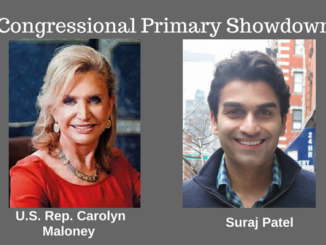
NEW YORK (TIP): House Oversight and Reform Chairwoman Rep. Carolyn Maloney is facing a primary challenge from Indian American Suraj Patel in New York’s 12th congressional district, which includes parts of Manhattan and Queens. Maloney, who defeated Patel with 60% of the vote in 2018 primary elections, is facing a much closer race this time around. Because of the significant volume of absentee ballots left to be counted, the tight margin may shift and the race likely will not be called until next week. Absentee ballots are still being counted and will be accepted until June 30, as long as they are postmarked by June 23.
As of June 24 morning, Maloney leads with 41.5 percent support, followed by Patel at 40 percent. Two years ago, New York University lecturer and former hotel executive Suraj Patel attempted to unseat longtime incumbent Rep. Carolyn Maloney in District 12. He fell short by about 20 points. This time, he’s only down by about 1.5 points and fewer than 1,000 votes. With as many as 109,500 absentee ballots outstanding in the district amid the coronavirus pandemic, Patel could very well close the gap in the coming weeks as they’re counted.
Patel said his campaign believed he would prevail as mail-in ballots are counted. “We are confident in our path to victory after a strong performance on Election Day, which traditionally favors establishment voters,” Patel said in a statement. “Over 58 percent of New Yorkers have rejected the incumbent’s politics of the past. We have a mandate for change, and the final tally will reflect that. We are proud to have run the best absentee ballot field program in this race, and now the energy and momentum is on our side. With thousands of votes outstanding — many from young voters and people of color — we will fight to ensure that every vote is counted, every voice is heard, and New Yorkers have the representation they deserve.”
On the other hand, a confident Maloney thanked voters for their support and did not signal any concern about the coming results.
“I am so grateful to all the voters who showed up yesterday, who voted early and who voted absentee to return me to Congress,” Maloney said. “This campaign was an opportunity not to just highlight my record of accomplishment and vision for a fairer future, but to talk about the opportunities ahead to advance police and criminal justice reform, to expand assistance to the millions impacted by COVID-19, and to hold President Trump accountable in what we are working to ensure are the final months of his disastrous presidency” she said in a statement.
Consul General of India at New York, Sandeep Chakravorty, as his last name suggests, has indeed been a Chakravorty Samrat of his sprawling territory covering ten US States . He came, he saw and he conquered, can well go to describe his work, accomplishments and achievements.
Mr. Chakravorty’s tenure witnessed extraordinary situations which demanded extraordinary responses. In both, the government of India’s J&K action , including the abrogation of Article 370 which granted special status to the State of Jammu & Kashmir, and later, the colossal human misery caused by COVID-19 calling for a gigantic effort to extend a helping hand to Indians , Ambassador Chakravorty proved himself equal to the occasion.
Ambassador Chakravorty ‘s work went well beyond the routine consular work. He strengthened the existing framework and created new and innovative ones. He strengthened institutions and organizations with his ideas, active participation and frontal leadership. In the process, he endeared himself to not only the Indian American community, but also to many from various communities . They will miss him .
Building bridges between India and U.S. and between Indian Americans and mainstream Americans has been his overriding passion. He can be credited with promoting amity and goodwill among communities here and the two nations. He leaves behind a rich legacy which his successor could well be proud of .
Ambassador Chakravorty’s fan following probably compares well with that of top film stars. He came to have many admirers, and quite a large number of friends, among whom I count myself. We will miss him a lot, and also his lovely wife Taruna Chakravorty, the kindly and caring First Lady at the Indian Consulate. Their twin daughters hardly ever made appearances but when they did as when they gave stellar Classical dance performances, they were amazing. God bless them!
New Yorkers tell me they will miss the friendly family. Of course, we will miss them.
We, at The Indian Panorama, Opinio Media , and International Media Arts, and my family who admire the Chakravorties, will miss the beautiful and admirable family. We wish them all health and happiness, and hope to see them remain connected.
Cruel hands of Death snatched away the 25-year-old Akashdeep , son to Sardarni Paramjit Kaur of Hicksville .
The handsome and promising young man was riding a motorbike when he met with an accident on May 17, 2020. He was hospitalized with life threatening injuries at Winthrop Hospital in Mineola. Despite of best efforts of doctors to save his life, he died on June 18, leaving his family and friends to mourn his loss. He was laid to rest on Tuesday, June 23.
Akashdeep will ever be deeply missed.
The Indian Panorama family prays for eternal peace to the dear departed soul.
SURREY, CANADA(TIP): Hailing from Rajeana village in Moga district, Sharanjit Singh Gill, popularly known as Shawn Gill, has been promoted as the Chief Superintendent and is now the Senior Operations Officer for the Royal Canadian Mounted Police (RCMP) in Surrey, British Columbia, Canada, reports Kulwinder Sandhu from Moga for Tribune News Service.
Hailing from Rajeana village in Moga district, Sharanjit Singh Gill, popularly known as Shawn Gill, has been promoted as the Chief Superintendent and is now the Senior Operations Officer for the Royal Canadian Mounted Police (RCMP) in Surrey, British Columbia, Canada.
British Columbia province is one of the biggest cities in Canada with a dominating Punjabi community.
Sharanjit Singh Gill was superintendent-rank officer — Community Services Officer — before being promoted to Chief Superintendent, early this week.
Congratulating him on his promotion, the Surrey police tweeted: “His 31 years of policing experience are a huge asset to our Frontline, Investigative and Community Services teams.”
In September 2015, then-Inspector Sharnjit Gill, who was Operations Officer for the Integrated Homicide Investigation Team, was promoted to the rank of superintendent in the position of Community Services Officer in Surrey police.
After beginning his career in 1989 on general duty in the Surrey police, he moved to Investigative Services where he worked in the Burglary and Serious Crime Units. Over the next 15 years, Gill gained extensive investigational police experience in various fields.
In 2012, Gill was commissioned as an officer and joined as a duty officer for general duty until he was transferred back to the Integrated Homicide Investigation Team in 2014. Gill was also a member of the Lower Mainland Hostage Negotiation Team and a past member of the E Division Interview Team.
Gill is fluent in Punjabi language and is fond of Punjabi lifestyle. He has been living in Surrey for the past five decades. He migrated to Canada in 1969. Gill is also a sportsman and used to play hockey, baseball and was also associated with soccer associations as a volunteer and also worked as an assistant coach.
In his career in the RCMP, Gill has won many accolades while in services.
In 1997, he was awarded the officer-in-charge certificate of recognition for his role in the arrest and conviction of two serial sex offenders. In 2009, he was conferred Long Service Medal for completing 20 years of service with good conduct and in 2012, he was awarded the Queen Elizabeth-II Diamond Jubilee Medal for his role as the team commander in-charge of the pipeline bombings investigation in Columbia.
British Columbia province is one of the biggest cities in Canada with a dominating Punjabi community.
Sharanjit Singh Gill was superintendent-rank officer — Community Services Officer — before being promoted to Chief Superintendent, early this week.
Congratulating him on his promotion, the Surrey police tweeted: “His 31 years of policing experience are a huge asset to our Frontline, Investigative and Community Services teams.”
In September 2015, then-Inspector Sharnjit Gill, who was Operations Officer for the Integrated Homicide Investigation Team, was promoted to the rank of superintendent in the position of Community Services Officer in Surrey police.
After beginning his career in 1989 on general duty in the Surrey police, he moved to Investigative Services where he worked in the Burglary and Serious Crime Units. Over the next 15 years, Gill gained extensive investigational police experience in various fields.
In 2012, Gill was commissioned as an officer and joined as a duty officer for general duty until he was transferred back to the Integrated Homicide Investigation Team in 2014. Gill was also a member of the Lower Mainland Hostage Negotiation Team and a past member of the E Division Interview Team.
Gill is fluent in Punjabi language and is fond of Punjabi lifestyle. He has been living in Surrey for the past five decades. He migrated to Canada in 1969. Gill is also a sportsman and used to play hockey, baseball and was also associated with soccer associations as a volunteer and also worked as an assistant coach.
In his career in the RCMP, Gill has won many accolades while in services.
In 1997, he was awarded the officer-in-charge certificate of recognition for his role in the arrest and conviction of two serial sex offenders. In 2009, he was conferred Long Service Medal for completing 20 years of service with good conduct and in 2012, he was awarded the Queen Elizabeth-II Diamond Jubilee Medal for his role as the team commander in-charge of the pipeline bombings investigation in Columbia.
LONDON (TIP): The UK Atomic Energy Authority’s Chitra Srinivasan is among the five Indian-origin engineers to be named among the UK’s Top 50 Women in Engineering for 2020.
Srinivasan, a control and software engineer at UKAEA’s fusion research lab at Culham Science Centre near Abingdon in south-east England, was joined by transport engineer Ritu Garg, seismic engineer Barnali Ghosh, climate change expert Anusha Shah and senior engineer Kusum Trikha for the Women’s Engineering Day awards announced on Tuesday, June 23.
Judged by a panel of industry experts, the awards seek to recognize female talent within engineering and are coordinated annually by the Women’s Engineering Society.
In its fifth year, the awards focused on sustainability – celebrating female engineers who are making a significant contribution to achieving net zero carbon emission.
The UK Atomic Energy Authority hailed Srinivasan’s success as part of a team developing fusion energy as a carbon-free source of electricity that could be used around the world.
“I am an upcoming engineer in fusion research and this achievement is highly encouraging for me,” said Srinivasan.
“This would not have been possible without the support of my colleagues. At UKAEA, I have the opportunity to research sustainable energy by developing computer codes to control the fuel inside fusion machines. We are copying the process that powers the sun for greener electricity,” she said.
Ritu Garg, a senior transport engineer at Arup, was recognized for her work involving the formulation and delivery of sustainable transport solutions. She is also part of a global initiative helping national governments unlock the economic power of zero-carbon sustainable cities.
Dr Barnali Ghosh, as technical director at Mott Macdonald, focuses on developing seismic resilience in infrastructure, using the UN’s Sustainable Development Goals (SDGs).
Among the other Indian-origin winners, Anusha Shah, as resilient cities director at Arcadis, supports organizations to meet net zero targets and become climate resilient and Kusum Trikha as senior engineer at WSP specializes in multi-million-pound low-carbon energy projects.
Sally Sudworth, the Women’s Engineering Society’s Honorary Secretary and head judge for the awards, said: “The panel of judges was thrilled by the outstanding achievements demonstrated by all of the winners and by the difference being made by the candidates.”
With the coronavirus outbreak, the awards were celebrated in a virtual International Women in Engineering Day event on Tuesday.
Elizabeth Donnelly, Chief Executive Officer of the Women’s Engineering Society, explained why they had chosen the theme of sustainability for 2020: “The 2019 Climate Emergency Declarations followed unprecedented weather conditions across the planet. It will be engineers who will provide many of the solutions needed to address the UN’s SDGs.
“We felt that it was the right time to showcase the amazing women who are already working on these issues.”
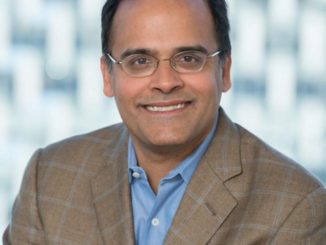
WASHINGTON (TIP): President Donald J. Trump announced his intent to nominate Deven Parekh, of New York, to be a Member of the Board of Directors of the International Development Finance Corporation for a term of three years.
Deven Parekh is a Managing Director at software investment firm Insight Partners and joined the firm in 2000. Deven manages investments in application software, data, and consumer internet businesses globally. He currently serves as Board Chair for Bullhorn, Appriss, and EveryAction, and he is a member of the Board of Directors for Fanatics, Diligent, 1stdibs, Checkout.com, Episerver, PDI, Community Brands, Vela (formerly SR Labs), Chrono24, Campaign Monitor, Wallapop, FloQast, and Inhabit IQ. He also represents the firm’s interests in Automattic (WordPress), SkyTap, and Zenefits.
Deven was selected to be on the 2014, 2015, 2016, 2017, and 2018 Forbes Midas list. In 2016, 2018, and 2019 he was selected as a Top 100 Venture Capitalist by CB Insights, and in 2014, was named by AlwaysOn as a Venture Capital 100 winner for his investments in Twitter and Chegg.
Deven was previously a Principal at Berenson Minella & Company, a New York based merchant banking firm where he served on the firm’s M&A Committee. Prior to Berenson Minella, Deven was with The Blackstone Group, where he was involved in both M&A advisory and principal activities. In 2016, Deven was nominated and confirmed by the U.S. Senate to serve on the Overseas Private Investment Corporation Board. That agency has since been merged into the new U.S. International Development Finance Corporation, and Deven was re-nominated to serve on the new DFC board in June 2020. From 2010–2012, Deven served as a Member of the Advisory Board of the U.S. Export-Import Bank, the official export credit agent of the United States. He also previously served as a Member of the Technical Advisory Council of the Federal Communications Commission, assisting with developing informed technology policies to support America’s competitiveness and job creation in the global economy.
Deven currently serves on the Board of Overseers of NYU Langone and is a Member of the Board of the Tisch New York MS Research Center. He has previously served on the Board of Trustees and Executive Committee of the Ethical Culture Fieldston School, and he is Chairman Emeritus of the Board of Publicolor, a New York City based non-profit organization that focuses on inner city schools, which he chaired from 2007 – 2012. In 2006, Deven was named a Henry Crown Fellow of the Aspen Institute, which seeks to develop the next generation of community spirited leaders. Deven is also a member of the Council on Foreign Relations as well as the Economic Club of New York. He received a BS in Economics from the Wharton School at the University of Pennsylvania.
NEW YORK /ROHTAK (TIP): Nephrologist Dr Pooja Bhatia Malhotra, who hails from Rohtak, had contracted the deadly disease coronavirus while treating her patients. The doctor, who is currently in the USA, resumed work after defeating the deadly disease, reports Sunit Dhawan from Rohtak for Tribune News Service.
She will feature in a Hollywood documentary film on COVID-19 warriors of Indian origin.
Dr Pooja is among the five Indian doctors working on the frontline during the COVID-19 in the USA which has been included in a feature-length documentary movie, “A Pandemic: Away from the Motherland”.
The documentary is made by Sweta Rai, an Indian filmmaker in Hollywood.
The movie showcases the remarkable contribution of Meerut-origin Dr Ankit Bharat, who is well-known for robotic lung surgeries and recently, performed pioneering double-lung transplant surgery on a COVID-19 patient.
The other COVID warriors of Indian origin based in the USA, who feature in the film, include Dr Uma Madhusudana (Internal Medicine), Dr Shreedhar Kulkarni (Internal Medicine) and Dr Shantanu Singh (Critical Care and Pulmonary Diseases).
As the film was shot during the lockdown, the filmmaker guided the doctors through a mobile app for shooting professional videos, like Skype, Zoom and WhatsApp video-calls.
“Reducing the pain and suffering of patients is a satisfying experience in itself. I am happy that the efforts of the medical fraternity have been acknowledged and appreciated universally in the COVID era,” said Dr Pooja, daughter of Rohtak-based senior advocate Amarnath Bhatia.
Dr Pooja is married to Sameer Malhotra, a software engineer based in the USA.
Dr Pooja’s brother Vishal Bhatia points out that after having tested positive for COVID, his sister stayed at home in strict isolation for more than two weeks and got treated.
“After defeating the disease, she resumed her clinical work and also gave her own blood-plasma for the treatment of COVID patients,” said the proud brother.
It was a big challenge, said Filmmaker Sweta Rai.
Talking to The Tribune on the phone, filmmaker Sweta Rai said it was a big challenge to shoot the film amidst the pandemic and lockdown and she was happy that they had made it.
“The underlying idea behind making the movie was to underline the contribution of Indian-origin doctors who are working far away from their country. The film focuses on the personal lives of the doctors and their family members in the Covid era,” stated Rai.
The Hollywood filmmaker revealed that she got the idea to include the Rohtak-origin woman doctor from her mother, who lives in India and had read a news report in The Tribune about Dr Pooja’s dedication towards the treatment of patients after recovering from Covid herself.
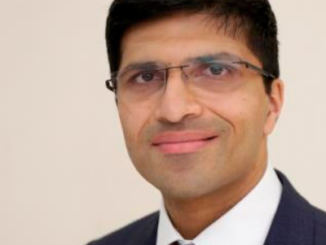
LONDON (TIP): HM Treasury on June 22 announced the appointment of Nikhil Rathi as the new permanent Chief Executive of the Financial Conduct Authority (FCA) of UK.
Nikhil is currently the Chief Executive of London Stock Exchange plc. From September 2009 to April 2014, he was Director, Financial Services Group at HM Treasury. In this role, he led the Treasury’s work on the UK’s EU and international financial services interests. Nikhil is expected to take up the role in the Autumn.
Chair of the FCA, Charles Randell, said: “I warmly welcome Nikhil to the FCA. I look forward to working with him as he leads the FCA to deliver the next phase of its mission. Nikhil has been closely involved in guiding the FCA’s development through his roles on our Practitioner Panel and Markets Practitioner Panel, and brings both private sector management skills and experience of domestic and international regulatory policymaking. I would also like to thank Christopher Woolard for steering the FCA through its initial response to Covid-19 with great energy and skill. He has been an exemplary leader in this very difficult period.”
Nikhil Rathi said: “I am honored to be appointed Chief Executive of the Financial Conduct Authority. I look forward to building on the strong legacy of Andrew Bailey and the exceptional leadership of Christopher Woolard and the FCA Executive team during the crisis. FCA colleagues can be very proud of their achievements in supporting consumers and the economy in all parts of the UK in recent months.
“In the years ahead, we will create together an even more diverse organization, supporting the recovery with a special focus on vulnerable consumers, embracing new technology, playing our part in tackling climate change, enforcing high standards and ensuring the UK is a thought leader in international regulatory discussions.”
WASHINGTON (TIP): Arizona State University Executive Vice President and Chief Research and Innovation Officer Sethuraman “Panch” Panchanathan has been named the 15th director of the National Science Foundation, unanimously confirmed by the U.S. Senate on June 18 after his December 2019 nomination by President Donald J. Trump.
During his six-year appointment, Panchanathan will be responsible for overseeing NSF staff and management, program creation and administration, merit review, planning, budget and day-to-day operations. He also will direct the federal agency’s mission, including support for all fields of fundamental science and engineering, keeping the U.S. at the leading edge of discovery.
“Right now, the world faces significant scientific challenges — most obviously a pandemic,” Panchanathan said. “But in addition to providing creative solutions to address current problems, our eyes are on the future, leveraging partnerships at every level and encouraging diversity that breeds new ideas for a robust pipeline of young scientists. It is only through that expansive perspective on the scientific and engineering enterprise that we can recognize the brightest ideas and nurture them into tomorrow’s world-class technological innovations.”
Panchanathan is the Foundation Chair in Computing and Informatics at the School of Computing, Informatics, and Decision Systems Engineering. He also founded the Center for Cognitive Ubiquitous Computing, where he researches human-centered computing to improve quality of life through artificial intelligence and machine learning techniques.
Beyond engineering and computing sciences, Panchanathan also champions transdisciplinary research through efforts to conceptualize and implement initiatives across disciplines, including the biological sciences, social sciences, physical sciences, humanities and public policy.
Ambassador Chakravorty may be credited with enormous work he has done to streamline the consulate functioning, bringing Indian American community to consulate and vice versa; strengthening bond between Indian Americans and mainstream Americans at various levels; reaching out to American lawmakers and educating them on contentious issues, and winning over some hesitant ones to India’s side ; educating Indian Americans on various Indian issues and winning their support for government of India policies; lobbying with investors in America to invest in India, and creating an image for himself as a dependable friend to Indian Americans and Americans alike. His passion for promotion of Indian culture and heritage resulted in the Consulate becoming a home to artists and promoters of various arts. His dialogue with anti -India separatists to persuade them to give up their futile efforts at separatism and get back to Indian mainstream, is a part of his historic initiatives. There is so much more to Ambassador Chakravorty’s immense work and valuable contribution.
The Indian Panorama, which was the first publication to interview Ambassador Chakravorty, three days after his taking over, as Consul General , on August 3, 2017 , is probably the privileged publication to have him to sit for his last interview as Consul General, on June 16, 2020.
“Setting up of Gandhi Shanti Van is my lasting legacy”, said Ambassador Sandeep Chakravorty. Ambassador Chakravorty ((third from left) inaugurated the plantation ceremony at Gandhi Peace Garden at CUNY, Old Westbury, October 1, 2019. 150 trees were planted in Commemoration of Mahatma Gandhi’s 150th birth anniversary Photo / Courtesy Indian Consulate, New York
The Indian Panorama Chief editor Prof. Indrajit S Saluja and Assistant Editor Bidisha Roy spoke with Ambassador Chakravorty.
Here are some excerpts from the interview.
TIP: Thank you for the interview, which I believe, is your last interview as Consul General with The Indian Panorama.
I recall your first interview to The Indian Panorama in August 2017. I believe it was your first interview to media after taking over as Consul General on August 3, 2017. You were kind enough to give us time immediately after joining here. And that was on August 6, 2017. You had said certain things, then, which I would probably like you to recall.
We have come a long way during the past close to 3 years.
We kept track of your journey, sometimes, through very difficult terrains particularly during the last about one and half year that I can think of. We have been appreciative of your work, and critical, too, where we thought the Consulate was failing, as is the dharma of media. However, we have had a great relationship, to the building of which you contributed more than we did. Thank you.
Institution building Is a continuous process. The consulate in 2017 when you took over has undergone transformation at your hands. You have added enormously to what you inherited. Pramit is the most outstanding example of your prized additions. What led you to imagine Pramit? How successful has it proved? Can you elaborate on that?
Ambassador: So, first of all, thank you and I vividly remember our first meeting right after I arrived here on August 3, if I remember correctly and you mentioned that our interview was on 6th August. So, I would request you to also remind me of what I had said then and I remember in another interview you had brought up what I had said and, you know, we were able to evaluate our performance. So now that I’m ending my tenure here I would again like to go back and see what all I promised, how much I was able to deliver and where I could not. But that’s not from a negative point of view but to see what more can be done. And I like this approach because three years back I set out the roadmap and some milestones to achieve, and I would be very happy to see how much I have achieved and how much I have not been able to achieve. So, that’s a very evaluative kind of exercise that you always do and I want to thank you and Indian Panorama for doing that.
Always planning better services at the Consulate. Ambassador Harsh Shringla cuts the ribbon to inaugurate the E-Seva at the Consulate, July 16, 2019. Consul General Sandeep Chakravorty is on extreme right. Photo/ Jay Mandal-On Assignment
Talking about the app that was developed – the app was developed with the whole idea. You know the moment I arrived here I realized that conventional ways of reaching out to the community will not succeed because of the sheer size and number. And this consulate, although it’s one of the largest consulates India has, it is not commensurate to the responsibilities and the duties that we have to perform. Our staff is the same since last so many years but the Diaspora has doubled, at least in the last 20 years, from 1 million it has become 2 million in this part of the world, and our interaction and connection with India in every, every way has increased. So, we realized that we had to rely on technology and with that objective we worked and I would like to put on record my appreciation and gratitude to one of my consuls Vipul Mesaria who came up with this server based idea, and then both of us, worked together and we developed it and it has really stood us in good stead, particularly now when we faced this crisis, due to COVID. One small example is that you know we responded to medical prescription requirements for across the United States, even outside our jurisdiction, hundreds and thousands. At least five to seven thousand people have responded – that would not have been possible without this app. You know the number of queries that we handle, the number of phone calls. We handle on an average 400 to 500 phone calls a day. That is not possible without this application. So, we integrated our web-based work, our telephone system, our monitoring system into one. And I think this is a great powerful tool, which we have developed and my hope is that other embassies and other missions use it and it actually proved its worth during this crisis, where we were able to reach out to everyone who came to us with some kind of a response. In these circumstances now what people need is response. Even if you say no, it’s a response. But what people don’t like is indifference. Indifference is the worst sentiment that can be created in somebody, and we have tried to overcome that, and I am very proud that my team has been very responsive. Our 24 hours helpline since mid-March, it is working 24 hours – you can call anytime, and you’ll get a response. So, I think that has been because of the technological changes we made in our consulate and our team spirit that we were able to bring. And we did it when things were Ok and normal, and it proved its worth when things became adverse in the last four months.
Building bridges. Ambassador Harsh V Shringla at an informal dinner reception, hosted in his honor by the New Jersey Governor, Phil Murphy (right) and his wife Tammy Murphy at his private residence in NJ, July 15, 2019. . Also in the picture is Consul General, Ambassador, Sandeep Chakravorty who organized the meeting Photo / Jay Mandal-On Assignment
TIP: If it is such a useful app, don’t you think the Ministry of External Affairs should recommend it across the board to all consulates all over the world ?
Ambassador: They are working on it, and I’ve been told by a very senior official that they are developing apps. This was home developed, homebrewed. I think they are trying to do it in a more professional That idea has been implanted. I have myself spoken to our leadership, and they liked the idea and they understand it, and I’m sure it will be the way we work in the coming years.
TIP: Let me take you to your first interview with The Indian Panorama in August 2017, soon after your arrival.
Always a man of ideas. General (Ret) David Howell Petraeus (Left), former Director of CIA and Ambassador Sandeep Chakravorty, India’s Consul General to New York at the Consulate General of India in New York July 23, 2019. General Petraus was invited to deliver a lecture on US-India relations under the New India Lecture Series. Photo/ Jay Mandal- On Assignment
You had said then, and I quote you “There are three relationships here – India-US relationship, Indian community-US relationship, and Indian community-India relationship. All are very important and we need to focus on all three.”
Almost three years later, when you look back, how do you score yourself on these issues?
Ambassador: Look, I would say that in all three, there has been positive developments. I can’t give a number because that would be the job of others who are evaluating me. Self-evaluation is always very difficult. But I think that on all three fronts, there has been, you know, great strengths. The India us relationship has gone ahead. It has been transformational with the Prime Minister’s visit to the US last year in September, then President Trump’s visit to India in February. All those have contributed immensely and if you are a keen observer of the political and geopolitical space, you will realize the kind of goodwill that India generates in the United States. Similarly, there’s a great deal of goodwill about United States in India. So, I think on that account too, we don’t have any reason to be unhappy. What may be, where we have the challenge is to convert this goodwill into economic opportunities, into businesses for bettering the lives of people in India. Having a strong economic relationship, I think ,nothing will put us back.
Rajiv Kumar, Vice Chairman, NITI Aayog (left) speaking about government policies and programs. Ambassador Chakravorty is to the right.
The India-Indian community relationship is also, I think, strong and vibrant. “Howdy Modi’ was a very good example where thousands of people went and you know there is a great deal of support to India and Indian causes in the United States, and the best support we found was when article 370 was abrogated. The Indian community, by and large, you know, greatly and very enthusiastically thought that it was anachronistic and they accepted it. You also mentioned in your remarks that there was a great deal of support. And as far as Indian community Indian Consulate relations are concerned, the assessment should be done by you. But I think that we have opened up our consulate to multiple actors. You know, all kinds of things we have done here. The idea was to not only open up to the Indian community but also to the mainstream American community, and events are a big method of doing that. I offered our facilities and our platform to all kinds of groups. Things that we have never done before we have done here. You know, and one initiative that I took was recognizing the contributions of Indian Americans who are friends of the consulate, and that I think has gone on very well. Few people told me don’t get into this, there will be people who are unhappy! Just because I will make one person unhappy, it doesn’t mean I won’t make 10 more people happy. So, I started in 2019 which was the first year we did it. And we honored people from the media and I think, Prof Saluja, you were one of the honorees last year. This year we honored Renee. You’re working in the media and you have contributed so much to the understanding of India in the United States and vice versa. This year it was in many more in numbers and in the coming years, I’m sure, it will be institutionalized and some of my colleagues and other consulates have liked this and they are proposing to do the same thing.
The New India Lecture Series at Indian Consulate, New York. From left, Sanjay Bhatnagar, CEO, WaterHealth International and Board of Dir. US-India Strategic partnership Forum, Arvind Panagariya, Professor of Indian Political Economy at Columbia University and Ambassador Sandeep Chakravorty, Consul General of India to New York during conversations on India’s current state of Economy at the Indian Consulate in New York City, New York; Jan 22, 2018
I’ll raise one point here. Earlier the interactions were different. They were more personal, because one could afford to be very personal in relationships, because the numbers were small and the kind of things that you did was small, relationship was small. But things have changed in last five years. Relationship has gone to a new level – it’s difficult to go personal now. But I think institution level power interactions have become much, much more. We have taken lots of initiatives. This year I started something called a ‘Chalo Consulate’. Rather than we going to you, you come to us, we will host you, we will talk to you. We did two or three Chalo Consulate’ editions till we were hit by COVID. We did with GOPIO we did it with AIA. But as soon as the situation normalizes, we’ll restart it. So, I think we’re at multiple levels we have connected with. You know, we celebrated 350th birth anniversary of Guru Gobind Singh Ji Maharaj then Guru Nanak Dev Ji’s 550th anniversary, and Gandhi celebrations. We introduced a lot of art and culture and business events. Then, educational events. So, I have tried to vibrate on all the cords, some very successfully, resulting in harmony in music; some maybe not so successful, but I tried my hands on all cords of the Sitar.
TIP: About India, American relationship, there are two areas, which you were looking at. One is the political and diplomatic relationship- India getting the support of the US, and the other is more important maybe, economic development, trade and commerce. There were high expectations of ever-growing economic cooperation between the US and India. There was a huge optimism. You organized so many lectures here by eminent economists, and there was huge optimism that Indian Americans will invest in India; Indian Americans will invest. Many central ministers and chief ministers of states made it a routine affair to visit New York to attract investment and they went all over the US in fact. Where are we on investment by Indian Americans in trade and commerce?
Ambassador Chakravorty held a meeting, October 2018, with the only Hindu Congresswoman Tulsi Gabbard Photo/ -Jay Mandal- On Assignment
Ambassador: The US India investment story is very positive. Now, as far as Indian Americans investing in India is concerned you know we have to understand it in a slightly nuanced way. If you consider an Indian company here which is owned by an Indian American, it doesn’t remain an Indian company, it becomes an American company. So, it then becomes very difficult to ethnically segregate that data. When you look at investment flows, for instance, let’s say, Google is investing in India. Now Google is headed by an Indian, or let’s say KKR is investing or let’s say BlackRock is investing – all their investment portfolio, India portfolio is handled by Indians. So, when American companies invest in India, we don’t see them as Indian American companies we see them as American companies, and that data is not available. But what I can say is that Indian Americans in decision making places, they are very pro India. I have attended so many meetings with CEOs when the finance minister came, when our Chief Ministers came. And we have been inviting all American corporates, but the room is full of Indians. The point is that our people have been so successful, they are making the main decisions in these companies. And so, you know, I would not like to go down that road and try to segregate the data. I think Americans are big investors in India, and when I talk of Americans, it means Indian Americans or, you know, African Americans or Latin Americans, all kinds of Americans are investing in India and the mood is very upbeat. The geopolitical changes that are happening in India will attract investments from the US and even during the COVID times, Facebook invested $6 billion, KKR invested some few hundred million dollars or I don’t know how much and that story is quite intact. And it will, as soon as things normalize, I think you will see a bounce back.
Kevin Thomas, the first Indian American NY State Senator was honored at the Consulate. Seen from left to right: Ambassador Syed Akbaruddin, India’s Permanent Representative to the United Nations, Senator Kevin Thomas, Ambassador Sandeep Chakravorty
TIP: Do you see American companies investing in pharmaceutical sector in India?
Ambassador: I think so. I think so because you know one point which came across is that although we are the pharmacy of the world, we do not make all the APIs in India. One of our friends, common friend, Mr Panaser – he has been leading this charge and trying to make sure that American companies also invest in India, particularly in some of the APIs. They would like to see the entire supply chain located in India so that there are less disruptions. So, we have held one video conference webinar on this issue. Some more are planned and the message I’m getting is that there is, and I see some collaborations. The only drug which works on COVID patients is Remdesivir. Indian companies got license to make Remdesivir. Jubilant America which makes Remdesivir in America, is an Indian company. So, you cannot separate India from pharmaceuticals, neither from vaccines. We are the vaccine factory of the world.
Ambassador Chakravorty at India Day Parade in New York. Seen from left to right: Yashpal Soi, Prof. Indrajit Saluja, Ambassador Sandeep Chakravorty, Congresswoman Carolyn Maloney, Dr. Neeta Jain, FIA Chairman Ramesh Patel (now deceased)and HR Shah
TIP: Coming to some very challenging situations you refer to – article 370 and abrogation of that. And that had international ramifications. Because Kashmir has always been a very hotly contested issue at the world fora, at United Nations and in world capitals. And it must have demanded a very huge effort on your part to explain to not only the Indian American community, a part of which was skeptical about what was being done by government of India, but the American mainstream, the lawmakers, including you know one Congressman you know you disciplined him. How big was that challenge and how you met it, because this is a story, which should be told, and which is a very important one.
Ambassador: I think you’ve raised a very important question. As we all know, and this is something which really strikes a chord in all Indians because we feel that Indian unity and India is one. And what was existing before – even if it was good – I don’t want to even evaluate it as good and bad – it was ineffective. And, rather integrating the people of Kashmir with India, it was fueling distancing. And something which does not work has to be changed. You can’t keep on taking the same medicine and get violent reactions and not do anything about it, you know, you have to stop that and take something else. And I’m optimistic that in the future, things will work out and Kashmir as a part of India will be fully integrated in our hearts and minds as well. So, you are right. You know it’s all a question about messaging and some people, I think, over the years had had been messaging in a very different way and when it happened I think there were some apprehensions and, also, we’ve to understand, other side was also very active in messaging that India was in the wrong. But I think from the messages that we got from our leadership, both in India and from Washington helped us in building a coherent strategy and there again we obtained or got the help of our community, and they were actually the main messengers to the American interlocutors and to the elected officials, public officials, saying that you know this is something where you know we feel very strongly about. And you need to hear all sides of the story, not only one side which they were had been listening to before. So, I think we were quite successful, to some extent, and people understood that this is something where Indians will not be muted. And, we will have to understand that. So, if you want a strong relationship with Indian Americans and with India, then you have to understand our point of view – I think that message went out well. And I think, very soon people understood that India had the full right to do. Earlier there were phrases being used like unconstitutional. It was not unconstitutional at all. It was done as per our law, as per our Constitution, and then then the narrative I think, we slowly shifted. And I think the message went down well and also I think we did a good job in managing the situation in Kashmir which was a very violent place earlier.
Promoting Indian culture internationally. Seen, among others, are Ambassador Chakravorty, wife Taruna Chakravorty, and their daughter who performed classical dance to perfection.
TIP: Even now there is violence. I mean, you can’t say there is peace. You know there are encounters taking place, every day.
Ambassador: Yeah, there is. But I think one has to understand that violence is reduced, and civilian deaths have gone down. I think, even if one life is saved, it’s worth that effort.
TIP: And I think COVID has played its own role. All contentious issues have been laid to rest for the time being. Everybody is bothered about self-preservation. So, that’s probably the positive effect of COVID on India. Even, on the world scene the differences and the contentions that were there, the strifes that were there, they have for now been laid to rest. Talking about COVID, it has affected everybody, in particular, a section of Indians. Whether Indians abroad got stranded in India, or Indians got stranded abroad, this was a big issue. And it was a big challenge – how did you deal with that. It was a huge number, particularly in the US
TIP: You know one thing which I felt good and I want to mention here also is that when we entered into lockdown in middle of March, we quickly retooled ourselves, and we decided that we will work from home, but we will work, we will not disappear from the scene. So, the consulate quickly re-modulated itself or reengineered itself. And we stopped people from coming to the consulate, but all of us were 24/7 available. And I realized the power of social media and I said, we have to be right there in the community, people should know that the consulate is there if they needed help. I think the number of events that we did over the last three/ four months is quite a mind-boggling number. And I involved the community. I found talent in the community. I asked people for help, people for ideas and suggestions and some of them have absolutely clicked so well that at the end, they have found resonance in India. So, I realized that one is helping people in need, in terms of helping them with food and housing and medicine. That was the first case; will come to the second case later. Otherwise, you know, keeping the morale high because people are sitting at home, getting upset, depressed they need some avenue or connection. I think we were able to provide that and I am very happy that our, social media platforms are very active and we have done lots of events and in fact, I will mention one event which will be of interest to you is that, we started this virtual. We were supposed to have this play festival for Natya Darpan of New Jersey, and it had to be canceled. And then I thought, why don’t we do virtual play festival. So, we had Vibrations 1. It was two/ three plays in English. Then I thought why we don’t go regional. So, we had one Hindi and one English play Vibrations 2. On Sunday we had Vibrations 3 in Kannad and Gujarati. And now we have Vibrations 4. For that I’ve asked people to come with a Punjabi or Telugu play, or whatever. So, this has become very popular and people in India are also seeing it. So, it is an invention of the times. So, initially when flights were not there we tried to engage with the community and Indians stranded here.
Promoting adventurer Soman, the globetrotting bicyclist
And then, when we were assured the flights are going to resume and run the Vande Bharat 1, we got involved in preparing those lists of people and trying to put as many needy people as we could. There were certain criteria for selection, and we tried to be as objective as possible, but the numbers are just staggering. And, so you know some people may say that I did not get a chance but I want to say, those who got chance were equally needy. And, you know, so many flights have gone. In the Vande Bharat 2 mission, the number of flights is tremendously high, and we opened up the booking. Now it’s directly through Air India and people are getting seats and people are going back home. And I think that’s a very positive development, you know. So, the burden of ticketing has now moved from us to Air India, and the people can go online and buy tickets. There are issues, because demand may be slightly more than whatever availability. But, again, you know, last week more flights were added from New York. So, I’m sure that the critical requirements was there, that is being fulfilled.
TIP: Yeah, right, critical requirement was fulfilled. I have received complaints that Air India has been charging astronomical fares.
Ambassador: This is completely baseless because Air India was not a company which was in the pink of health, with a green balance sheet or a blue balance sheet. It was in financial stress. I will give you one example. Get me a ticket to China! Chinese nationals are complaining you know how much a ticket to China is costing? $10,000. How can you run the operation if this is not paying? What has happened here was due to COVID. All the supplies were disrupted. And everyone was charging more because you see everyone was laid off and they were earning Social Security, nobody wanted to come to work. Second thing is, Air India has taken a policy of dividing the cost. You know some tickets are cheap. It’s not a money-making operation. It has to be a viable operation – thousands of people went back home. It can’t run on charity. Because of COVID everybody has taken a hit, government has taken a hit; revenues are down. Air India has taken a hit. So, whatever has happened, I think that is a positive culture. When the situation was normal, there were other carriers; people had an option. It could not have been done by any other model. I think it’s justified but saying that Air India is price gouging I don’t accept that.
Celebrating Guru Nanak, the First Master of the Sikhs at his 550th birth anniversary celebrations, at the Indian Consulate. Prof. Baldeep Singh and his co- performers at the shabad kirtan were honored.
TIP: You have actually seen in the consulate basically middle-aged people; the older generation you know they are all over. But the younger generation of Indian Americans, and you probably were trying to rope them in. What did you exactly do to rope them in, to make them interested in their roots, and promote their visits to India so that they get familiar with their own homeland, you know, I mean the Mother India. What did you do about that and how successful has been your initiative?
Ambassador: I think it’s a very valid point and although we tried, I don’t think we have been very successful. But that doesn’t mean that you see, we may not get attract young Indian Americans to our, let’s say, cultural programs. But we were all the people who came for investment programs or the roadshows or the, you know, business with India, those are all young people. So when you come in the evening, let’s say, for classical music, you may not see young people, but during roundtable with Jaitley saab or Nirmala Sitharaman or Planning Commission and many other such events, they joined. So, I would say that, if you go across the events that we did, we were able to attract young people also, but maybe in some events they came in others did not. But I think that exercise is more needed.
TIP: We have thousands of students, you know, studying in various colleges and universities here under your jurisdiction. So, have you been able to drop a program to reach out to those students?
Our student outreach is, I think one of the high points of our work here. We have now an educational officer. We have an India-US student hub running out of Washington. We are active members of that, and hundreds and thousands of students are being reached in through social media. During COVID time we reached out. In fact, Ambassador did an event on Instagram, where more than 100,000 people students saw. So, we have a fantastic outreach to student. In every campus we have a campus lead, who connects to us. We have this India Corner library initiative, I have personally gone to many universities and colleges and set up the India corner where we have reached out to students.
So, we have a very strong student outreach.
Recognizing Friends of the Consulate at PBD 2018. Prof. Indrajit S Saluja was among those honored. See, from L to R: Prof. Indrajit Saluja, Ambassador Sandeep Chakravorty, Deputy Consul General Shatrughna Sinha Photo/ -Jay Mandal- On Assignment
TIP: I come to another question, and I take you back to your August 2017 interview. and I quote, but as you said, every person is different. And I would also love to leave a legacy behind my legacy that I would love to leave behind this fantastic relationship with the Indian community here. So, as we look at your relationship with the Indian American community and the mainstream of Americans. We have no doubt you have created that legacy. And people here will fondly remember you. But how did you achieve it? It must have meant an enormous effort and work on your part. Would you please like to tell us, for our readers.
Yeah, I think, you know, I sensed that many people were hesitant to engage with the consulate. They had some issues in their mind. Maybe we were signaling what we were not. So, I tried to change that signaling. I said that this is home for everybody, and all kinds of people. You know, whether you’re rich or poor or belong to which part of India, really, as long as you are in India connection, you are most welcome here and even if you don’t have you are most welcome. So I think, and that messaging I passed down my consulate and, you know, I tried to build. I told my team that you know the way you behave with each other and with your family, you will have to be here with your clients and customers. So that is the messaging I tried to give from the very beginning and I think we have been successful. And I also said that you know everyone needs a response. People come to see you, or meet you or write to you or call you, response was a deficit, I think, in the same when I came in. And I tried to put in place a very efficient response management system. People want an answer. So, if you see on social media on Google on Facebook, on Twitter and all I think the feedback that we give, we get that has improved dramatically. And to that feedback also we respond. So, I said you know respond to everybody. And I think that creates a positive sensation. And I think the message that I gave to people was that, you know, we are here to serve people you know it’s not the other way around. You have to be very clear. I got support from our embassy and from our leadership. And I think if it continues like this, then I think I’ve achieved my goals.
2018 Friends of the Consulate honorees with Ambassador Sandeep Chakravort, DCG Shatrughna Sinha and Devadasan Nair, Consul (Community Affairs)
TIP: There always is some unfinished task, as there are unsatiated desires. What are the things that you had on the list to do, but haven’t been able to do?
The greatest regret is COVID!! It took away four months from my calendar. There were many things that I wanted to do. Even I am not able to say goodbye in a proper way. I wanted to work more on some political issues, meeting governors and elected officials under my jurisdiction. After President Trump’s visit, the messaging was very important but could not do that. I leave on a high, if people say, ‘don’t go’ – I think that’s the achievement rather than they say, ‘you go now!’
TIP: What would be your message for people in the New York Consulate jurisdiction, in particular, and for all Indian Americans, in general?
Ambassador: People must be very careful about COVID. You have to take precautions. If you are opening up and re-engaging with the community, you have to do it very carefully. Secondly, we have tried to make a new relationship with the community and the consulate is part of the community. This Consulate has the best relationship with people. Extend the same degree of support to my successor. I think I have been able to create a very good team. They are all working for you and will be there. Use that relationship for your benefit. And thirdly, I want to thank everybody. Various institutions, including temples, mosques and gurdwaras were extremely cooperative. I want to thank them all.
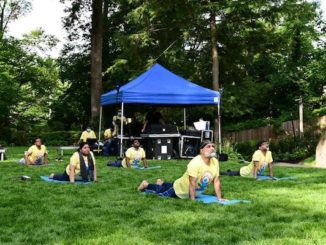
Celebrating International Day of Yoga 2019
TIP: What situation or event or happening can you identify as you may like to cherish and never want to forget?
Ambassador: It is a little difficult to identify it. But I may say, the driven and energetic leader that I saw in our Prime Minister on his last visit in September to USA is one I cannot forget. However, I should think, setting up of Gandhi Shanti Van at CUNY campus was my high point. It was my idea. You know my love of trees. So, it was a very satisfying thing to do. I asked Mr. Arvind Vora, who is at least, 70, for his cooperation and he very willingly stepped forward. No government of India funds were used. It was people’s participation. They planted trees in commemoration of their near and dear ones, even as I did in the name of my parents. Gurdwaras, temples, institutions and individuals contributed .We planted trees in the name of all 50 States. Prime Minister Modi Ji made some suggestions which were very helpful. I consider setting up of Shanti Van as my lasting legacy.
TIP: Any situation or event or happening you may like to forget as a bad dream?
Finding time to watch US Open. Also seen is wife Taruna Chakravorty. Photo/ -Jay Mandal- On Assignment
Ambassador: I try to be very discerning not to get into a situation which I may regret later. I may not have made all happy. But I did not intentionally make anybody unhappy. What I know for sure is institutionally, we have never failed.
Always a man of the people. Participating in the Holi festivities organized by The Indian Panorama in 2019
TIP: As you are preparing to leave , to take up another assignment , we, at The Indian Panorama and Opinio Media, Bidisha and myself ,wish you all success and happiness .I hope our bond is beyond geographical limits, and our paths will continue to cross again and again.
Karela or Bitter Gourd has multiple Health benefits
Its uses are varied, and the juice stimulates the Liver and is especially beneficial for weight loss and diabetes. Here is an easy, healthy and delicious Karela recipe.
Ingredients:
5-6 thin, firm karelas…(fat ones are full of seeds) -a few cloves Garlic – finely chopped -1 Onion – thinly sliced -2 Tomatoes – chopped -2 green chilies hari mirch-
–Coriander leaves -hara dhania chopped -salt –haldi –dhania powder -1 teaspoon sugar
-a pinch of amchoor ( dried mango powder)
– 2 tbspn. Wheat flour – atta
-Cooking Oil
Method:
Cut karelas into thin rounds ( do not peel).
Sprinkle some salt, sugar and the wheat flour -mix and keep covered for 3-4 hours.
Now mix karelas well and wash thoroughly with water.
Squeeze and deep fry in hot oil till crisp.
In a wok, put in the fried karelas, onions, garlic, tomatoes, chilies, sprinkle a little salt, dhania powder, haldi, a pinch of sugar and a pinch of amchoor-
Cover and put a little water on the lid and let it remain so for 5-7 mins on sim/slow fire. Stir lightly and cover again for another 5 mins. Turn off fire and let it remain on dum ( steam )for a few minutes.
Garnish with chopped coriander leaves and serve with chapattis and curd.
(A former Miss India, Sheila has for decades been one of the top newsreaders and anchors with Doordarshan. She is a culinary connoisseur. She can be reached at schaman@hotmail.com)
“Perhaps never before humanity felt so scared and helpless. A minute or invisible spec of a virus, riding a molecule of protein, has put the might of the world to shame. Nations armed with nuclear and biological weapons have lost count of ideas that could instill confidence in the masses. Doors of the places of worship have been shut and mobility of mankind halted.”
Prabhjot Singh
Change is the only thing that is permanent in life. But the change brought about by the corona virus pandemic makes Mount Everest look like an ordinary hillock. So massive is the change that all those factors, including society, religion, governance and human values that have been under criticism for fragmenting the universe in general and mankind in particular for centuries, have suddenly become irrelevant. It does not matter where and which part of the world you are located, sense of insecurity or fear of the invisible is the same.
Intriguingly, humans who have been priding themselves to be the masters of the planet earth, stand tamed while all other members of the living kingdom, with their newly acquired freedom – freedom from the fear of the man and his nefarious designs of wreaking havoc with Mother Nature – are wondering where humans have disappeared.
Perhaps never before humanity felt so scared and helpless. A minute or invisible spec of a virus, riding a molecule of protein, has put the might of the world to shame. Nations armed with nuclear and biological weapons have lost count of ideas that could instill confidence in the masses. Doors of the places of worship have been shut and mobility of mankind halted.
Fear of the invisible is so strong that people have even refused to claim the dead bodies of their near and dear ones. Doctors, specialists and super specialists are working round the clock to contain the spread of this latest virus that has been proving more dangerous than any of the previous ones, including Spanish virus, Zika, Nipah or even AIDS. Medical researchers are engaged in finding a vaccine, hoping for a breakthrough later this year or early next year. All you hear every morning is the new number of those who tested positive or the number of those who lost their battle against corona. Day in and day out health experts are warning the people that corona has come to live with us. Social distancing or social alienation, they maintain, is the only way to contain its spread. Humanity should be prepared to shed its traditional ways of getting together in good or bad times. Results are already before us. Social gatherings are fast becoming a thing of the past.
One of social scientists and an ardent advocate of “human freedoms” went to the extent of saying that “if the medical experts have their say they would love humans to hibernate till the pandemic lasts.”
Scientists, including Doctors, seldom approve of natural remedies that people have been successfully using for centuries together to counter natural and unnatural disasters. These therapies were generally based on unflinching faith in spirituality or naturopathy.
Though the guidelines promulgated by the medical world through governments are being religiously followed the world over, it may be very risky to allow faith or religious beliefs as a part of the warfare against corona. After all remedy lies in the faith, whether it is in the modern health care system or the traditional natural ways. For centuries, faith in the latter has worked though scientists may not approve of any involvement of religion or traditional faith in what they believe to be their domain.
Amultilateral approach that encompasses both traditional and modern scientific theories should be the ideal solution to fight the virus wars that are becoming increasingly regular. The world has already encountered four during the past two decades before Corona knocked at our doors.
Spirituality or even religious faiths that have stood by humanity in difficult times, unfortunately, also have their values overshadowed. Places of worship that provided solace, peace and relief from natural and unnatural disasters, including epidemics, since the time immemorial, are now standing mute spectators to the unprecedented agony facing mankind.
Before jumping to any conclusion, there is a need to study the role the spirituality has played for the wellbeing of mankind over the centuries. Take the case of Sikhism, the youngest and perhaps one of the most scientific religions of the world. It is this faith, started by Sri Guru Nanak Dev Ji more than 550 years ago, that runs more or less on logical or scientific lines. There are numerous instances that Sikhism supports the scientific thought process.
It is the Sikh philosophy that has given the modern scientific world lead in many areas, including the use of tobacco, besides laying stress on maintaining sanctity of air, water and soil. Intriguingly, the modern scientific world woke up to these realities, much later or as recent as the late last century.
Langar seva is a Sikh tradition. Ludhiana’s Gurdwara Dukh Niwaran Sahib served over 10,000 meals daily amid the lockdown
Giving religious sanctity to these three basic elements of life and avoiding use of tobacco were perhaps the most recognizable initiatives of Sikhism that also gave the world of voluntarism. Tradition of community kitchen or langar started by the founder of Sikh faith has given it global recognition. Even now when all the places of worship are ordered to be closed under lockdown conditions, community kitchens of gurdwaras continue to work to feed the poor, needy and those in distress. This role of Sikh institutions has come for praise from none other than Indian PM Narendra Modi.
However, these arguments were ignored while taking forward the fight against coronavirus. Unfortunately, places of worship were put in the category of possible spread zones of the virus. It is why authorities and medical experts are issuing warnings against gatherings or congregations at places of worship. Instead of temples of peace, solace, and meditation, these places are being viewed as suspected epicenters or source centers of infectious corona virus. Unfortunately there have been tirades to paint some minority religious groups for the alleged spread of the virus. It may be pertinent to mention that famous and historic religious or worship places have seldom proved to be the source center for the spread of any disease or infection. Instead, these abodes of peace, spirituality and tranquility have always stood as big support zone for the suffering humanity.
There have been appeals for special prayers individually or at limited mask clad gatherings to rid the world of this corona menace, places of worship are no more allowed to be frequented to assuage the hurt mankind has inflicted upon Mother Nature over the centuries.
The Malaysian example is there for all of us. When it allowed special religious congregations, especially on Fridays, it mandated the requirement to observe social distancing, practice sanitizing besides recording proper details (of congregation members) for record purposes. Members of the congregation are also required to bring their own prayer mats and take ablutions at home before going to the mosques.
India being far more religious can take a leaf or two from the Malaysian experiment.
For me, religion is a way of life. It not only provides me light through dark phases that dot day to day life but also guides me to stay calm and focused for peaceful coexistence with fellow beings. Essentially, someone who endeavors to be a good human being, contributes a part of his income towards charities, lends helping hand to others in distress and lives a healthy, hygienic life by following the tenets as enshrined in the sacred scriptures is a fairly religious person.
Meditation and listening to Holy Scriptures, scientists admit, strengthen the human immune system. It is not the numbers but the state of mind that makes one vulnerable to infection. Faith and positive feelings make a huge difference. It is in no way to denigrate the good work scientists have been doing to prevent spread of diseases.
They firmly believe that “chakhna” (taking palmful ) of “amrit” or “jal” from the sacred “sarovars” is cure for all ailments. For them, the “jal or amrit” is like a universal vaccine that has a cure for all ailments.
And their belief was immense. They would support it by saying that thousands of people who take holy dips in sacred sarovars or even in rivers like Ganges not only get their sins washed away but also get cured of their ailments. There was definitely logic behind their belief.
However, researchers in health care neither subscribe to these theories of natural or spiritual cure centers nor make them a part of their action plan simply because there have been no scientific backups for these claims. This may be the reason that the governments and medical experts feel that taking holy dips or visiting places of worship may not be of much help in fighting the corona pandemic. They stand convinced that only Science, which for others is the bane of the present suffering of mankind, has the solutions to the problems it unwittingly creates for mankind.
(The author is a senior journalist, based in Chandigarh. He can be reached at prabhjot416@gmail.com)
“Operation Blue Star – Counterbalancing Terror – results in boomeranging horrible pain”
By Ravi Batra
The 1984 Operation Blue Star was the biggest internal security mission ever undertaken by the Indian Army. Operation Blue Star was Indira Gandhi’s solution to the haywire going law and order situation in Punjab.
Operation Blue Star was carried out between June 1 and June 8, 1984, in Amritsar.-EDITOR
“Leadership requires making choices – picking between not “good” and “bad,” but “bad” and “worse.” This Op-Ed is aimed at policymakers – to abandon counterbalance as a pillar of statecraft, and it’s noisy and genie-out-of-the-bottle progeny: state-sponsored Terrorism. It doesn’t work, and is very painful at the bitter end. Being “right,” and winning by “right means” permits an end – as a civil “trial by jury” does daily in our courts even for losers. Nations, however, continue to exercise “might is right,” when it really never was – given its lingering “tail”.”
“My takeaway: don’t use counterbalance; it’s sexy upfront, and painful as a nightmare divorce in the end. Recently, Kurds in Syria bear witness – as some of them became Terrorists against Turkey.”
The enemy of my enemy is my friend; or so goes the saying, lovingly followed by policymakers seeking a shortcut to victory for several millennia. Indeed, counterbalancing continues as a steady pillar of statecraft the world over. It matters not that ultimately it doesn’t work, and backfires with a painful boomerang.
Recall President Ronald Reagan’s “Freedom Fighters” in Afghanistan who we trained and equipped to fight the then-USSR’s excursion in Afghanistan to an unhappy exit. Then, after 9/11, when we were in hot pursuit of its mastermind OBL and ended up in Afghanistan – our Freedom Fighters became the Taliban we were fighting against. 40 years and lots of blood and treasure we have spent, only to make a recent Jello gelatin flexible peace-deal with the Taliban, and then cause the local government’s twin executives to sign on after the fact to make it operational, all so we may extricate ourselves from a war we cannot lose, nor win by civilized standards in a place where our values are alien to the local ecosystem. My takeaway: don’t use counterbalance; it’s sexy upfront, and painful as a nightmare divorce in the end. Recently, Kurds in Syria bear witness – as some of them became Terrorists against Turkey.
Well, let’s go back to 1971 – when the Blood Telegram sent from Dhaka was ignored in China-loving Richard Nixon’s Washington DC – and Indira Gandhi, Prime Minister of India, moved to save the remaining Hindus in now-Bangladesh from genocidal demise. India secured a striking victory in short order that exceeded expectations and was decisive to boot. Pakistan was unhappy, to state the obvious. Nations have found that sponsoring Terror is attractive – because it is what I call – war on the cheap. Pakistan enjoyed such sponsorship as a rejoinder. India’s Punjab and Kashmir border Pakistan, and cross-border Terror-support in Sikh-rich Punjab was easier, as Sikhism’s founder, Guru Nanak’s immortal roots remain in Pakistan – a matter of great importance even now while celebrating His 550th Birthday in Nankana Sahib, Lahore Pakistan via opening the visa-free Kartarpur Corridor – thanks to P. M. Imran Khan and P. M Narendra Modi – which nations and people of goodwill celebrate.
So after 1971, Pakistan’s cross-border sponsorship was for Khalistan to be born – perhaps, as a nation for a nation – with three Sikh leaders Shabeg Singh, Balbir Singh, and Amrik Singh turned separatists, who were allegedly taught tactics more familiar to Terror in Pakistan. As a result, India suffered a porous border and a porous state in Punjab and Kashmir, such that India’s sovereignty would be an afterthought if not stopped. Mrs. Gandhi decided to fight fire with fire, and allegedly “sponsored” a genuine Sikh leader Jarnail Singh Bhindranwale. Ultimately, he and his armed supporters came under threat of arrest, being un-controllable by Delhi, and took refuge in the Golden Temple – the holiest Harmandir Sahib – and Operation Blue Star was born in June 1984 to turn back the hands of time and Statecraft’s expediently sexy counterbalance pillar. When first trying to peacefully end the stalemate and get the innocent pilgrims released failed over two days, as the separatists were armed with even Chinese-made grenade-launchers, on June 5th military force was initiated to forcibly evict Terrorists from the house of worship. That goal would be tough enough without religion being implicated; but attacking the holiest Sikh Gurdwara – a sanctuary – with 10,000 booted soldiers was successful in a military sense, but a failure by all other metrics. Harmandir Sahib was severely damaged, ancient scripts and artifacts forever lost in the “firefighting fire.” Thereafter, while the Indian Government rebuilt it, the Sikh community tore it down and rebuilt it afresh – perhaps, as we recently tore down our newly built embassy in Moscow and rebuilt it anew.
The historic Ramgarhia Bunga damaged in the Operation Bluestar
The price of counterbalancing Pakistan’s punishment – trying to create Khalistan for loss of her East Pakistan – was that Mrs. Gandhi was assassinated on October 31, 1984 by her favorite bodyguard, Beant Singh, and Satwant, both Sikhs – whom she insisted upon keeping. What followed was nothing short of a bloodbath – known as the Anti-Sikh Riots or worse – where even innocent Sikhs were hurt, injured and even killed and some members of the Indian Congress party were allegedly directing the Sikh-killings in an opportunistic manner – a stain that India has dealt with (and still has to remedy) as we did for interning loyal Japanese-Americans after Pearl Harbor some 40 years later.
Recall in 1988, President Reagan signed the Civil Liberties Act to compensate more than 100,000 Japanese-Americans who were incarcerated in internment camps during World War II. The Law offered a formal apology and paid $20,000 in compensation to each surviving victim.
Leadership requires making choices – picking between not “good” and “bad,” but “bad” and “worse.” This Op-Ed is aimed at policymakers – to abandon counterbalance as a pillar of statecraft, and it’s noisy and genie-out-of-the-bottle progeny: state-sponsored Terrorism. It doesn’t work, and is very painful at the bitter end. Being “right,” and winning by “right means” permits an end – as a civil “trial by jury” does daily in our courts even for losers. Nations, however, continue to exercise “might is right,” when it really never was – given its lingering “tail.” A lesson China will learn from its current collective and sequential miscalculations: Tibet, Uighurs, OBOR with AIIB, exporting Wuhan Virus (lab-engineered as it has the Spike Glycoprotein (S) spliced off the 2003 SARS Bat viruses and transplanted onto the surface of the AIDS virus in 2019 – see, my April 14, 2020 “Open Letter to POTUS et al” in public domain – recently re-confirmed by former head of MI6) as a global Pearl Harbor, with it’s cover-up, followed not by an apology and compensation, but added belligerence in South China Sea and Hong King, and inter alia, converting diplomacy, a channel most useful during disputes and war, and instead burning it by making diplomats act as a “Wolf Warrior” commando doing battle. That our Hollywood celebrates Chinese-Americans and China is starkly in contrast to the steady anti-American diet fed by Chinese Communist Party leadership to her people. That is both strategic, as it is tactical – something President Trump, Secretary Esper, Speaker Pelosi and Leader McConnell ought digest, as we too have our nation to defend in present time from folks we saw as friends, since Nixon, but who played us.
Disclosure: I legally represented Indian National Congress and Mrs. Sonia Gandhi, merely a loving wife, mother and daughter-in-law in 1984, when they were sued by a so-called entity, Sikhs for Justice, under the Alien Tort Claims Act in United States Federal Courts in New York – SDNY and EDNY. I successfully argued that India, where all events occurred and all actors reside, was ineligible for US courts to exercise extra-territoriality and it was for India to remedy this stain. The lofty U. S. Second Circuit Court of Appeals issued two orders in 2014 and 2015, respectively, agreeing to dismiss the cases pursuant to US law. Thereafter, Rahul Gandhi, adopting my legal filings, gave an interview to Arnab Goswami confirming for the first time that “some” Congressmen were complicit in misconduct. SFJ’s subsequent cases against then-PM Manmohan Singh and PM Narendra Modi were dismissed, based upon the precedents I secured, along with application of the Foreign Sovereign Immunities Act, as Prime Ministers, as head of government, are so entitled – which neither INC or INC President Sonia Gandhi was so entitled. Now, SFJ is out of the media-rich harassing litigation, but, allegedly, based upon reports, may be subject to Foreign Agent Registration Act given its foreign supporters.”
(The author is a senior attorney and Chair, National Advisory Council South Asian Affairs. He can be reached at ravi@ravibatralaw.com)
CHICAGO (TIP): Shina Trivedi, a Lake Park High School District 108 student, received The President’s Education Awards Program which is awarded on behalf of the President of the United States and the United States Secretary of Education. She was also honored by the State of Illinois as 2020-21 Illinois state scholar.
Shina’s mother Hina shared her daughter’s achievement on Facebook congratulating her on graduating in 2020 online with a 5.0 GPA at the end of seven semesters.
Shina is a student of Lake Park Educational Foundation in Illinois and she was honored by the state of Illinois as 2020-21 state scholar.
Shina’s mother Hina is an Indian community leader in Chicago and has been invited as delegate for the Pravasi Bhartiya Divas in Bangalore in 2017.
Hina had been teaching the younger generation Indians in the US about Indian history and culture.
NEW YORK (TIP): Indian American Shankari Rajagopal has been named as one of the 2020 Stanford Science Fellows. She is among eight postdoctoral researchers from around the world who are studying a variety of topics, including geoscience, computational chemistry and condensed matter physics. The program arose from Stanford’s Long-Range Vision as a way to cultivate new directions in foundational scientific research by advancing and bridging disciplines in the physical, mathematical and life sciences.
Rajagopal came to Stanford as a postdoctoral scholar studying quantum physics and will continue to pursue experimental investigations of novel phases of matter as a Stanford Science Fellow.
The Stanford Science Fellows Program will recognize and support scholars who reflect a diversity of perspectives, identities, life experiences and backgrounds, including those from groups that are underrepresented in the sciences. Stanford Science Fellow appointments are for three-year terms.
SCHAUMBURG, IL (TIP): This week, Congressman Raja Krishnamoorthi (IL-08) joined more than 150 Members of Congress as a cosponsor of the Justice in Policing Act of 2020. The bill is led by Congressional Black Caucus Chair Karen Bass, Senator Cory A. Booker, Senator Kamala D. Harris, and House Judiciary Chair Jerrold Nadler. Sponsors described the bill as the first-ever bold, comprehensive approach to hold police accountable, change the culture of law enforcement and build trust between law enforcement and our communities.
“As our nation continues to battle its legacy of systemic racism, this legislation will help to ensure that police officers are equipped with the resources they need to appropriately and effectively respond to the challenges they face on the job while sending a clear message that there is no place for brutality or misconduct in law enforcement,” said CongressmanRaja Krishnamoorthi. “We need to make equal justice under the law not simply a principle, but also a reality for all Americans, regardless of their background, and this legislation is a crucial step forward in that effort.”
The Justice in Policing Act of 2020:
Prohibits federal, state, and local law enforcement from racial, religious and discriminatory profiling, and mandates training on racial, religious, and discriminatory profiling for all law enforcement.
Bans chokeholds, carotid holds and no-knock warrants at the federal level and limits the transfer of military-grade equipment to state and local law enforcement.
Mandates the use of dashboard cameras and body cameras for federal offices and requires state and local law enforcement to use existing federal funds to ensure the use of police body cameras.
Establishes a National Police Misconduct Registry to prevent problematic officers who are fired or leave on agency from moving to another jurisdiction without any accountability.
Amends federal criminal statute from “willfulness” to a “recklessness” standard to successfully identify and prosecute police misconduct.
Reforms qualified immunity so that individuals are not barred from recovering damages when police violate their constitutional rights.
Establishes public safety innovation grants for community-based organizations to create local commissions and task forces to help communities to re-imagine and develop concrete, just and equitable public safety approaches.
Creates law enforcement development and training programs to develop best practices and requires the creation of law enforcement accreditation standard recommendations based on President Obama’s Taskforce on 21st Century policing.
Requires state and local law enforcement agencies to report use of force data, disaggregated by race, sex, disability, religion, age.
Improves the use of pattern and practice investigations at the federal level by granting the Department of Justice Civil Rights Division subpoena power and creates a grant program for state attorneys general to develop authority to conduct independent investigations into problematic police departments.
Establishes a Department of Justice task force to coordinate the investigation, prosecution and enforcement efforts of federal, state and local governments in cases related to law enforcement misconduct.
LAKEWOOD, CO (TIP) – Last week, the Sikh Coalition, the nation’s largest Sikh civil rights organization, has called on the Jefferson County District Attorney’s Office and the Lakewood County Police Department to pursue hate crime charges in an April assault in Lakewood, Colorado.
According to a press release, Mr. Lakhwant Singh, an observant Sikh American husband and father, was brutally attacked at the store he owns with his wife on April 29, 2020. That evening, Eric Breemen, entered the store and began harassing the Singhs: he damaged numerous items, shouted profanity, and repeatedly told the couple to “go back to your country.” When Breemen finally left the store, Mr. Singh followed him outside to take a photo of his license plate so that he could report the abuse; Breemen then struck Mr. Singh with his vehicle, throwing him several feet across the parking lot, causing multiple injuries. Breemen then continued his crime spree by attacking two additional individuals in the area.
“No one deserves to be targeted because of who they are, and I hope that sharing my story sheds further light on the hatred and bigotry faced by Sikhs and others across the country,” said Lakhwant Singh. “Colorado is my home, and I urge the authorities in charge of my attacker’s case to demonstrate, through action, that crimes rooted in hate will not be tolerated.”
On April 30, 2020, Breemen, who was on bond for prior offenses at the time of these crimes, was arrested for all the incidents. Subsequent to his arrest, Breemen referred to Mr. Singh as an “older Arab.” Due to the significant injuries inflicted on Mr. Singh and his inability to be interviewed immediately after his attack, the investigation into appropriate charges, including a hate crime charge under Colorado’s bias-motivated crime statute, is ongoing. Breemen’s preliminary hearing date is scheduled for July 24, 2020, at which time charges will officially be brought.
“Mr. Singh remains in recovery after sustaining serious injuries during this attack, and was only recently transferred to a rehabilitation center,” said Amrith Kaur, Sikh Coalition Legal Director. “We are in communication with the Jefferson County District Attorney’s Office and the Lakewood County Police Department, and urge them to bring forth a formal hate crime charge against the defendant given the clear influence of bias in this case, in addition to all other applicable charges.”
CHICAGO (TIP): For the first time, surgeons led by an Indian American at Northwestern Medicine performed a double-lung transplant on a patient whose lungs were damaged by COVID-19. The patient, a Hispanic woman in her 20s, spent six weeks in the COVID ICU on a ventilator and extracorporeal membrane oxygenation (ECMO), a life support machine that does the work of the heart and lungs. By early June, the patient’s lungs showed irreversible damage. The lung transplant team listed her for a double-lung transplant, and 48 hours later, performed the life-saving procedure at Northwestern Memorial Hospital.
“A lung transplant was her only chance for survival,” says Ankit Bharat, MD, chief of thoracic surgery and surgical director of the Northwestern Medicine Lung Transplant Program. “We are one of the first health systems to successfully perform a lung transplant on a patient recovering from COVID-19. We want other transplant centers to know that while the transplant procedure in these patients is quite technically challenging, it can be done safely, and it offers the terminally ill COVID-19 patients another option for survival.”
Dr Bharat is board certified in general surgery and thoracic surgery. His clinical interests include malignant and benign chest and esophageal diseases. Dr Bharat’s research is focused on lung preservation, transplant immunology and airway biology, achieved through collaboration with the Kovler Comprehensive Transplant Center and the Division of Pulmonary and Critical Care Medicine.
Bharat, since joining Northwestern in 2013, has distinguished himself as a skilled thoracic surgeon, scientist and mentor. Beyond his clinical practice, which includes treatment of patients with complex thoracic malignancies, lung transplantation and extracorporeal life support, Bharat leads a multi-R01 funded laboratory focused on airway biology, lung preservation and transplant-tumor immunology. The laboratory aims to translate discoveries into novel therapeutics for patients with advanced lung disease and thoracic malignancies, as well as those undergoing pulmonary transplantation.
Bharat has published more than 100 peer-reviewed papers in top scientific journals, including Science Translational Medicine, Journal of Clinical Investigation, Journal of Immunology and American Journal of Respiratory & Critical Care Medicine. His research, which is funded by the National Institutes of Health, has already led to significant advancements in patient care.
URBANA-CHAMPAIGN , IL (TIP): Two Indian Americans are among Fourteen University of Illinois at Urbana-Champaign students and recent alumni who were offered Fulbright grants to pursue international education, research and teaching experiences across the globe this coming year.
Rina Ravisundar, of Willowbrook, Illinois, and a graduate of Hinsdale Central High School, was offered an English Teaching Assistant position in India. Ravisundar graduated cum laude from Illinois in December as a James Scholar honors student with a bachelor’s degree in political science. She served as a teaching assistant for Leadership and Society, an orientation course for freshmen James Scholar honors students in the College of Liberal Arts and Sciences.
Ravisundar also worked as a research assistant studying gender violence and substance misuse, applying that research as a legal case worker at the Parliament of the United Kingdom. A first-generation American, Ravisundar tutored refugee children in English and math through the organization Refugee Tutoring. Ravisundar is currently employed by Fragomen LLP as a paralegal and said she hopes to begin law school and pursue a career in family law.
Aboorva Sivasankaran, of Huntley, Illinois, and a graduate of Huntley High School, was offered an English Teaching Assistant position in South Korea. Sivasankaran graduated from Illinois in 2019 as a James Scholar honors student with a bachelor’s degree in psychology. She currently resides in Atlanta. On campus, Sivasankaran served as a lead peer adviser in the Division of General Studies and as an English native speaker volunteer with English Corner. She also worked to destigmatize mental illness as a member of the National Alliance on Mental Illness.
Sivasankaran served as an event coordinator of KConnect, a social organization for fans of Korean pop culture, and regularly participated in Korean conversation tables. Sivasankaran said she plans to attend graduate school in family counseling upon her return from her Fulbright year. She said the Fulbright would help her understand Korean families, which would inform her studies and career helping Korean and other Asian families and children in the U.S.
NEW YORK (TIP): The Faculty Women’s Forum, which acts to enable women faculty members to thrive at Stanford, presented its Outstanding Leader Award to Jisha Menon, an associate professor of theater and performance studies in the School of Humanities and Sciences, director of the Center for South Asia and faculty director of the Stanford Arts Institute.
The Faculty Women’s Forum Outstanding Leader Award recognizes an individual leader of a Stanford department, school or institute who has an outstanding record of developing a culture of inclusion and promotion of women faculty in their organization.
In its award citation on June 8 at a virtual ceremony, the Faculty Women’s Forum honored Menon “for her exemplary and dynamic leadership, for including, mentoring and promoting many female colleagues and for being a trailblazer for women in the academy, and for women of color in particular.”
In a nomination letter, Jennifer DeVere Brody, a professor of theater and performance studies, and director of the Center for Comparative Studies in Race and Ethnicity, said Menon has demonstrated “extraordinary leadership” by fostering diverse programming that develops a culture of inclusion and the promotion of women faculty members.
For many years, Menon has brought numerous queer-identified women of color to address various constituents – students, faculty and staff, DeVere Brody said.
(Source : Stanford)
Signup to our Newsletter!
Don’t miss out on all the happenings around the world