United States
MANIFEST DESTINY : Continental Ambition and Its Human Cost
“Expansion promised land, opportunity and national greatness. It also carried conquest, dispossession and slavery westward.”

“Expansion promised land, opportunity and national greatness. It also carried conquest, dispossession and slavery westward.”
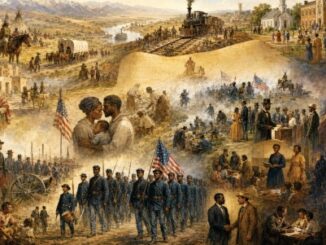
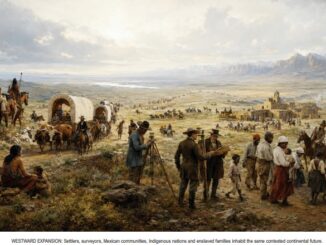
“Expansion made America larger. Division tested whether it could remain one nation. Reunion asked whether unity could be rebuilt upon freedom.” America’s continental expansion opened land, markets and possibility while carrying conquest, Indigenous dispossession, Mexican […]

Women could not vote, hold most public offices or enjoy equal legal status, yet they became central to reform. The doctrine of separate spheres assigned women moral authority within the home; reformers used that claim […]
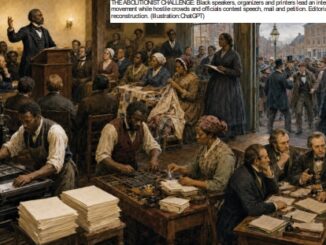
new immediatist abolition movement demanded an end to slavery without gradual delay or compensation to enslavers. William Lloyd Garrison published The Liberator beginning in 1831, but Black abolitionists supplied indispensable leadership, institutions and intellectual power. […]
The Jacksonian era coincided with the rapid expansion of cotton slavery across Alabama, Mississippi, Louisiana, Arkansas and eastern Texas. Enslaved people cleared land, planted and harvested cotton, built roads and communities and generated wealth they […]
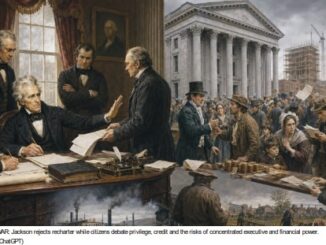
J ackson regarded the Second Bank of the United States as a dangerous concentration of financial privilege. The Bank was privately owned but federally chartered, held government deposits and helped regulate credit and currency. Its […]
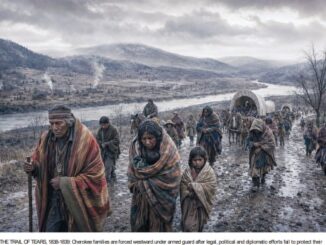
White settlement and cotton cultivation intensified pressure upon the homelands of the Cherokee, Muscogee (Creek), Choctaw, Chickasaw and Seminole peoples. These nations had adopted varied strategiesdiplomacy, written constitutions, schools, farming, print culture and legal action-to […]
ackson treated the presidency as the only national office elected by all the people-meaning the eligible electorate-and therefore as an institution with independent popular authority. He used the veto more frequently than all previous presidents […]
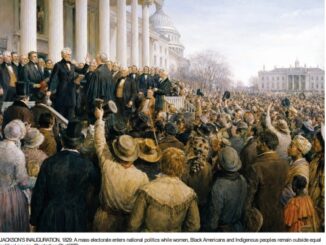
Democracy Expanded, Democracy Denied “American democracy grew wider for white men-and harsher for many people kept outside its promise. During the early nineteenth century, most states removed property requirements for voting by white men. Presidential […]
As western territories sought statehood, the expansion of slavery became a national crisis. In 1819, Missouri applied for admission as a slave state. Representative James Tallmadge proposed restricting slavery there, igniting debate over congressional power, […]
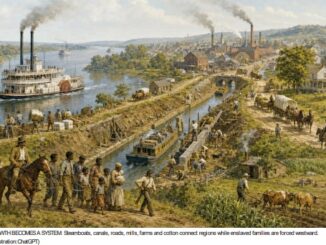
Steamboats made upriver commerce faster and cheaper. The National Road linked the Potomac region to the Ohio Valley. The Erie Canal, completed in 1825, joined the Great Lakes to the Hudson River and made New […]
After the war, the decline of the Federalist Party produced the socalled Era of Good Feelings under President James Monroe. Political conflict did not disappear. Congress chartered a Second Bank of the United States, adopted […]
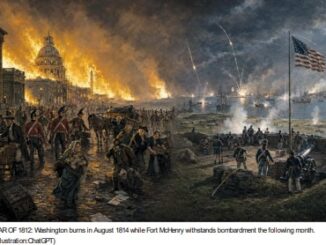
War Hawks in Congress demanded action against British impressment, interference with trade and support for Native resistance. President James Madison asked for war in June 1812. The nation entered divided and militarily unprepared. New England […]
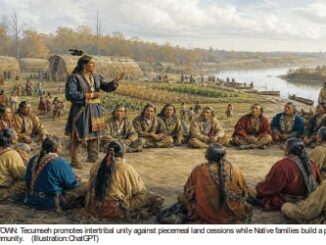
American settlers and officials continued acquiring western lands through treaties often signed under pressure or by leaders whose authority to sell communal territory was disputed. The Shawnee leader Tecumseh and his brother Tenskwatawa, known as […]
J efferson reduced some federal taxes and military expenses while retaining Hamilton’s national financial structure. His administration prosecuted the Mediterranean conflict commonly called the First Barbary War, demonstrating that the republic would use naval power […]
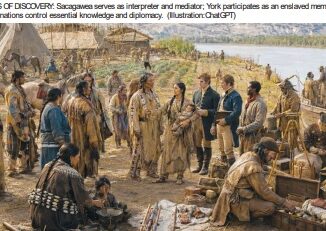
efferson commissioned Meriwether Lewis and William Clark to explore routes, map geography, establish diplomatic relations, describe plants and animals and strengthen American claims. The Corps of Discovery departed in 1804 and reached the Pacific in […]
JUNE 2026 USTR MISSION: USTR Jamieson Greer visited New Delhi in June 2026 to resolve outstanding tariff schedules and digital trade parameters. Minister Goyal addressed speculation regarding stalled negotiations, emphasizing that both governments remain committed […]
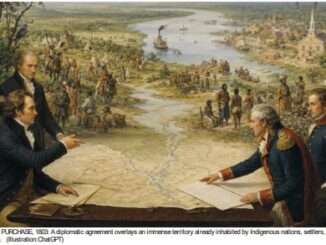
Expansion, Exploration and the Price of Growth “The republic grew across a continent already inhabited-and every mile of growth enlarged both its promise and its contradictions.” THE LOUISIANA PURCHASE New Orleans and the Mississippi River […]
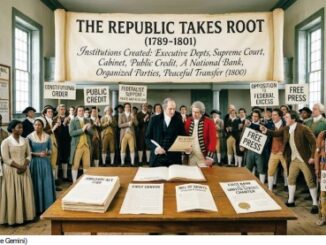
Between 1789 and 1801, Americans created institutions the Constitution had only sketched: departments, courts, a cabinet, public credit, a national bank, organized parties, constitutional opposition and norms of presidential retirement and transfer. They also revealed […]
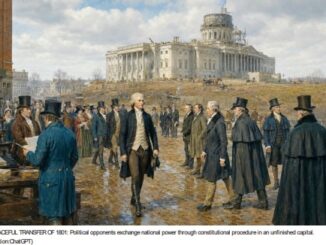
The election of 1800 pitted Adams against Jefferson amid fierce newspaper warfare, accusations of tyranny and warnings that either religion or republican government would perish. Because electors cast two undifferentiated votes, Jefferson tied with his […]
BY Gobind Munjal As the United States celebrates the historic milestone of its 250th year of independence, I reflect with deep gratitude on my own American journey. For me, America has been far more than […]
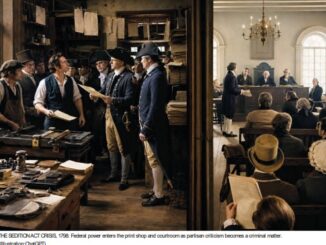
ohn Adams became president in 1797 after a bitter election. France, angered by Jay’s Treaty, seized American ships. American envoys reported that intermediaries had demanded payments before negotiationsthe XYZ Affair. Public outrage produced an undeclared […]
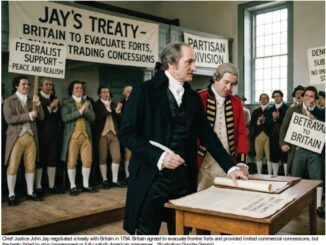
The French Revolution divided Americans. DemocraticRepublicans celebrated its republican promise; Federalists increasingly recoiled from its violence and feared radicalism at home. When Britain and revolutionary France went to war in 1793, the United States faced […]
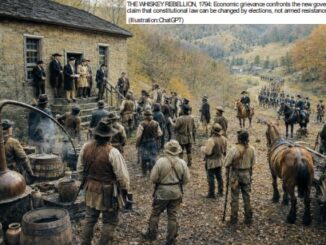
Hamilton’s excise tax on distilled spirits fell heavily upon western farmers, for whom whiskey was a marketable form of grain and sometimes a medium of exchange. Many viewed the tax and distant federal collectors as […]
The new government inherited conflict in the Ohio country, where Indigenous nations rejected American claims based upon the Treaty of Paris-a treaty to which they had not consented. A Native confederacy, including Shawnee, Miami, Delaware […]
© The Indian Panorama